Showing posts with label Algeria. Show all posts

Wednesday, May 22, 2013

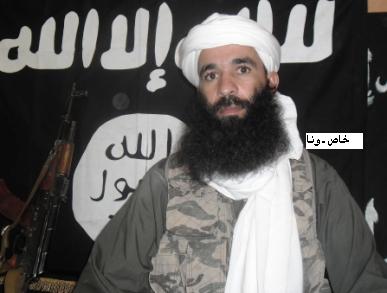
Ansar al-Din spokesman surrenders to Mauritania

A spokesman for Malian Islamist group Ansar al-Din surrendered to Mauritanian forces on Saturday (May 18th), near the Mali border.

Sanda Ould Bouamama (aka Abou Mohamed) "was transferred at the week-end to Nouakchott, where he is currently being questioned by the police", ANI reported.

Last month, Ould Bouamama told ANI that he was close to the border between Mali and Algeria and was going to surrender to Algerian authorities.

"This surrender had been expected for several weeks because the Ansar al-Din spokesman had expressed a desire to surrender to Algerian forces on April 17th and had implored the Mauritanian president to request his extradition so that he could stand trial in Mauritania," terrorism expert Sidati Ould Cheikh said.

"Since the beginning of the French intervention in Mali, it has been a case of every man for himself within terrorist groups," he added.

On April 19th, El Watan reported that three Ansar al-Din leaders were in Algeria.

The refugee "emirs" were identified as Wathik (aka Abderrahman Gouli), Abou Abida (aka Mourabiti Ben Moula) and Athman Ag Houdi, Ansar al-Din chief Iyad Ag Ghaly's cousin.

Although Algeria denied rumours that Ansar al-Din leaders intended to seek refuge in the country, El Watan underlined that other members of this small group could surrender.

"Algeria is loyal to its principles with regard to its foreign policy, based on respect for legitimacy," Algerian foreign ministry spokesperson Amar Belani told APS on April 21st.

"It will continue contributing in order to achieve peace and security in the region and particularly in Mali by working closely based on international legitimacy," Belani said.

"Ould Bouamama's surrender follows intervention by senior members of his tribe, the Barabiches, who negotiated with Mauritanian authorities for almost a month," explained journalist Jidou Ould Sidi.

The delegation of tribal senior members "accompanied a special Mauritanian task force to a locality in Mali, about 30 kilometres from the Mauritanian border", he added. "There, Ould Bouamama laid down his weapon, abandoned his vehicle and mobile phones and gave himself up without a fight."

He was taken to Bassiknou and was then transferred to Nouakchott aboard a military aircraft, according to Ould Sidi. "All signs are that Sanda will be very co-operative with the investigators," he noted. "The Mauritanians have a real mine of information on their hands."

Ould Boumama is from the city of Bassiknou, Mauritania, where his family and business are located. He studied at the University of Nouakchott.

He was known for his intransigence.

"The enforcement of Sharia is a divine obligation for any Muslim," Ould Bouamama told French daily Sud-Ouest last August. "If that shocks some people, we don't care."

"We are already an Islamic emirate, and the Taliban regime in Afghanistan is our model," he added at the time.

By Bakari Gueye in Nouakchott for Magharebia – 21/05/2013
Enhanced by Zemanta

Thursday, May 9, 2013

Tunisia: Al-Qaeda tied to Jebel Chaambi militants

[AFP/Abderrazek Khlifi] Tunisian Special Forces stand guard in Kasserine as soldiers continue their hunt for a jihadist group hiding out in the border region with Algeria.
Tunisian security forces arrested 37 suspects connected to jihadist violence in Jebel Chaambi, the interior ministry revealed on Tuesday (May 7th).

Interior ministry spokesperson Mohamed Ali Aroui also said the remaining militants belonged to the Okba Ibn Nafaa brigade, which is linked to al-Qaeda. He made the announcement at a joint press conference with defence ministry spokesperson Mokhtar Ben Nasr.

The arrests included armed militants as well as elements that supplied logistic support, according to Aroui. Ten suspects were captured in Kef, while the rest were rounded up in Kasserine.

He stressed that the security forces and the army have full knowledge of the names and nationalities of the militants holed up in Kasserine and Kef.

He pointed out that the number of militants at large was between 10 and 15 terrorists in Kef and 20 in the Jebel Chaambi area of Kasserine, including 11 Algerians.

Aroui confirmed that the army and security forces were working very hard to eliminate these terrorist groups in co-ordination with Algeria and Libya.

"The armed elements holed up in Jebel Chaambi on the border with Algeria received logistic assistance of water, food and clothing from Tunisians sympathetic to them, which serves as evidence of the presence of an incubator for those insurgents who are believed to belong to al-Qaeda," defence ministry spokesperson Ben Nasr said.

Meanwhile a fourth land mine exploded on Monday morning in Jebel Chaambi, seriously wounding three army corporals. One of them, from the elite brigade of the fort of Bizerte in northern Tunisia, lost a leg. The second from the same brigade lost his eyes and sustained injuries to his face while the injuries of the third soldier were not determined.

"There is co-ordination with the Algerian authorities at both the field and intelligence levels to capture the terrorists who sought refuge in Jebel Chaambi," the defence ministry spokesman said.

He explained that "the mines that exploded were made of ammonium nitrate fertilizer and flammable materials that can easily explode when exposed to heat."

Journalist Nabil Zaghdoud commented that "nothing has changed" since the clashes with terrorists in Soliman several years ago.

"However, they were unable to this day to eliminate these terrorists and the reason is the absence of a political and sovereign decision to eliminate them and eradicate their roots with iron and fire," he added. Sadok Chourou, an Ennahda leader known as a hardliner, called for a dialogue between the government and the armed Islamists, a proposal that raised eyebrows.

Political analyst Anis Mansouri answered Chourou by saying that he was calling for "recognising the terrorists as a political party that the government sits with for dialogue".

"Their demands are the application of Sharia law, crucifixion of highwaymen, and to excommunicate as many as possible... In short, they would convert Tunisia into Afghanistan or Sudan," Mansouri added, stressing, "No dialogue and no democracy with the enemies of democracy and with those who call for violence, exercise it, justify it or defend it."

However, Ennahda chief Rachid Ghannouchi took a more moderate tone in remarks posted on the party's official Facebook page.

"We salute the heroes of the national army, the police and civil society in confronting terrorist acts and all young Islamists must know that fighting a Muslim is a heresy, debauchery and one of the greatest crimes."

Ghannouchi added, "Our police force is Muslim and so is our army and society; this so-called jihad has no place here."

By Yasmin Najjar in Tunis for Magharebia – 08/05/2013
Enhanced by Zemanta

Wednesday, May 8, 2013

Tunisia Hunts al-Qaida-linked Militants Near Algeria

TUNIS - The Tunisian army and police force were hunting more than 30 suspected al-Qaida linked militants close to the border with Algeria on Tuesday, and President Moncef Marzouki travelled to the area to oversee the operation in a signal of its importance.

An Interior Ministry spokesman said there were about a dozen militants in the city of El Kef and about 20 in the remote area of Mount Chambi in the west of the country where police and militants have clashed regularly in recent weeks.

"President Moncef Marzouki arrived in Mount Chambi to raise the morale of soldiers and check on the conduct of pursuit operations there,'' an official in the president's office said.

The Interior Ministry spokesman said security forces had apprehended someone who had been delivering food to some of the suspected militants, cutting them off from supplies.

Tunisia, long among the most secular countries in the Arab world, has become increasingly concerned about attacks the authorities blame on hardline Islamists.

Police say Salafists - Muslim extremists - were behind the assassination of secular opposition politician Chokri Belaid in February, which triggered the biggest street protests in Tunisia since the 2011 overthrow of dictator Zine al-Abidine Ben Ali.

from VOA News


Enhanced by Zemanta

Saturday, April 6, 2013

Algerian governor escapes Al-Qaeda assassination

Medea wali Brahim Merad on Wednesday (April 3rd) survived an assassination attempt by al-Qaeda terrorists in the Algerian city of Mezghena.
Terrorists opened fire on police officers who were securing the route for the governor's convoy going to an event. One police officer was killed and two others were wounded and were taken to a hospital in Tablat.

There are conflicting reports as to what happened, El Watan noted. One of the newspaper's sources said that terrorists started shooting into a crowd of people they thought were surrounding the governor.

The other report said that the terrorists started shooting because they grew impatient from waiting for the governor's arrival.

The governor's convoy remained relatively distant from the place where the fire-fight took place and the governor withdrew after the security forces intervened.

The operation was followed by a bomb blast targeting an Algerian army vehicle that rushed to the scene directly after the attack. However, no soldiers were wounded and there were no material losses.

The terrorists seized four civilian vehicles and fled after forcing the owners out of their vehicles. The owners were later found tied up on the road.

Ennahda Movement Secretary-General Fateh Rebai condemned the terrorist attack that targeted Medea governor and his accompanying delegation.

In a statement, the movement called the attack a cowardly criminal act, and that such cowardly attacks could bring Algeria back to blood and fire.

The statement also urged the authorities to deal with all reasons of social and political tensions that some exploit to manipulate young people and throw them into the cycle of violence and terrorism.

"Al-Qaeda in Islamic Maghreb (AQIM) always seeks to target the symbols of state… to show that it still can inflict harm," Mohamed Smiem, an academic specialising in security affairs said.

"Although the terrorist operations have recently dropped, the group is always seeking to carry out attacks… It wants to send a message to national and international public opinion that it still has the ability to launch painful blows," he added.

He noted that the group chose this area for this operation due to the rough terrain there and the mountains surrounding the road that the local official was supposed to take, in order to make the chase difficult.

This was not the first time that AQIM targeted senior Algerian officials. In 2007, terrorists targeted the Tizi Ouzou governor, and in 2012, former Illizi governor Mohamed Laid Khelfi was kidnapped by a group affiliated to Abdelhamid Abou Zeid.

The Illizi governor was taken to Libyan soil and was freed after the central authorities in Tripoli intervened.

The operation occurred the same day Algerian authorities released a list of 57 terrorists, they said would likely carry out suicide attacks. Algerian newspaper Ennahar published the list with pictures.

The group includes one woman and two Libyans who have been wanted since the end of 2011. The newspaper added that orders were given to all security authorities to publish the pictures of terrorists, names and aliases to facilitate their identification.

from MAGHAREBIA
By Walid Ramzi in Algiers for Magharebia – 05/04/2013

Enhanced by Zemanta

Sunday, March 24, 2013

Al-Qaida Names New North African Chief

(Reuters) - Algerian Djamel Okacha has been named as a new commander in al Qaeda in the Islamic Maghreb (AQIM), replacing Abdelhamid Abou Zeid who was killed in fighting in northern Mali, Algerian Ennahar TV said on Sunday.

An Algerian security source said Okacha, 34, was very close to AQIM's leader Abdelmalek Droukdel as both belonged to the Group of Algiers, made up of militants born in the region around the Algerian capital.

The source also said that he was confident that al Qaeda commander Mokhtar Belmokhtar, whose death was reported shortly after that of Abou Zeid, was dead.


"Okacha is Droukdel's right-hand man," he said. Okacha's priority would be to reorganize AQIM after it registered the losses of two heavyweight commanders.

France said last week that it had confirmed "with certainty" the death of Abou Zeid, saying that he had been killed in fighting led by French forces in the Adrar des Ifoghas region of northern Mali at the end of February.

It made no comment on Belmokhtar, presumed mastermind of an attack in January at the In Amenas gas plant in Algeria in which more than 60 people were killed, including foreign hostages.

Both commanders' deaths had been reported by Chad, but many analysts remain skeptical about Belmokhtar, noting that his experience and knowledge of the desert terrain could have helped him escape after French-led military operations were launched against the Islamist militants in Mali this year.

Okacha, also known as Yahia Abu El Hamam, joined AQIM northern Mali in 2004, the security source told Reuters.

"He was present at the attack against a military barracks in Mauritania in 2005, and he was also present in the killing of an American in 2009," the source said, referring to aid worker Christopher Leggett.

Algerian security sources had said earlier they believed Abou Zeid and Belmokhtar were together when they were killed.

"I strongly believe that Belmokhtar is dead," the security source said.

A jihadist quoted by the SITE monitoring service on March 3 rejected reports that Belmoktar had been killed, saying he was alive and would soon release a message. No message has been released.

Belmokhtar represented an important link to al Qaeda's roots, having trained in Afghanistan in the early 1990s.

France launched a joint military campaign with some African armies in Mali in January after Islamist rebels took control of the north of the country and began a move south towards the capital Bamako.

On Sunday, Mauritania's news agency ANI reported that AQIM had beheaded a French hostage, Philippe Verdon, captured in northern Mali two years ago. AQIM said other French hostages were at risk because of France's intervention in Mali.

from REUTERS
By Lamine Chikhi
ALGIERS | Sun Mar 24, 2013 3:01pm EDT
(Writing by Myra MacDonald; Editing by Stephen Powell)

Enhanced by Zemanta

Monday, March 4, 2013

R.I.P. - Corporal Cedric Charenton (FR)(Mali,Operation Serval)

"France's defence ministry said 26-year-old Corporal Cedric Charenton was shot dead on Saturday during an assault on an Islamist hideout in the desolate Adrar des Ifoghas mountains near Algeria, the third French soldier killed in the campaign."

these words came from the Ministere De La Defense website, translated with google, sry for some mistakes/errors


 Born August 24, 1986, Corporal Cédric CHARENTON sign a contract as a volunteer in the Army for five years for the 1st Airborne Infantry Regiment on 1 December 2009. Corporal Cédric CHARENTON have served France for more than three years.

After a training period during which he is licensed skydiver March 12, 2010, he joined the 2nd company of the 1st Regiment of Combat Airborne Infantry to serve as a grenadier. Upon his arrival in his new unit, he reveals a very promising profile and excellent soldier. It is raised to the 1st class distinction on 1 July 2010.
...
Just finished his internship, he was appointed July 10, 2011, with his band to join Afghanistan as part of Operation PAMIR within arms task force KAPISA / Battle Group Raptor to replace a group of 1st combat company severely affected. He distinguished himself with his friends for more than three months in the Afghan valleys.
...
Its qualities are unanimously recognized as a soldier and his service are rewarded with a promotion to Corporal April 1, 2012.
Projected in Gabon with his company from June to November 2012, in the 6th battalion of marines, he gives freely throughout the mission, distinguishing himself especially during commando training in jungle.

January 25, 2013, he was selected to participate in the operation SERVAL Mali. On March 2, the unit conducting the search and destruction in the massif of Adrar - more precisely in the valley Ametettai, about fifty miles south of Tessalit - has repeatedly urged during the day of fighting with terrorists. During one of these actions, to 18 hours, while the section amounted to an assault on an enemy position, Corporal Cédric CHARENTON was fatally wounded.

Corporal Cédric CHARENTON held the bronze medal in the national defense, the French Commemorative Medal with Afghanistan clasp medal and non-Article 5 NATO - ISAF.

Aged 26 years, single, was killed in the performance of its mission in the service of France.


official link:
http://www.defense.gouv.fr/terre/a-la-une/mali-deces-du-caporal-cedric-charenton-du-1er-rcp  
Enhanced by Zemanta

Sunday, March 3, 2013

Chadian forces claim raid killed top Algerian jihadist Mokhtar Belmokhtar

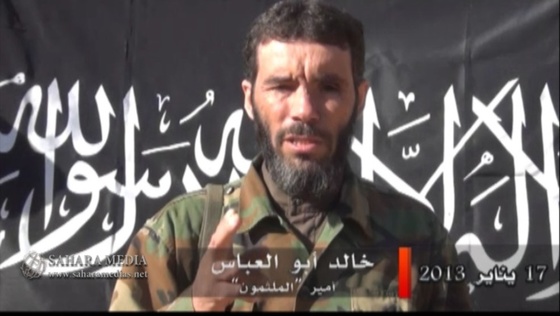
Al Qaeda commander Mokhtar Belmokhtar. Image from Sahara Media.
by LWJ STAFF - March2, 2013. - LWJ

Chadian military forces in Mali claimed to have killed fugitive al Qaeda affiliate Mokhtar Belmokhtar, the mastermind behind the deadly terrorist assault against an Algerian gas plant in January, during a dramatic counterterrorism operation in northern Mali today.

"On Saturday, March 2, at noon, Chadian armed forces operating in northern Mali completely destroyed a terrorist base .... The toll included several dead terrorists, including their leader Mokhtar Belmokhtar," Chadian armed forces spokesman General Zacharia Gobongue said on a Chadian television station. The statement also noted that weapons, equipment, and 60 vehicles were seized, according to the BBC. As this is a developing situation and Belmokhtar's death has not yet been confirmed by additional sources, the reports must be taken with caution.

Yesterday Chadian forces claimed to have killed Abdel Mejid Abou Zeid, a top al Qaeda leader who serves as the deputy to Yahya Abu Hammam, the head of al Qaeda in the Islamic Maghreb's operations in the Sahel region of North Africa.

Zeid leads the Taregh Ibn Ziyad brigade, which operates throughout Mali, Mauritania, Niger, and southern Algeria. Zeid's brigade is responsible for the beheading of British hostage Edwin Dyer in May 2009. Algerians, Mauritanians, Malians, and Moroccans are known to fight with both Hammam and Zeid. [See LWJ report, US adds senior AQIM commander to terrorist list.]

So far, the French ministry of foreign affairs has not confirmed Zeid's death, but officials are awaiting results of a DNA test that has been conducted on the remains supposedly belonging to Zeid, according to France 24 News.

Chadian military forces are reported to have entered Mali around Jan. 22 as part of a regional African military force seeking to thwart the Islamist takeover in the country.

Continue & Read more :  http://www.longwarjournal.org/archives/2013/03/chadian_forces_claim.php
Enhanced by Zemanta

Friday, March 1, 2013

Senior Al-Qaeda leader Abu Zeid killed in northern Mali

This Al-Andalus image grab taken on September 30, 2010 from a video released today shows Abu Zeid (L), also known as Abid Hammadou, posing with fighters of al-Qaeda in the Islamic Maghreb (AQIM) and hostages (unseen) seized two weeks ago, among whom are five French.
A senior leader of Al-Qaeda in the Islamic Maghreb (AQIM) has been killed in northern Mali: Algeria-based Ennahar television reported on Thursday.

The station said 40 militants including Abu Zeid were killedin the region of Tigargara in northern Mali three days ago. A French Defense Ministry official declined to comment on the report. Algeria did not confirm the killing.

France launched a whirlwind assault to retake Mali's vast northern desert region from AQIM and other Islamist rebels on Jan. 11 after a plea from Mali's caretaker government. The military intervention dislodged the rebels from several main towns they had occupied and drove them back into desert wilds.

Overwhelmed by the superior fire-power of the French air force and special forces, Islamist hardliners in northern Mali pulled out of the towns they had ruthlessly ruled for nine months, imposing an extreme form of sharia law.

They regrouped and reverted to guerrilla tactics, launching hit-and-run attacks against French or pro-government forces and resorting to suicide attacks.

AQIM has earned tens of millions of dollars in ransom payments for Western hostages taken to its strongholds in northern Mali.

Abu Zeid has been regarded as one of AQIM's most ruthless operators. He is believed to have executed British national Edwin Dyer in 2009 and a 78-year-old Frenchman, Michel Germaneau, in 2010.

Canadian diplomat Robert Fowler, in an account of his kidnapping by another Islamist cell in the Sahara, recounted how Abou Zeid refused to give medication to two hostages suffering from dysentery, one of whom had been stung by a scorpion.

By Al Arabiya With Agencies
Last Updated: Thu Feb 28, 2013 22:10 pm (KSA) 19:10 pm (GMT)

Enhanced by Zemanta

Saturday, February 23, 2013

13 Chadian Troops, 65 Islamists Killed in Mali

The military command in the African country of Chad says 13 of its soldiers and 65 Islamist rebels have been killed in a fierce battle in a mountainous region of northern Mali.
A brief military statement late Friday from the Chadian capital said the Chadian force also destroyed five vehicles in the Ifoghas region, near Mali's border with Algeria. In addition, it said five Chadian troops were wounded.

Chad is part of an African force that is fighting with French and Malian troops against Islamist rebels who had taken over northern Mali.

Forces from former colonial power France entered Mali in January to push back militants moving toward the capital, Bamako.

France has since said it plans to begin withdrawing its ground forces, and hand over military operations to the Malian army and the emerging African force.

from VOA News
February 22, 2013

Enhanced by Zemanta

Saturday, February 16, 2013

US adds senior AQIM commander to terrorist list

By

Yahya Abu Hammam, the emir of al Qaeda in the Islamic Maghreb's operations in the Sahel. Image from the ANI.

The US added the head of al Qaeda in the Islamic Maghreb's operations in the Sahel region of North Africa to the list of global terrorists yesterday.
Yahya Abu Hammam, whose real name is Jemal Oukacha, was added by the US to the list of Specially Designated Global Terrorists for his "key role in the group's ongoing terrorist activities in North Africa and Mali," the US Treasury Department stated in a press release.
"Today's designation supports ongoing international efforts to isolate AQIM, deny its members the benefits of their violent and criminal acts, and help restore Mali's territorial integrity," Treasury stated.
Hammam has been waging jihad in North Africa since the 1990s, according to Magharebia.com, which profiled the AQIM emir in October 2012. He was detained by the Algerian government for 18 months, then released. He subsequently joined the Salafist Group for Prayer and Combat, which eventually morphed into AQIM in 2006.
"In 2004, he joined fighters in northern Mali and southern Algeria where he served under the command of Khaled Abou El Abbas, who was then emir of the Sahara," Magharebia.com reported. Hammam fought in northern Mali and Mauritania, where he was involved in several attacks against the Mauritanian military. In one such attack, in 2005 against the Lemgheity barracks, 17 Mauritanian soldiers were killed.
Prior to being appointed the head of AQIM's operations in the Sahel, he served as the group's emir in the northern Malian town of Timbuktu. Under his rule, numerous Muslim shrines were destroyed and civilians were beaten for the slightest infractions of sharia, or Islamic law.
Hammam was named the emir of the Sahel after his predecessor, Nabil Abu Alqama, was killed in a car crash. Upon taking command, Hammam named Abdel Mejid Abou Zeid as his deputy. Zeid leads the Taregh Ibn Ziyad brigade, which operates throughout Mali, Mauritania, Niger, and southern Algeria. Zeid's brigade is responsible for the beheading of the British hostage Edwin Dyer in May 2009. Algerians, Mauritanians, Malians, and Moroccans are known to fight with both Hammam and Zeid.
The US said that Hammam "as of late 2011 ... reportedly had possession of multiple European hostages." The French accuse Hammam of executing Michel Germaneau, an elderly aid worker, in July 2010. AQIM has brought in tens of millions of dollars by kidnapping European hostages for ransom.
Hammam is known to be close to Abdelmalek Droukdel, the emir of al Qaeda in the Islamic Maghreb.
AQIM, in alliance with the Movement for the Oneness and Jihad in West Africa (MUJAO) and Ansar Dine, seized control of northern Mali in March 2012. France ultimately intervened in Mali last month after the al Qaeda-led jihadist alliance launched an offensive to take central and southern Mali. The jihadists likely would have succeeded had France not intervened, as the Malian military was in retreat.
A document written by Droukdel that was found at an AQIM command center in Timbuktu after the town fell to the French exposed the terror group's plan to use northern Mali as a base to conduct attacks in the region and against the West.
Enhanced by Zemanta

Saturday, February 9, 2013

French Troops Capture Key Airport in Northern Mali

French forces battling Islamist militants in northern Mali have taken a strategic airport near the Algerian border.
The French defense ministry said Friday that special forces have seized the airport at Tessalit, a small town in Mali's Kidal region, and are moving to secure the town itself with the help of Chadian troops.

The airport would give French-led forces another base in their fight against the militants, who have fled into the Sahara after losing control of northern Mali's major cities.


Fighting continued elsewhere in Mali Friday.  Outside the city of Gao, a suicide bomber driving a motorcycle blew himself up near a military checkpoint.  One soldier was wounded in the blast.

A local journalist, Soumalia Maiga, ran to the scene as soon as he heard the explosion.

He says the explosion happened less than 10 meters from the checkpoint.  He says people in the town are afraid to go to the market and some are even afraid to go to the mosque for Friday prayers.  He says it is impossible to know whether the bomber was trying to hit the checkpoint or was trying to get inside the town.

The French news agency, AFP, reports that the Islamist group MUJAO claimed responsibility for the attack.

continue and read more from VOA News with some nice photos
February 08, 2013

Enhanced by Zemanta

Thursday, January 31, 2013

AQIM, Ansar al-Din bosses flee Kidal

map by Evan Centanni (www.polgeonow.com)
Malian and French forces recaptured Kidal on Wednesday (January 30th), forcing the main Islamist chiefs to flee their last holdout in northern Mali, AFP reported.
Al-Qaeda in the Islamic Maghreb (AQIM) katibat leader Abou Zeid and Ansar al-Din chief Iyad Ag Ghaly have reportedly retreated to the Adrar des Ifoghas mountain region bordering Algeria and Niger.

Meanwhile, at a donor conference in the Addis Ababa Tuesday, African leaders and international officials pledged more than 340m euros to support Mali.

Lack of cash and equipment has hampered the deployment of nearly 6,000 troops in the African-led force for Mali (AFISMA).

from MAGHAREBIA
30/01/2013

Enhanced by Zemanta

Tuesday, January 22, 2013

MNLA supports African force in Mali

map by Evan Centanni (www.polgeonow.com)
Mali separatist group National Movement for the Liberation of Azawad (MNLA) on Sunday (January 20th) offered to join army forces from the Economic Community of West African States (ECOWAS), Le Monde reported.
The secular Touareg rebels are ready to participate in the International Mission for Support to Mali (MISMA), MNLA spokesperson Ibrahim Ag Mohamed Assaleh said.

Meanwhile, French troops on Sunday consolidated gains in Mali's Islamist-held north, AFP reported. Canada, Germany and Russia offered vital aid for the offensive.

Ansar al-Din fighters and their al-Qaeda allies were reportedly abandoning some of their positions and converging on the mountainous region of Kidal, near the border with Algeria.

from Magharebia
21/01/2013

Enhanced by Zemanta

Monday, January 21, 2013

Algeria Says 80 Dead at Gas Complex

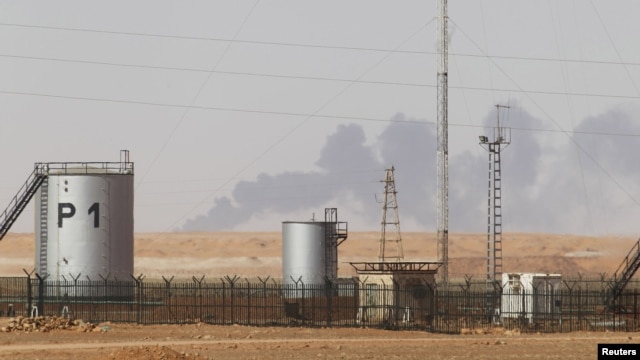
Smoke rises above following demining operations at the In Amenas gas plant, January 20, 2013.
Algeria's prime minister is expected to announce Monday the latest details of the militant takeover and military raid of a desert natural gas complex that left at least 80 people dead, including militants.

The toll jumped Sunday when officials combing through the complex found 25 more bodies, which they said were so disfigured it is hard to tell if the remains were of militants or hostages.

Officials in the Philippines said Monday that six of the victims were Filipinos, and that four of its nationals remain missing.

Many of the dead were foreign hostages held when Islamist militants seized the In Amenas gas complex Wednesday.  So far, nationals from Britain, Romania, the United States, Japan and France have also been confirmed dead.

Islamist militant leader Mokhtar Belmokhtar claimed responsibility for the attack. In an Internet video posted Sunday, he said he was acting in the name of al-Qaida and that 40 militants from Muslim and Western nations carried out the raid.

Belmokhtar said the attack was an answer to the French military operation against other al-Qaida-linked militants in Mali.

Algerian forces captured five militants alive during a Saturday raid on the complex.  Algeria's official news agency said the militants killed seven hostages during the raid, while Algerian troops killed 11 of the kidnappers.

A number of militants and hostages were also killed earlier during the crisis, while other hostages escaped unharmed.

British Prime Minister David Cameron said Sunday that responsibility for the killings "lies squarely" with what he called the "terrorists who launched this vicious and cowardly attack." French President Francois Hollande welcomed what he described as Algeria's "most appropriate" response to "coldly determined terrorists."

Algerian Communications Minister Mohamed Said said the Islamist assailants came from six nations. He said Algerian experts are tying to clear away land mines the militants laid around the gas complex.

Nearly 700 Algerian workers and more than 100 foreigners escaped the militant attack last week.

The foreign hostages included Americans, Austrians, Belgians, Britons, Colombians, French, Japanese, Malaysians, Norwegians and Romanians. The complex is jointly run by Algerian, British and Norwegian firms.


Some information for this report was provided by AP, AFP and Reuters.

from VOA NEWS
January 20., 2013.
Enhanced by Zemanta

Sunday, January 20, 2013

Algeria: Death Toll from Hostage Crisis May Rise

Algeria says the death toll from the hostage crisis at a natural gas complex could rise. The government said Sunday several countries have indicated some of their citizens remain missing after an end to the bloody conflict at the complex in eastern Algeria.

On Saturday, Algeria's Interior Ministry said the nation's hostage crisis had ended with 23 hostages and 32 militants killed.

British Prime Minister David Cameron said Sunday that three British nationals are confirmed dead, and another three are believed to have been killed. U.S. officials previously said at least one American is known to have died.

Algeria's Interior Ministry said security forces managed to free 107 foreign hostages and 685 Algerians.

Algeria's official APS news agency said the country's special forces stormed the complex Saturday in their "final assault" on Islamists who had been holding scores of hostages in the desert facility.  However, few details have emerged from the remote location where the rescue mission took place.

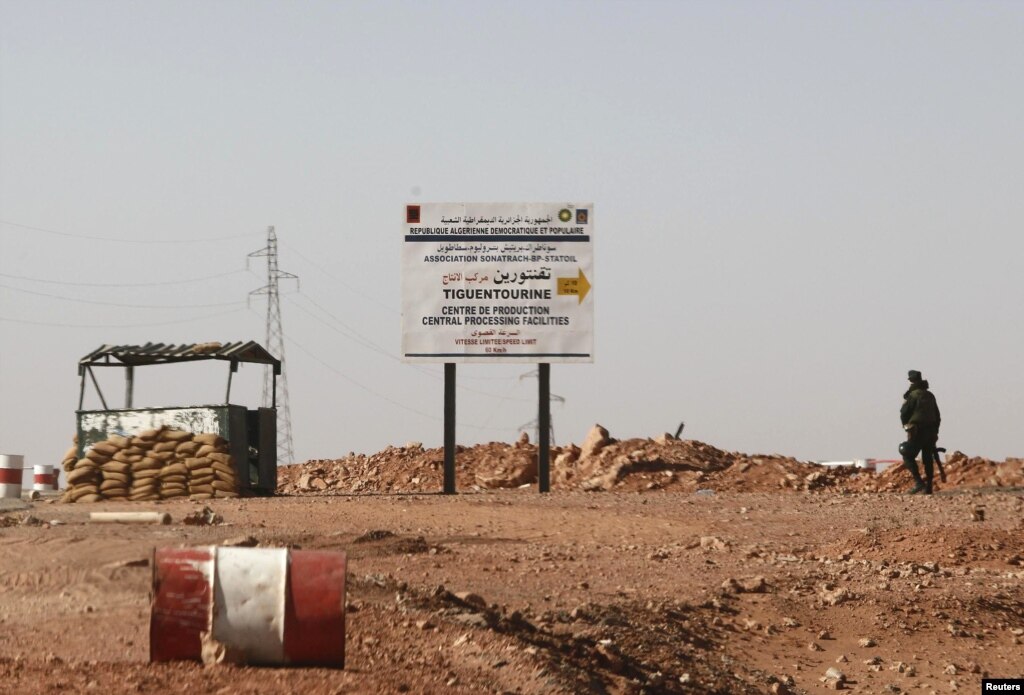
An Algerian soldier stands at a checkpoint near a road sign indicating 10 km (6 miles) to a gas installation in Tigantourine, the site where Islamist militants have been holding foreigners hostage according to the Algerian interior ministry, in Amena Janu
France endorsed Algeria's handling of the situation Saturday, saying it was the "most appropriate" response since it was not possible to negotiate with the "coldly determined terrorists."

In Washington, President Barack Obama condemned the actions of the kidnappers, saying they were entirely to blame.

British Defense Secretary Philip Hammond also said the terrorists bear the "sole responsibility" for the deaths.

Several Americans were among those being held.  Defense Secretary Leon Panetta said in London after meeting with Hammond that he had only "sketchy information" about the American hostages and would not comment until he had better details.  He also renounced terrorist attacks on Americans across the globe.

"Just as we cannot accept terrorism attacks against our cities, we cannot accept attacks against our citizens and our interests abroad. Neither can we accept an al-Qaida safe haven anywhere in the world," he said.

Foreign hostages at the gas complex are believed to have included nationals from the U.S., Britain, Japan, Norway, Romania, the Philippines, France, Malaysia and Austria. The complex is jointly run by Algerian, British and Norwegian firms.  Japanese officials say several of their nationals are missing.

The U.S. State Department has issued a travel warning Americans in Algeria, saying there are credible threats of the kidnapping of Western nationals.

The militants say they attacked the facility Wednesday in retaliation for French military operations in Mali.

Some information for this report was provided by AP and AFP.
from VOA News
January 20, 2013

Enhanced by Zemanta

Seven hostages, 11 militants killed in final onslaught by Algerian army

The final onslaught of Algerian special forces on a gas installation where foreigners were being held by Islamist militants killed 11 kidnapers and seven hostages, the state news agency reported.

Algerian Press Service says the troops stormed the facility on Saturday after a four-day standoff in which militants occupied the Ain Amenas natural gas facility in southern Algeria.

Al Arabiya reporter from Algiers said two Americans, one Japanese and one Norwegian were among those killed on Saturday.

The heavily armed gunmen from a group known as "Signatories in Blood" had been holed up in the In Amenas gas complex since they took up to 41 foreign worker hostage in a dawn assault on Wednesday.

"The (army) assault took place mid-morning. Eleven terrorists lost their lives along with the foreign hostages," the security source told AFP.

"We think they were killed in retaliation" for the army attack, the source said.

"Signatories in Blood," led by Algerian Mokhtar Belmokhtar, a former senior Al-Qaeda commander in north Africa, were demanding an end to French intervention against Islamists in neighboring Mali, ANI reported earlier.

Belmokhtar also wanted to exchanging American hostages for the blind Egyptian sheikh Omar Abdul Rahman and Pakistani Aafia Siddiqui, jailed in the United States on charges of terrorist links.

The plant is jointly run by BP, Norway's Statoil and Algeria's state-owned oil company.

An international outcry mounted over the Algerians' handling of the crisis. Experts noted that this is how they have always dealt with terrorists, refusing to negotiate.

The standoff has put the spotlight on militancy plaguing the region and al-Qaida-linked groups roaming remote areas from Mali to Libya, threatening vital infrastructure and energy interests.

The militants attacked the plant Wednesday morning, creeping across the border from Libya, 60 miles (100 kilometers) from the natural gas plant, and fell on a pair of buses taking foreign workers to the airport. The buses' military escort drove off the attackers in a blaze of gunfire that sent bullets zinging over the heads of the crouching workers. A Briton and an Algerian, probably a security guard, were killed.

Frustrated, the militants turned to the vast gas complex, divided between the workers' living quarters and the refinery itself, and seized hostages, the Algerian government said. The gas flowing to the site was cut off, though the circumstances of the cutoff remain unclear.

from AL ARABIYA
Saturday, 19 January 2013

Enhanced by Zemanta

Friday, January 18, 2013

Foreign govts voice alarm over Algerian hostage raid

A bloody Algerian military raid on a gas field seized by Islamist militants has resulted in the death of at least several foreign nationals. Foreign governments have expressed concern at being kept in the dark over the operation.

Algerian security forces stormed a gas plant seized by Islamist militants in eastern Algeria on January 17, but several hostages were killed along with the captors in what appears to have been a highly questionable and chaotic rescue attempt.

At least seven foreign nationals were killed after Algerian forces launched the operation, according to a security source quoted by Reuters. However, the kidnappers report that 34 captives died in the assault.

There are no official figures as yet, and several conflicting reports on the number of dead, injured and missing.

Local and foreign sources said the site was still surrounded early Friday by Algerian special forces and some hostages remained inside.

Militants originally stated they were holding 41 foreign nationals and more than 150 Algerians after they seized control before dawn on Wednesday. The hostage-takers demanded Algeria close its airspace to French fighter jets bombing Islamist targets in northern Mali and on France to end its military intervention there.

Several Algerian sources said security forces were given the green light to attack the Islamists after the heavily armed kidnappers asked for safe passage to leave the country with the hostages.

the report continues here, read more from FR24
Latest update: 18/01/2013
Enhanced by Zemanta

Thursday, January 17, 2013

Al Qaeda-linked group claims credit for kidnappings in Algeria


Mokhtar-Belmokhtar.jpg
Al Qaeda commander Mokhtar Belmokhtar. Image from the SITE Intelligence Group

A notorious al Qaeda commander named Mokhtar Belmokhtar has claimed credit for kidnapping more than 40 foreign nationals at a BP oil field in eastern Algeria today, according to multiple press reports.

A Frenchman, a Briton, and an Algerian security guard are reported to have been killed in the initial attack. Seven Americans, five Japanese citizens, and several Europeans are said to be among those who are being held hostage. The precise number of hostages remains murky.

According to Reuters, BP said that armed men still occupy the "facilities at the gas field, which produces 9 billion cubic meters of gas a year (160,000 barrels of oil equivalent per day), more than a tenth of [Algeria's] overall gas output."

A spokesman for Belmokhtar's terrorist organization, the al-Mua'qi'oon Biddam (Those who Sign with Blood) Brigade, said the assault and kidnappings were retaliation for the French-led invasion of neighboring Mali.

"Algeria's participation in the war on the side of France betrays the blood of the Algerian martyrs who fell in the fight against the French occupation," the spokesman said, according to a translation provided by the SITE Intelligence Group.

In a subsequent statement, also translated by SITE, the group demanded that France end its fighting in Mali. The group said that its "blessed invasion" was retaliation for the French trying to "to break the Islamic ruling system in" Mali, "while the Muslims are moaning under the butcher Bashar al Asad in wounded Syria, in the sight and ear shot of the whole world."

"This invasion comes in the global campaign of fighting the Jews and the Crusaders," the statement reads, echoing al Qaeda's many calls for global jihad.

Belmokhtar, who is also known as Khalid Abu al Abbas, long served as an al Qaeda in the Islamic Maghreb (AQIM) commander, but had a falling out with the group's senior leadership. Late last year, he formed his own splinter group, but that group still answers to al Qaeda's senior leadership.

In an interview with the Associated Press in December, one of Belmokhtar's confidants confirmed the move and explained his motivation.

"It's true," said Oumar Ould Hamaha, who has held positions in AQIM, Ansar al Din, and the Movement for Oneness and Jihad (MUJAO). Hamaha continued: "It's so that we can better operate in the field that we have left this group which is tied to the 'Maghreb' appellation. We want to enlarge our zone of operation throughout the entire Sahara, going from Niger through to Chad and Burkina Faso."

The AP added: "Hamaha said, however, that while he and Belmokhtar have left the North African branch, they remain under the orders of al Qaeda central."

Belmokhtar was designated an al Qaeda-affiliated terrorist by the United Nations in 2003. The UN described him as "a former Algerian soldier with experience in training camps in Afghanistan" and explained that he had belonged to the Salafist Group for Call and Combat (GSPC), as well as its successor, al Qaeda in the Islamic Maghreb.

Belmokhtar has compiled an extensive dossier of illegal activity, according to the UN, including kidnappings, gunrunning, robbery, "forming terrorist groups," and murder. He also reportedly runs an extensive cigarette smuggling operation.

In March 2008, an Algerian court sentenced Belmokhtar "in absentia to lifetime imprisonment for the murder of 13 custom officers." In December 2008, he was involved in the kidnapping "of two Canadian diplomats working for the United Nations." Dozens of other kidnappings also have been attributed to Belmokhtar.

Read more: http://www.longwarjournal.org/archives/2013/01/al_qaeda_commander_c.php#ixzz2IE8qxSjk

Enhanced by Zemanta

Saturday, January 5, 2013

Kidnapped Algerian diplomats in new terror tape

Three Algerian diplomats kidnapped by terrorists in Gao last April appeared in a new video posted online Tuesday (January 1st) by Mauritania's al-Akhbar.

The hostages are shown sitting on the ground surrounded by their armed captors from al-Qaeda splinter group Movement for Tawhid and Jihad in West Africa (MUJAO).

"We call on the President of the Republic, Mr Abdelaziz Bouteflika, to find a solution to our situation by accepting the terms of the group so that we can come back to our families," one captive said.
The hostage added: "We had the opportunity to leave the city of Gao before we were kidnapped, but on the orders of the Algerian Ministry of Foreign Affairs, we stayed to offer services to the diaspora."
Another of the Algerian diplomats pleaded, "Get us out of this crisis and enable us to come back to our families."

As far as the Algerian government is concerned, discretion remains the watchword. On Wednesday, it said that contact with the kidnappers was being maintained through various intermediaries.
Algerian foreign ministry spokesman Amar Belani refused to comment on the video of the hostages but said that authorities were "endeavouring to secure the release of the Algerian nationals".

Soon after the Algerians were abducted in Gao, they appeared in a video aired by Al Jazeera, in which the MUJAO claimed responsibility for the kidnapping. The video showed the Algerian diplomats in a vehicle with blank expressions, but apparently in good health.

One month later, the MUJAO issued a ransom demand. They wanted Algeria to release prisoners, as well as a 15m euro ransom.
Three of the hostages were freed in July.


On August 26th, another video released by MUJAO showed one of the remaining hostages asking the Algerian authorities to save his life. But the terror group later executed the diplomat, identified as Taher Touati.
The wife of hostage Mourad Guessas has appealed to the terrorists to free the diplomats. She said that they were merely "innocent, ordinary civil servants" and urged President Bouteflika to work to free them, adding they were kidnapped while in the "service of the Algerian state".

Algeria has staunchly opposed the terrorists' ransom demands, with Algerian Maghreb and African Affairs Minister Abdelkader Messahel saying last October that there would be "no negotiations with terrorists".

During a session with Parliament's foreign affairs committee last week, Foreign Minister Mourad Medecli revealed that both the National Movement for the Liberation of Azawad (MNLA) and Ansar al-Din were mediating the release of the Algerian diplomats kidnapped in Mali.
Last April, President Bouteflika reportedly approved a large military operation to free the hostages, according to a December article by El Khabar. The operation was to be conducted by a few hundred to 3,000 soldiers along with Special Forces, fighter jets and attack helicopters.
El Khabar said that the goal was to free the Algerian diplomats and strike a serious blow to the armed extremists who had taken over northern Mali.
The Algerian military operation was cancelled at the last minute.

from MAGHAREBIA
By Walid Ramzi in Algiers and Bakari Gueye in Nouakchott for Magharebia – 04/01/13

Enhanced by Zemanta

Monday, December 24, 2012

Ansar al-Din, MNLA sign deal in Algiers

[AFP/Farouk Batiche] Members of Ansar al-Din and the National Movement for the Liberation of Azawad (MNLA) sign agreement in Algiers.
Malian rebel groups Ansar al-Din and the MNLA vow to reject terrorism and work together towards securing the areas they control.


from MAGHERABIA
By Hayam El Hadi for Magharebia in Algiers – 23/12/12


Two Malian rebel groups on Friday (November 21st) said they were committed to suspending hostilities and holding peace talks, despite condemning the UN's approval of plans for an African-led intervention to reconquer the country's Islamist-held north, AFP reported.

Ansar al-Din and the National Movement for the Liberation of Azawad (MNLA) signed a seven-point partnership agreement in Algiers under which both parties rejected terrorism and opposed the use of military force in northern Mali.

The two groups have also engaged in talks with Mali's interim government after pledging earlier this month to respect the country's territorial integrity and root out terrorism.

Algeria, with the mediation of Burkina Faso, succeeded in getting Ansar al-Din and the MNLA to reach a deal.

Ansar al-Din's Mohamed Ag Akharib and the MNLA's Bey Diknan pledged to "refrain from any action which may lead to situations of conflict and from all forms of hostility in the areas under their control and to make every effort to honour this commitment".

After the deal was signed, both parties hailed Algeria's efforts to promote dialogue. While in Algiers, Ag Akharib said that his group "reiterates its desire for and commitment to a peaceful resolution" and praised "Algeria's efforts to resolve the Malian crisis through dialogue".

The two groups announced their intention to take steps to free hostages, provide emergency humanitarian assistance to communities and to facilitate the free movement of people and goods. Additionally, they pledged to send in forces to maintain the security of the areas they control.

Ten Europeans and three Algerians remain held hostage in northern Mali, kidnapped by al-Qaeda in the Islamic Maghreb (AQIM) and its offshoot the Movement for Tawhid and Jihad in West Africa (MUJAO) since September 2010.

The two Malian groups jointly condemned Resolution 2085 adopted on Thursday by the UN Security Council, which unanimously approved the deployment of a 3,300-strong international force in northern Mali for one year. The resolution also authorised "all necessary measures" to help the Malian government regain its full territorial integrity.

But the 15-member council insisted that military force could only be used after political efforts were exhausted. It said military plans would have to be refined and approved before any offensive started.

The Security Council also called on the transitional authorities in Bamako to re-establish constitutional order and hold elections before April 2013.

It urged them to engage in "credible" negotiations with groups in the north, including the side-lined Touaregs.

A move toward a military offensive would come in a second phase.

Mali's government hailed the Security Council decision on the intervention plan as a sign that the world would not abandon the country.

"We are grateful to the international community, a consensus has been reached on the Malian situation," said advisor to Mali's interim president Dioncounda Traore.

"We are going to wage war against the terrorists and continue to negotiate with our brothers who are ready for dialogue", he added.

Another Mali politician, Mustapha Cisse, said the UN vote showed "the willingness of the international community not to abandon Mali to its own devices".

Ansar al-Din and the MNLA instead called for a "peaceful, lasting and final solution to the conflict in accordance with Islamic principles and in harmony with the true values of the people of Azawad, respecting all basic freedoms without distinction and universal rules concerning human rights".

Ag Akharib asked "Algeria and the international community to help the people of Mali in their quest for a solution to this crisis, by political rather than military means".

Algerian diplomats have sought to bring about a peaceful end to the crisis in Mali. Efforts have been made to convince neighbouring countries of the need to preserve Mali's integrity.

The conflict has so far displaced more than 400,000 people, according to the UN.

from MAGHERABIA
By Hayam El Hadi for Magharebia in Algiers – 23/12/12

Enhanced by Zemanta

Search this blog