Showing posts with label West Africa. Show all posts

Saturday, May 25, 2013

Belmokhtar's unit participated in Niger suicide attacks


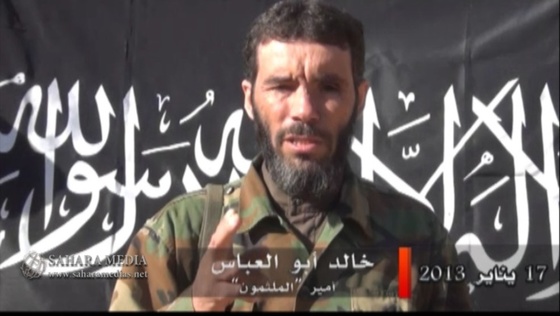
Mokhtar-Belmokhtar-Sahara-Media.jpg
Al Qaeda commander Mokhtar Belmokhtar. Image from Sahara Media.

Mokhtar Belmokhtar, the leader of the al Qaeda-linked al Mua'qi'oon Biddam, or the Those Who Sign in Blood Brigade, said that its fighters participated in yesterday's double suicide attack in Niger along with the Movement for Oneness and Jihad in West Africa (MUJAO). The attack was launched to avenge the death of a senior al Qaeda in Islamic Maghreb commander who was killed while fighting in Mali earlier this year, he claimed. The statement also put to rest rumors that Belmokhtar was killed in Mali by French and Chadian forces in early March.

Belmokhtar's statement was posted on jihadist forums on May 23; it was obtained and translated by the SITE Intelligence Group. The statement was signed by Khalid Abu al Abbas, which is one of Belmokhtar's aliases.

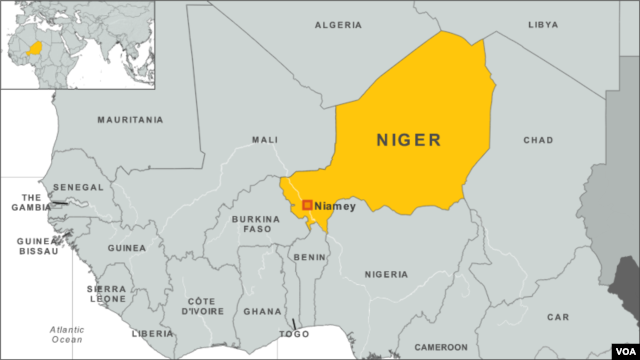
The May 23 suicide attacks, the first of their kind in Niger, targeted a military barracks in Agadez and a uranium mine in Arlit that supplies French reactors. The Agadez attack was executed by a five-man suicide assault team; 18 Nigerien soldiers and a civilian were killed. A MUJAO spokesman claimed credit for the attack.

Belmokhtar said the attacks in Niger were executed to avenge Abdel Hamid Abou Zeid, an AQIM commander who was killed by French and Chadian forces during a military operation to root out the terror group in northern Mali.

"We send to our dear Ummah a glad tiding of one of the epics of Islam that took place in the heart of the enemy land, and one of the invasions of al Mua'qi'oon Biddam under the name of the martyred commander, as we consider him, Abdel Hamid Abou Zeid," Belmokhtar stated.

Belmokhtar said that "a battalion from our commandos who gave a pledge of allegiance to die rose to retaliate for him [Abou Zeid], coming from different countries to sign with their blood inside the fortresses of an enemy whose army was one of the foundations of the Crusader campaign on our Muslim land."

The attack was also launched as "the first of our response to the statement of the President of Niger - from his masters in Paris - that he eliminated jihad and the mujahideen militarily."

Warning that "more operations" are being prepared, Belmokhtar said, "We will move the battle to the inside of his country [Niger] if he doesn't withdraw his mercenary army" from Mali. Belmokhtar also warned other countries who plan to provide "peacekeepers" in Mali that they will "taste the heat of death and wounds in [their] homelands and among [their] soldiers."

"The convoys of martyrdom-seekers and commandos are ready and waiting for their targets and permission," Belmokhtar concluded.

The al Mua'qi'oon Biddam fights throughout West Africa. In January, just after French forces invaded Mali to eject AQIM, MUJAO, and Ansar Dine from the north, Belmokhtar launched a large-scale suicide assault against the In Amenas gas facility in southeastern Algeria. More than 40 fighters carried out the attack. One of the assault teams was led by a Nigerien known as Abdul Rahman al Nigeri, who had led another assault on a military barracks in Mauritania in 2005. Belmokhtar claimed the attack in the name of al Qaeda.

Although Belmokhtar was reported to have been killed at the same time Abou Zeid was killed, the reports were never confirmed. The president of Chad and the military insisted that Belmokhtar was dead, but the French, who were adamant that Abu Zeid was killed, refused to speculate about the status of Belmokhtar. In early April, Hamad el Khairy, the head of MUJAO, claimed that Belmokhtar was alive.

Although Belmokhtar split with AQIM in December 2012, he still conducts joint operations with the group as well as with MUJAO. Belmokhtar reports directly to al Qaeda's central leadership, according to his spokesman. Al Qaeda central tightened its control over AQIM's hostage operations in late 2010.

Read more: http://www.longwarjournal.org/archives/2013/05/belmokhtars_unit_par.php#ixzz2UIK9AcKJ
Enhanced by Zemanta

Tuesday, February 12, 2013

Malian, French Forces Repel Islamist Assault on Gao


French and Malian soldiers are on high alert in the northern town of Gao, a day after Islamist militants launched an assault to retake the city they were forced out of two weeks ago.

Residents who hid in their homes during the hours-long attack Sunday, cautiously entered the streets still littered with corpses.

Authorities report the crossfire killed three civilians and wounded at least 10 others, but it is still unclear how many soldiers or militants died.

Heavy gunfire and explosions resounded Sunday through the Saharan town, the largest in northern Mali, as the combined government force, complete with French helicopter gunships, fought the Movement for Oneness and Jihad in West Africa.

Clashes were ongoing for days in areas just outside the city.  Saturday and Friday suicide bombers attacked an army checkpoint near the entrance to Gao.  The two suicide blasts were the first in Mali.

The Malian military said the bomber in Saturday's attack was a young Arab man and the Movement for Oneness and Jihad in West Africa claimed responsibility.

The militant group seized control of Gao in April and had ruled the city until the arrival of French and Malian forces last month.  Military officials have said some elements of the group remain in the Gao area, and other fighters are hiding in the surrounding desert.

The group is a splinter faction of al-Qaida's North African wing which, in loose alliance with the home-grown Malian Islamist group Ansar Dine, held Mali's main northern towns of Timbuktu and Gao for 10 months until the French-led offensive drove them out.
from VOA News
Enhanced by Zemanta

Tuesday, January 15, 2013

French Planes Bomb Town Seized by Mali Islamists

French warplanes have bombed a Malian town seized by Islamist militants as more troops prepare to join the offensive against the extremist groups.

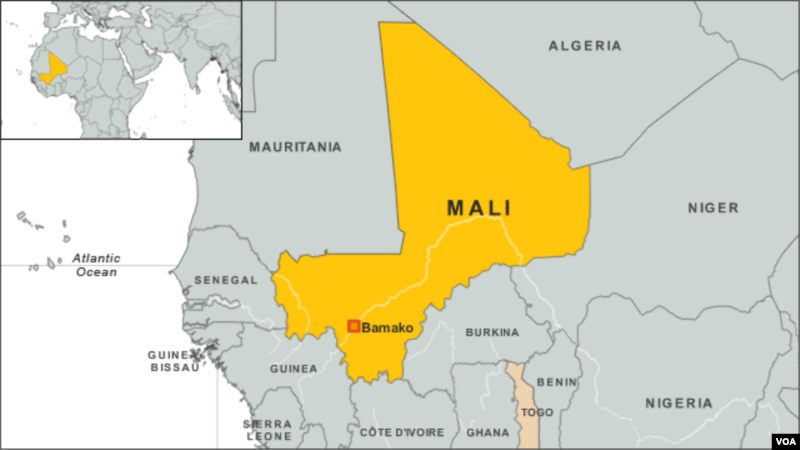
Witnesses say French planes attacked Diabaly overnight, just hours after Islamist fighters took control of the town, located 400 kilometers north of Mali's capital, Bamako.

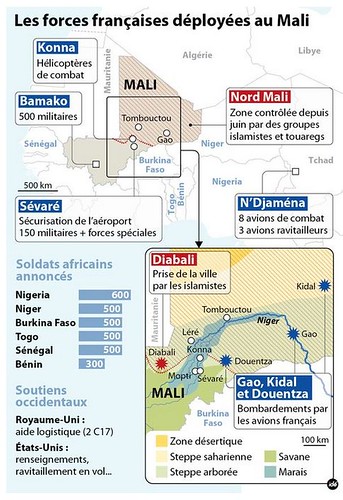
French defense officials say the French contingent in Mali, now at 750, will gradually rise to 2,500.  And Nigeria said Tuesday that it will deploy its first troops into Mali within 24 hours.

West African countries have speeded up their planned deployment to Mali after Islamist groups that control the north began advancing last week.

Sonny Ugoh, communications director for the Economic Community of West African States, said in an interview with VOA's English to Africa that ECOWAS members sensed the need for urgency.

"They have said member countries should deploy immediately in order to support Mali to defend its territorial integrity, defend the capital from this onslaught and secure the country," Ugoh said. "I think they have acted as responsibly as the situation requires."

The French ambassador to the United Nations, Gerard Araud, said Monday that a Nigerian general who will lead the African force is already in Bamako.  The neighboring countries of Niger, Burkina Faso and Senegal have also promised promise to send troops.

France deployed forces in Mali on Friday, acting on a request from Mali's interim government.  Araud said the government decided to offer military help because it was worried the militants could possibly take over the country.

"Our assessment was that they were totally able to take Bamako," he said. "And so, we decided that what was at stake was the existence of the state of Mali, and beyond Mali was the stability of all of West Africa.  With determination, but also with reluctance, we decided that we had no other choice but to launch this military intervention and we'll conduct it as long as necessary."

from THEATHRUM BELLI flickr
The United Nations refugee agency said Tuesday that the latest clashes have driven more than 1,000 Malians into neighboring countries.  It says the total number of Malian refugees in the region now stands at 144,000, and that more than 200,000 Malians are displaced within the country.

The United States said Monday that it is preparing to offer logistical support to France.  Defense Secretary Leon Panetta says the United States is already providing intelligence gathered by unmanned aerial vehicles operating in the region.  He said Washington is also considering providing limited logistical support and some airlift capability.

Al-Qaida-linked Islamic extremists seized control of northern Mali soon after renegade soldiers toppled the government in March, leaving a temporary power vacuum.  The militants have imposed harsh conservative Islamic law across the north.

Mali is a former French colony and France still has a variety of economic and political interests there.

from VOA News
January 15, 2013

Enhanced by Zemanta

Sunday, January 13, 2013

French Planes Bomb Rebel Positions in Mali

PARIS — France attacked Islamists targets in Mali for the third straight day on Sunday, bombing an key northern town held by the extremists.

French fighter jets bombed the northern Malian town of Gao, even as West African troops were due to arrive to help Bamako beat back an Islamist insurgency.

In a television interview, French Defense Minister Jean-Yves Le Drian said the air raids would continue Monday.

Le Drian said roughly 400 French soldiers have been deployed to Bamako, to ensure security and protect French and European nationals.  More French troops were dispatched to the town of Mopti, about 500 kilometers north of the capital.

Launched Friday, the attacks aim to eradicate an Islamist insurgency that was making inroads to the south last week, after capturing vast chunks of territory in northern Mali.  France says the Islamists not only threaten Mali and surrounding countries, but also Europe.

Paris has also notched up its terrorism alert, underscoring concerns extremists may launch retaliatory attacks in the city and against more than half a dozen French hostages held by Islamists in West Africa.

News reports describe Bamako as calm, with some cars sporting French flags.  The offensive has earned praise in Europe and West Africa.

Residents in Gao say the Islamists who occupied their town and imposed Islamic Sharia law have fled.  Interviewed on French radio, the town's mayor, Diallo Sadou, hailed the French attacks.

Sadou thanked France for its courage to have launched the offensive, and said he hoped God was protecting the French hostages.

One French soldier has died since the French airstrikes began Friday.  The Malian government says at least 11 of its soldiers have been killed and another 60 injured.   

from VOA News
by Lisa Bryant
January 13, 2013

Enhanced by Zemanta

Saturday, January 5, 2013

Kidnapped Algerian diplomats in new terror tape

Three Algerian diplomats kidnapped by terrorists in Gao last April appeared in a new video posted online Tuesday (January 1st) by Mauritania's al-Akhbar.

The hostages are shown sitting on the ground surrounded by their armed captors from al-Qaeda splinter group Movement for Tawhid and Jihad in West Africa (MUJAO).

"We call on the President of the Republic, Mr Abdelaziz Bouteflika, to find a solution to our situation by accepting the terms of the group so that we can come back to our families," one captive said.
The hostage added: "We had the opportunity to leave the city of Gao before we were kidnapped, but on the orders of the Algerian Ministry of Foreign Affairs, we stayed to offer services to the diaspora."
Another of the Algerian diplomats pleaded, "Get us out of this crisis and enable us to come back to our families."

As far as the Algerian government is concerned, discretion remains the watchword. On Wednesday, it said that contact with the kidnappers was being maintained through various intermediaries.
Algerian foreign ministry spokesman Amar Belani refused to comment on the video of the hostages but said that authorities were "endeavouring to secure the release of the Algerian nationals".

Soon after the Algerians were abducted in Gao, they appeared in a video aired by Al Jazeera, in which the MUJAO claimed responsibility for the kidnapping. The video showed the Algerian diplomats in a vehicle with blank expressions, but apparently in good health.

One month later, the MUJAO issued a ransom demand. They wanted Algeria to release prisoners, as well as a 15m euro ransom.
Three of the hostages were freed in July.


On August 26th, another video released by MUJAO showed one of the remaining hostages asking the Algerian authorities to save his life. But the terror group later executed the diplomat, identified as Taher Touati.
The wife of hostage Mourad Guessas has appealed to the terrorists to free the diplomats. She said that they were merely "innocent, ordinary civil servants" and urged President Bouteflika to work to free them, adding they were kidnapped while in the "service of the Algerian state".

Algeria has staunchly opposed the terrorists' ransom demands, with Algerian Maghreb and African Affairs Minister Abdelkader Messahel saying last October that there would be "no negotiations with terrorists".

During a session with Parliament's foreign affairs committee last week, Foreign Minister Mourad Medecli revealed that both the National Movement for the Liberation of Azawad (MNLA) and Ansar al-Din were mediating the release of the Algerian diplomats kidnapped in Mali.
Last April, President Bouteflika reportedly approved a large military operation to free the hostages, according to a December article by El Khabar. The operation was to be conducted by a few hundred to 3,000 soldiers along with Special Forces, fighter jets and attack helicopters.
El Khabar said that the goal was to free the Algerian diplomats and strike a serious blow to the armed extremists who had taken over northern Mali.
The Algerian military operation was cancelled at the last minute.

from MAGHAREBIA
By Walid Ramzi in Algiers and Bakari Gueye in Nouakchott for Magharebia – 04/01/13

Enhanced by Zemanta

Thursday, January 3, 2013

Ansar al-Din pursues peace talks, MUJAO name new chief

Ansar al-Din envoys on Tuesday (January 1st) submitted the Islamist group's "political platform" to Burkina Faso President Blaise Compaoré in Ouagadougou, AFP reported.

The group has been involved for several months in Mali peace talks with the Economic Community of West African States (ECOWAS) lead mediator.

In related Mali news, a Benin national known as "Abdoulah" was named head of al-Qaeda splinter group Movement for Tawhid and Jihad in West Africa (MUJAO). The former Boko Haram envoy to al-Qaeda camps in northern Mali is said to be of Yoruba ethnicity and in his thirties, security sources said.

He replaces Hicham Bilal, who surrendered to authorities in his native Niger after quitting the MUJAO over its criminal activities, including drug trafficking.

from MAGHAREBIA
02/01/2013

Enhanced by Zemanta

Tuesday, December 11, 2012

Mali: UN Blacklists MUJAO

Nouakchott — Security Council sanctions aim to put pressure on the Mali-based terror group.

The UN Security Council last Wednesday (December 5th) sanctioned al-Qaeda splinter group Movement for Tawhid and Jihad in West Africa (MUJAO).


Under the resolution, "UN member states have to freeze the assets of groups and individuals on this black list, impose a ban on arms sales and a travel ban on all of its members," according to AFP.

The UN said that the MUJAO had seized heavy machine guns, rocket propelled grenades, explosives and other military equipment from Mali military arsenals since moving into the country.

"The MUJAO's leaders are known to be drug traffickers, involved in the drug trade in the Sahel," the UN statement added.

Following the passage of the UN resolution, MUJAO leaders Hamada Ould Mohamed Kheirou of Mauritania and Ahmed al-Talmasi of Algeria were put on international lists of known terrorists.

A source close to Kheirou's family spoke to Magharebia on December 9th.

"He belongs to the Tagounanet tribe in Lebeiratt, Trazra province, in southeast Mauritania. He joined al-Qaeda in 2003 when he left to fight against international forces in Iraq. He climbed the ladder in al-Qaeda until he became the head of the Sharia committee, and was later appointed as head of the judiciary council in Gao after MUJAO controlled the city," the source said under condition of anonymity.

According to analyst al-Mokhtar al-Salem, "the area of Lebeiratt - from where Ould Mohamed Kheirou hails - is also the home of the great Mauritanian scholar Lemjidry Ould Hob Allah, who brought Wahhabism to the East in the 19th century".

"The people around here don't think the resolution changed anything," journalist Osman Mohamed Osman said.

"The MUJAO hasn't denied its relations with al-Qaeda and its leaders realise that they have been a target for the hostility of all Western and regional forces since the formation of the group," journalist Osman Mohamed Osman said.

"Anyway, this resolution can be seen as important as far as the procedural and moral aspects only are concerned, as it's already known that regional countries weren't selling arms to MUJAO and weren't dealing amicably with their elements," Osman said.

The MUJAO first appeared after the kidnapping of three humanitarian workers at a Western Sahara refugee camp in October, 2011. AQIM and MUJAO are currently holding at least 13 foreign hostages, including the Algerian diplomats kidnapped in Gao.

from allAfrica/Magharebia
By Jemal Oumar, 10 December 2012

Enhanced by Zemanta

Saturday, December 8, 2012

US adds West African group, 2 leaders, to terrorism list


MUJAO-French-Hostage-SITE-Video.jpg
Gilberto Rodriguez Leal, a French hostage, from a MUJAO videotape released on jihadist forums on Dec. 1, seated in front of the banner of jihad.

The US government has added the al Qaeda-linked Movement for Tawhid [Unity] and Jihad in West Africa and two of its leaders to the list of global terrorists and entities. The Movement for Tawhid and Jihad in West Africa, or MUJAO as it is commonly called, is an al Qaeda in the Islamic Maghreb offshoot that controls territory in Mali and has been behind several terrorist attacks and kidnappings in West Africa. The group has named one of its units fighting in Mali after Osama bin Laden.
The Department of State said that the designation of MUJAO and two of its top leaders, Hamad el Khairy and Ahmed el Tilemsi, who were also designated by the United Nations as terrorists, "demonstrates international resolve in eliminating MUJAO's violent activities in Mali and the surrounding region."
MUJAO formed in late 2011 as an offshoot from al Qaeda in the Islamic Maghreb, the al Qaeda affiliate in North Africa, in order to wage jihad in western Africa. Although MUJAO leaders are purported to have leadership differences with the Algerian-dominated AQIM, MUJAO conducts joint operations with AQIM in northern Mali and other areas. At the time of its formation, MUJAO expressed affinity to al Qaeda and its founder, Osama bin Laden, and Mullah Omar, the leader of the Taliban in Afghanistan and Pakistan.
MUJAO "has been behind violent terrorist attacks and kidnappings in the region," including suicide attacks and the abduction of aid workers in Algeria and Algerian diplomats in Mali, according to State.
State described Hamad el Khairy and Ahmed el Tilemsi as "founding leaders" of MUJAO. Khairy, who was born in Mauritania and is a Malian citizen, served as "a member of AQIM, and was involved in planning terrorist operations against Mauritania in 2007." Tilemsi, a Malian citizen, "acts as MUJAO's military head" and was "also affiliated with AQIM."

MUJAO is one of three major al Qaeda-linked groups that participated in last spring's invasion of northern Mali. Along with AQIM and Ansar Dine, MUJAO took control of northern Mali after the Malian military overthrew the government in the south. MUJAO, AQIM, and Ansar Dine fought alongside the secular Tuaregs from the Movement for the Liberation of Azawad (MNLA) to take control of northern Mali, but then quickly cast aside the MNLA and imposed sharia, or Islamic Law, in areas under their control.
Mali has become a new and dangerous front and safe haven for al Qaeda and its allies. Foreign jihadists from West African countries such as Togo, Benin, Niger, Nigeria, Guinea, Senegal, and the Ivory Coast, as well as Egyptians, Algerians, and Pakistanis, are filling out the ranks of MUJAO, AQIM, and Ansar Dine. Additionally, at least two training camps have been established in Gao, the largest city in northern Mali [see Threat Matrix reports, West African jihadists flock to northern Mali, and Foreign jihadists continue to pour into Mali].
MUJAO currently controls the northern town of Gao and surrounding areas. At the end of November, MUJAO defeated an MNLA assault to regain control of Gao.
During the battle for Gao, MUJAO deployed its "Osama bin Laden Battalion" to defeat the MNLA forces. MUJAO's Osama bin Laden Battalion teamed up with more than 300 fighters from AQIM's El Moulethemine Battalion.
After MUJAO defeated the MNLA in Gao, a jihadist linked to MUJAO said that the group would not stop fighting after taking over northern Mali, but instead said its jihad was global.
"Expect soon the conquest of the Malian capital, Bamako, then of Rome, as our Messenger, Allah's peace and prayer be upon him, promised us," the jihadist said, according to the SITE Intelligence Group.

Ahmed Ould Amer, the leader of the Osama bin Laden Battalion, warned that it would fight any international efforts to oust the jihadists from northern Mali.
"We will oppose the international threat against us by engaging in combat and jihad," Amer said, according to Magharebia.com.

Read more: http://www.longwarjournal.org/archives/2012/12/us_adds_west_african.php#ixzz2ET4DBvP3
Enhanced by Zemanta

Thursday, November 22, 2012

Nigeria to send 600 troops to Mali: minister

ABUJA, Nov. 21 (Xinhua) -- Nigeria will send a total of 600 out of the 3,300 troops pledged by ECOWAS, for deployment to contain rebel militants in Northern Mali, a top government official said on Wednesday.

Minister of State for Defense Olusola Obada said so to a delegation from the United Kingdom led by the representative of the Prime Minister of Britain in the Sahel, Stephen O'Brien, in her office in Abuja.

O'Brien was in Abuja to dialogue with Nigerian leaders on the rising insecurity in the Sahel, especially the crisis in Northern Mali, and to get first hand information on the areas.

The minister said that security in the Sahel region was not just of concern to West Africa but also to the entire international community.

She also regretted that the Sahel region has become home to cells of terrorist organizations who are exporting insecurity not only in Northern Mali but in the sub-region.

She said while the country was aware of the forthcoming elections in Mali, the elections should be held in the whole of Mali and not just a part of the country, thereby necessitating the need to sort out the issue of Northern Mali before the election.

from XINHUA
2012-11-22 08:22:02
Editor: Yamei Wang

Enhanced by Zemanta

Saturday, November 3, 2012

5 Kidnapped Aid Workers Freed in Niger, 1 Killed

Officials in Niger say five African aid workers who were kidnapped by suspected al-Qaida militants last month have been freed.

The aid groups BEFEN and Health Alert say the workers were freed on Saturday near Niger's border with Mali. They say a sixth worker who had been kidnapped with the group was shot during the abduction and later died from his wounds.

Officials in Niger say the kidnappers are suspected to be Islamist extremists based in Mali, who have been linked to a string of abductions.

Mali plunged into chaos in March after a military coup toppled President Amadou Toure and led to the formation of an interim government.

Militants who seized the country's northern region have been trying to enforce a strict version of Islamic law.

In October, the U.N. Security Council passed a resolution that clears the way for deployment of forces from the West African bloc ECOWAS. The regional group has proposed sending about 3,000 troops into Mali.

Some information for this report was provided by AP, AFP and Reuters.
from VOA News
November 03, 2012

Enhanced by Zemanta

Tuesday, October 23, 2012

Mali: France to Send Drones to Mali As Jihadists Flock to North, Report

France is to send surveillance drones to back up west African intervention in northern Mali and is meeting top US diplomats in Paris this week to discuss the fighting the Islamist presence there, the AP news agency reports.

Citing an anonymous source in the French Defence Ministry, AP says that France plans to move two surveillance drones to west Africa from Afghanistan before the end of the year as part of an increasing role in the Malian conflict.

France is not believed to have any armed drones.

Hundreds of jihadists arrived in northern Mali over the weekend to help fight a military intervention there, according to residents, Malian security forces and Islamists.

The Tuareg separatist National Movement for the Liberation of Azawad denied the report, however.
US Assistant Secretary of State for African Affairs Johnnie Carson and other American diplomats are meeting their French counterparts for two days in Paris, starting Monday.

They will discuss intelligence-gathering and security in the Sahel.
The French defence official told AP that Washington has "conferred to us the role of leader" in the crisis.

France, the former colonial ruler of Mali, has airpower and hundreds of troops in Senegal, Côte d'Ivoire, Chad and Gabon, which were also once French colonies, French and US officials said, while the US has only trainers and advisers on temporary missions, according to Africom, the US military Africa command based in Stuttgart, Germany.

France is also reported to have special forces in the region and to have contracted out surveillance of Mali to a private company.

US awareness of Islamist presence in the Sahel has increased since the attack on its consulate in Beghazi, Libya, which saw the US ambassador and three other Americans killed and Washington has started satellite and spy-flight surveillance to track rebel movements.

France and the UN, which ordered secretary general Ban Ki-moon, want west African countries to organise a direct military invention in northern Mali, where armed Islamist groups have taken control following Tuareg separatist rebellion.

President François Hollande has promised not to send French troops while offering logistical support and training to the west African force.

Read or Listen to this story on the RFI website.

from allAfrica/RFI
Enhanced by Zemanta

More Islamist Fighters Deploy in Northern Mali

Hundreds of additional Islamist fighters have deployed in northern Mali, as neighboring countries make plans to send troops to the troubled nation.

According to witnesses, the fighters began deploying last week, after the U.N. Security Council passed a resolution asking West African bloc ECOWAS to submit its plans for a Mali force.

Residents report seeing hundreds of Tunisian and Egyptian militants in the city of Gao, while many other militants went to the central town of Douentza, close to Malian army positions in Mopti.

Mali's interim government has called for help to oust Islamist militants who seized control of the north after a March military coup in the capital, Bamako.

In an interview with VOA Monday, a spokesman for Islamist group Ansar Dine said he could not confirm an influx of foreign fighters.

But the spokesman, Sanda Ould Bouamama, said Muslims have an obligation to help the militants in what he called an unjust and illegal war against Islam.

On Friday, Mali's interim president called for swift foreign intervention to retake the north.

The al-Qaida linked militants in the region have carried out public executions, amputations and floggings in an effort to enforce their strict version of Islamic law.

ECOWAS has proposed sending some 3,000 military personnel to Mali to help stabilize the country, train the army, and oust the militants.  However, some Malians object to the idea of foreign intervention.

from VOA News
October 22, 2012

Enhanced by Zemanta

Monday, October 15, 2012

Hollande Warns AQIM to Free Hostages After Death Threat

French President François Hollande has told Al-Qaida kidnappers in Mali to free six French hostages "before it is too late" after one of their leaders declared that their lives were in because of France's support for a military intervention in the north of the country.

"Free them before it is too late," Hollande told Al-Qaida in the Islamic Maghreb (Aqim) in Kinshasa on Saturday.

The French president stuck to his guns in backing the planned Ecowas/African Union force that is to be sent to reunite Mali, large parts of which are now under the control of Tuareg separatists and armed Islamist groups.

Hollande was responding to Islamist rebel leader Oumar Ould Hamaha, who on Saturday warned that France's backing for Friday's UN Security Council resolution on Mali endangered the hostages and could even lead to an attempt on Hollande's own life.

"The lives of the French hostages are now in danger because of statements by the French president who wants to wage war against us," said Hamaha, claimed membership in the Movement for Oneness and Jihad in West Africa (Mujao). "His own life is now in danger. He needs to know this."
Mujao is linked to Aqim, which is holding 10 Europeans hostage and had already threatened to kill the six French captives if France intervenes in Mali.

He added that Hollande wants to "open the door to hell" for the hostages and hinted that his movement might capture more.

"If we wanted to take French hostages in west Africa or even in France, we could do so easily," he said.

But Hollande pledged to continue the "war on terrorism" at a press conference in Kinshasa, where he was attending the Francophonie summit.

"It's by showing great determination to stick to our policy, which is that of war on terrorism, that we can convince the hostage-takers that it is now time to release our hostages," he said.

Algerian Foreign Affairs Minister Mourad Medelci played down differences with France over Mali after meeting French Interior Minister Manuel Valls in Algiers this weekend.

They had sometimes been "exaggerated", he said, adding that his country supports the UN Security Council resolution.

Algerian ministers reportedly feared being squeezed out of the Mali operation if Ecowas was in charge. They have been accused of involvement with Aqim.
Valls, who was set to meet Algerian Interior Minister Daho Ould Kablia in the evening, hailed his remarks as "very important".

Read or Listen to this story on the RFI website

from allAfrica/RFI
Enhanced by Zemanta

Wednesday, September 5, 2012

Islamic Militant Group in Northern Mali Expanding Southward

DAKAR, Senegal — A relatively new al-Qaida offshoot in northern Mali has pushed south, seizing a town less than 200 kilometers from the Malian army frontline.

Since 2011, the militant Islamist sect has been involved in kidnapping for ransom, a suicide bombing in Algeria, and most recently the execution of an Algerian diplomat, taken hostage in northern Mali in April. Analysts say the sect is still defining itself. 

The Movement for Oneness and Jihad in West Africa, more commonly known by its French acronym MUJAO, is one of a kaleidoscope of allied, armed Islamist groups in control of northern Mali.

The group emerged from al-Qaida's North Africa branch in 2011 with the aim of spreading jihad further south beyond the Sahara.

Ambitions

MUJAO seized the northern town of Douentza from a local self-defense militia on September 1. The town, in the Mopti region of Mali, marks the southernmost point of Islamist occupied territory, and its seizure has sparked concern in Bamako.

Northern community leader and analyst, Mohamed Ould Mahmoud, said MUJAO is eager to flex its muscle.

He said they want to show that they can move south, that they can go anywhere they want. He said MUJAO calls itself a West African jihadist movement and it has larger regional ambitions than the other Islamist groups in the north. Mahmoud said they want to prove themselves and are more unpredictable.

MUJAO was among the armed groups that took control of northern Mali following a military coup March 22 in Bamako. It has since consolidated its position in the northern town of Gao after pushing out Tuareg separatist rebels.

...

from VOA News

Anne Look
September 04, 2012


Read more: http://www.voanews.com/content/islamic_militant_group_in_northern_mali_expanding_southward/1501473.html

Enhanced by Zemanta

Sunday, September 2, 2012

Islamic Extremists Seize Town in Northern Mali

Islamic extremists have seized a town in northern Mali, close to government-controlled territory.

Witnesses in Douentza say members of the group calling itself the Movement for Unity and Jihad in West Africa entered the town early Saturday morning and disarmed a local militia.

No violence was reported, but one Islamist leader tells the Associated Press that the group has holding the militia members in custody.

Douentza is about 180 kilometers from the city of Mopti, which is the unofficial border between the Islamic-held north and the government-controlled south.

Islamists took over much of northern Mali in April after rebel soldiers overthrew the democratically-elected government.

Mali is also struggling with a long-running drought and famine, which has affected more than 4 million people.

from VOA News
September 01, 2012

Enhanced by Zemanta

Saturday, September 1, 2012

32 militiamen arrested in Malian capital Bamako

BAMAKO, Sept. 1 (Xinhua) -- As many as 32 militiamen were arrested when taking training in the Malian capital Bamako, the West African country's security sources said at the weekend.

The trainees at Sokorodji belong to a self-defense militia group "the Youth Action to Save the North." They were taken to the National Police Training School for verification after detained by security personnel.

Mali's Security Minister Tiefing Konate on Friday said they were arrested at around 1:00 a.m. (local time).

"The security minister would wish to inform the public that the safety of people with their property as well as the defense of territorial integrity are a sacred duty of the state," a statement from the ministry said.

"In this regard, no parallel initiative which intends to substitute the armed and security forces will be tolerated," the statement added.

On Tuesday, the brothers and friends of Mahamadou Diouara, who is the head of "the Youth Action to Save the North", said he had been abducted on the night of Aug. 24 by a group of 30 armed men.

Northern Mali fell into the hands of rebels soon after the March 22 military coup.

from XINHUA
2012-09-01 17:36:19

Enhanced by Zemanta

Sunday, August 5, 2012

Pirates attack ship off Nigeria, kidnap 4 foreigners

PORT HARCOURT, Nigeria (Reuters) - Pirates attacked a ship being used by an oil servicing company in waters off southeastern Nigeria on Saturday, killing two Nigerian Naval guards and kidnapping four foreigners, the Navy said.

"The incident was somewhere around the Niger Delta, where an oil servicing company was attacked by gunmen. We lost two of our men and four expatriates were abducted, one Malaysian, one Iranian," Navy spokesman Commodore Kabir Aliyu said.

He said a Thai and an Indonesian were also taken, but had no immediate further details.

Security in the Delta has improved since militant activity shut down nearly half of Nigeria's oil output around the middle of the last decade, thanks to an amnesty between various militant factions and the government.

But the situation remains volatile and inflamed by organised crime and local political rivalries.

Piracy and kidnapping in the Delta and offshore are common, and West Africa's oil-rich Gulf of Guinea is second only to the waters around Somalia for the risk of pirate attacks, which drives up shipping insurance costs.

They are seen as more of a criminal enterprise making huge sums for armed gangs than as anything political.

Nigerian pirates usually release kidnapped crew members after their cargo has been looted, rather than held for ransom.

from REUTERS
Sat Aug 4, 2012 2:51pm GMT

Enhanced by Zemanta

Thursday, July 19, 2012

Mali militants release Spanish, Italian hostages

Two al Qaeda-linked rebel policemen, among them Ivorian Ahmed El Guedir (L), patrol in the streets of Gao, northern Mali, on July 16, 2012.— Photo by AFP
BAMAKO: An al Qaeda-linked jihadist group based in northern Mali said Wednesday it had freed three European hostages who were kidnapped in western Algeria last October.

“Consider them freed, because our conditions were respected,” Mohamed Ould Hicham, a leader of the Movement for Oneness and Jihad in West Africa (Mujao), told AFP.

He said a ransom had been paid for the three aid workers, a Spanish man and woman and an Italian woman, referring to it as a “debt”, but he would not be drawn on the amount.

“The hostages were freed not far from Gao (north eastern Mali), we handed them to a delegation from Burkina Faso. They are currently with the Burkinabes,” said Hicham.

This was confirmed by a military source in Burkina Faso, which is often involved in mediation for hostage releases.

Italian Foreign Minister Giulio Terzi confirmed the release of the Italian woman Rossella Urru, describing it as “beautiful news”.

In Madrid, a spokesman for the foreign minister said: “The liberation process is almost finished, it was delayed by a sandstorm… A plane was sent to bring home the two Spaniards.”They are Enric Gonyalons and Ainhoa Fernandez Rincon.

The hostages were abducted from a Sahrawi refugee camp in Tindouf, Algeria.

Sahrawis are people from the disputed Western Saharan territory that abutts Morocco, Mauritania and Algeria.

The previously unknown group Mujao claimed responsibility, presenting themselves as an offshoot of al Qaeda in the Islamic Maghreb (AQIM).

In May, Mujao demanded the release of two Sahrawis arrested by Mauritania for their role in the kidnapping, as well as 30 million euros in ransom.

They threatened to kill the Spanish man if their demands were not met.

In Nouakchott, online news agency Alakhbar reported that among Islamist prisoners exchanged for the hostages was a Sahrawi called Memine Ould Oufkir, one of those arrested in the wake of the kidnapping.

Mujao last week said they had freed three of seven Algerian diplomats kidnapped during the takeover of the northern Mali city of Gao in late March.

No further details were given on a ransom or the identity of those freed.

Mujao, along with Islamist group Ansar Dine (Defenders of Faith) and a Tuareg rebel group, seized key northern Mali cities in the chaos that followed a March 22 coup in Mali’s southern capital of Bamako.

However the extremists have since forced the Tuareg fighters, who wanted an independent secular state, out of key positions as they seek to implement strict Islamic law.

In Timbuktu, Ansar Dine has exerted its control, whipping unmarried couples, smokers and drinkers and destroying ancient World Heritage shrines it considers idolatrous.

Mujao is holding the city of Gao.

Both groups have stated ties to AQIM and other extremist groups on the continent, raising fears that the vast region could become a safe-haven for extremist groups.

AQIM has for years carried out attacks, kidnapped foreigners and been involved in drug and human trafficking in the Sahel.

Thirteen hostages are still being held in Africa’s Sahel region after the Mujao freed on Wednesday two Spanish and one Italian hostage kidnapped in western Algeria in October 2011.

Northern Mali, in the vast and arid Sahel region which runs south of the Sahara desert, has been under the control of the Movement for Oneness and Jihad in West Africa (Mujao) and armed Islamist group Ansar Dine, allied to al Qaeda in the Islamic Maghreb (AQIM), since late March.

HOSTAGES DETAINED BY AQIM

- September 16, 2010: Militants seize five French nationals plus a citizen of Togo and a citizen of Madagascar from the huge uranium mine run by the French company Areva at Arlit in northern Niger.

A French woman hostage who is ill is freed along with the Togolese and the Madagascan on February 24, 2011.

On October 7, 2011, officials in charge of negotiating the release of the remaining four French nationals say they are in good health, but that their abductors are demanding that France withdraw its forces from Afghanistan.

- November 24, 2011: Two Frenchmen described as geologists are abducted from their hotel in the northern Malian town of Hombori. Two weeks later AQIM publishes photos of the two in captivity. A video shot in late February, seen by AFP, shows the two.

- November 25, 2011: In an attack on Timbuktu, AQIM militants try to seize four Europeans. One of them, a German, is killed while the other three — a Swede, a Dutch national and a Briton who also has South African citizenship — are kidnapped by AQIM. On December 8-9 AQIM claims responsibility for the abductions and publishes photographs of the hostages.

HOSTAGES DETAINED BY MUJAO

- April 5, 2012: The Algerian consul and six members of his team are abducted in Gao in northeastern Mali. On April 8 MUJAO claims responsibility.
On July 15 the Algerian foreign ministry announces the liberation of three of the seven hostages.

from DAWN
Enhanced by Zemanta

Tuesday, April 3, 2012

Mali: Urgent Action Needed to Protect Civilians


The Tuareg and Islamist armed groups who have taken the northern cities of Kidal, Gao and Timbuktu must protect the civilian population in areas under their control, Amnesty International said today.

In Gao, the organisation received reports of armed men firing into the air and looting public and private buildings, including the hospital.

One witness living there told Amnesty International today: "Armed people are entering the houses and looting. They are firing in the air and we are all terrified. We are left with no defence."

A woman was forced to give birth in the street in Gao as the hospital was being looted by armed men. One patient died as medical care was withdrawn.

"The armed groups who seized these towns in the last three days must ensure human rights abuses do not occur and where they do, they must take action and remove anyone implicated from their ranks," said Gaëtan Mootoo, Amnesty International's researcher on West Africa.

"The looting must be halted to ensure that the civilian population can safely go about their lives."

"In Gao especially, there is an atmosphere of terror and confusion. People must be reassured that if they stay they will not be harmed."

In Timbuktu a young man was reportedly killed on Sunday by a stray bullet while walking in the street.

As chaos spirals more and more people are fleeing their homes.

A resident of Kidal told Amnesty International this morning: "I'm trying to leave the city with my family but there is a waiting list at the bus station. I hope I can have a ticket for Wednesday."

The Azawad National Liberation Movement (Mouvement national de liberation de l'Azawad, (MNLA), a Tuareg armed opposition group, launched a military uprising in the north of the country late January 2012.

Meanwhile Islamic group, Ansar Dine, which says it aims to implement the Sharia law in Mali, has also been fighting against the national army.

Since the beginning of the uprising, more than 200,000 people have fled the north of Mali with an estimated 100,000 crossing to the neighbouring countries of Mauritania, Niger, Algeria and Burkina Faso.

"There is a real risk of a humanitarian crisis as aid agencies are encountering many problems gaining access to those in need," said Gaëtan Mootoo. "This situation is aggravated by the fact that the whole Sahel region is facing a widespread food and nutrition crisis."

The situation in Bamako continues to be volatile ten days on from the military coup that toppled Mali's President Amadou Toumani Touré.

The leader of Mali's new ruling junta promised on Sunday to reinstate the constitution, hours ahead of a deadline set by the Economic Community Of West African States (ECOWAS) either to start handing back power or face sanctions.


an Amnesty International Press Release
from allAFRICA
Enhanced by Zemanta

Sunday, March 4, 2012

Suicidal Islamist Explodes Car in Algeria; Wounds 23

Algerian officials say a suicide bomber has attacked a paramilitary base in the Sahara desert, wounding at least 23 people.

Officials say Saturday's attack took place in Tamanrasset, about 2,000 kilometers south of the Algerian capital. Officials said the bomber drove his vehicle into a crowd of police officers and civilians before setting off the explosives and killing himself.

Algeria and other countries in the area have been battling al-Qaida's north African branch, al-Qaida in the Islamic Maghreb for years. But officials said this is the first time terrorists have struck so far south.

The French news agency said Saturday it had received a note from an al-Qaida splinter group, the Movement for Oneness and Jihad in West Africa, claiming responsibility for the attack.

The attack follows an announcement by Algeria's largest opposition party that it will take part in a May 10 parliamentary election.

Until now, the secular Front of Socialist Forces had boycotted every election since 1997. The FFS has strong support among Algeria's large Berber ethnic minority.

Political analysts had said the upcoming election would likely be a showdown between military-linked government parties and Islamist factions.
Enhanced by Zemanta

Search this blog