Showing posts with label Timbuktu. Show all posts

Thursday, May 2, 2013

French jihadist arrested in Mali

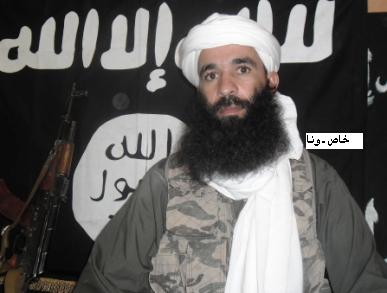
[AFP/Sahara Media] French jihadist Gilles Le Guen in October delivered a message to warn against a military intervention in northern Mali.
French forces captured a French citizen in Mali suspected of joining al-Qaeda in the Islamic Maghreb (AQIM).

"He was arrested by our troop close to Timbuktu. He was obviously fighting among jihadist groups," French Defence Minister Jean-Yves Le Drian told Europe1 on Wednesday (May 1st).


"The jihadist was not in combat position when he was arrested by our troops, given that the situation in Timbuktu was relatively calm," he added. "However, our troops continue to do their job with necessary night patrols, and in this way, we managed to arrest him."

The minister noted that this case did not represent a general pattern.

"There are only a handful of such cases," he said. "We know their identities, and therefore, we have to take the necessary precautions."

The minister spoke of "an individual deviation to fanaticism" and described the suspect as "a loser who became a terrorist".

Malian airport and security sources told AFP on Thursday that the wife and children of the French Islamist arrested in northern Mali had been "evacuated" to Paris.

Le Guen, 58, who goes by the name Abdel Jelil, was detained on Sunday and is now being questioned in Mali's northeastern city of Gao, AFP reported. The Frenchman is believed to have joined AQIM after moving to Mali with his family following previous stints living in Morocco and Mauritania.

He converted to Islam in 1985, according to Le Monde.

In October, Le Guen appeared in Islamic dress with a gun at his side in a video on a Mauritanian website in which he warned France, the United States and the United Nations against military intervention in Mali to drive Islamists from the country's vast desert north.

To local analysts, the incident proves that terrorism has no nationality and any individual can fall prey to extremist propaganda.

"I'm not surprised with the presence of this French jihadist with the Islamists in Mali," Mauritanian security analyst and strategy expert Hamdi Ould Dah told Magharebia. "Terrorism has become internationalised in recent years, which attracted the attention of some people outside the cultural and civilisational circle where terrorism grew from salafist ideology."

He added that the media "opened the doors for salafist ideology to reach the farthest point in the world". Extremists take advantage of the "means of globalisation" to present some peoples as "oppressed victims of certain policies", he commented.

"Extremism is an approach that a group of individuals who may not be from the same civilisation can join for this or that reason because of psychological inclinations, exactly like some people may resort to suicide or sadism," Ould Dah concluded.

The arrest caught many Malian observers off guard.

"While the French state and its soldiers enjoy much appreciation and respect in Mali, we were shocked to find out about the arrest of a French citizen whose country is trying to liberate the land of Mali from the terrorists," Malian journalist Moussa Maiga said.

"However, this shock may fade away when we come to realise that this French citizen is not much different from the Malians who fight alongside al-Qaeda against their own country," he added.

In her turn, Meriam Coulibaly, a Malian youth activist, wondered, "How can a native French citizen espouse jihadist ideology against us? He must have been a victim of terrorists who deceived him to embrace the ideology of killing and terrorism."

from MAGHAREBIA
By Jemal Oumar in Nouakchott for Magharebia – 02/05/2013

Enhanced by Zemanta

Monday, April 1, 2013

Mali Troops, Islamists Clash in Timbuktu

map by Evan Centanni (www.polgeonow.com)
At least one Malian soldier was killed and several others were wounded Sunday during fighting between Malian soldiers backed by French forces  and Islamist militants in the northern city of Timbuktu.

Officials say at least five insurgents were also killed in the shootout that started Saturday night after a group of Islamist militants infiltrated the Saharan city.

The militants linked to al-Qaida in the Islamic Maghreb, or AQIM, used a suicide bomber as distraction and entered the city while he blew himself up at a military checkpoint.  The militants are trying to recapture the city they held for months until Malian and french troops recaptured it in January.

It is not clear how many rebels have re-entered Timbuktu.

City residents told VOA that the fighting is not far from their homes, and that some civilians have been wounded by stray bullets.  They say they are staying indoors as the clashes continue.

The attack Saturday began hours after a Malian military vehicle drove over a land mine, killing two soldiers.

Mali has been the target of a series of attacks claimed by Islamist insurgents since France launched a military intervention against al-Qaida-linked groups that had seized northern Mali.  France began its operation in Mali in January.

Meanwhile, a contingent of Senegalese troops has arrived in the northern city of Gao to boost a regional intervention force trying to oust the Islamist rebels from there.

French President Francois Hollande has said France plans to begin pulling its troops out of northern Mali in April.  A multi-nation African force being assembled to replace the French needs more training and equipment to protect vulnerable northern Malian towns.

from VOA News
March 31, 2013

Enhanced by Zemanta

Friday, March 22, 2013

France: 10 Islamists Killed in Timbuktu

France says about 10 Islamist fighters were killed Thursday as French and Malian forces repelled an attack on the northern Mali city of Timbuktu.
A French army spokesman, Thierry Burkhard, said in Paris that two Malian soldiers were slightly wounded in the overnight clash.

Timbuktu residents reported hearing several hours of gunfire and seeing French warplanes overhead.  They said fighting died down by morning.

The clash followed a suicide bombing at a Malian army checkpoint near the Timbuktu airport late Wednesday.  The bomber and one Malian soldier were killed, while at least two other soldiers were wounded.

It was the first suicide attack in Timbuktu since a French-led offensive drove Islamist militants out of their northern Mali strongholds in January.

On Wednesday, French President Francois Hollande said military operations in Mali are in their last phase.

Analysts fear al-Qaida-linked militants could return to northern Mali's cities and towns after the French withdraw their 4,000 troops from the region.

The Malian army remains weak, and an African force meant to take over from the French lacks funding and training.

Mali was plunged into crisis last year when soldiers overthrew the president, enabling Islamist militants to seize control of the north. The militants imposed a harsh form of Islamic law on the region. French forces intervened when the Islamists began moving south toward the capital.

Most of the recent fighting has been in the Ifoghas mountains of northeastern Mali, where militants fled after their retreat.

from VOA News
March 21, 2013

Enhanced by Zemanta

Thursday, March 21, 2013

Mali Suicide Bombing Leaves 2 Dead

map by Evan Centanni (www.polgeonow.com)
DAKAR — An apparent suicide bomber struck in the northern Malian town of Timbuktu Wednesday. News agencies report at least two dead, one Malian soldier and the bomber.

Timbuktu residents say an explosion rocked the town during the night of Wednesday to Thursday.

The explosion reportedly came from a car near the Timbuktu airport where French and Malian troops are stationed.  It was not immediately clear whether the car was laden with explosives or the bomber was wearing a belt.

Malian military spokesman Lieutenant Colonel Diarran Kone told VOA that the bombing appeared to have been part of a larger raid. 

He said that the perpetrators were "terrorists who wanted to infiltrate" the area.

French and Malian troops were able to repel the attackers.

Timbuktu residents told VOA that gunfire began around 11 Wednesday night and continued until early Thursday morning.

This resident, identified by his last name Oumar, told VOA by phone from Timbuktu that he heard a "large boom" and gunfire, including heavy weapons, coming from the direction of the airport.  He said he heard French planes flying overhead until the early morning hours.  He said he and his family, unsure of what was happening, remained sheltered in their home until morning.

French, Malian and Chadian troops have been fighting al-Qaida-linked Islamist militants in northern Mali for nearly ten weeks.  France intervened after the militants, who seized control of the region last April, tried to move south in January.

The attack on Timbuktu Wednesday would mark the town's first suicide bombing and highlights fears of a stubborn "hit and run" guerrilla war to come in northern Mali.

France has said it will withdraw its troops, leaving Malian troops and a multi-nation African force to fight the militants.

from VOA News
by Anne Look
March 21, 2013

Enhanced by Zemanta

Monday, February 25, 2013

AQIM Leader Condemns Destruction of Mali Mausoleums

map by Evan Centanni(www.polgeonow.com)
RFI journalist Nick Champeaux and a journalist from French newspaper Libération have discovered extraordinary papers in which the leader of Aqim, Abdel Malek Droukdel outlines his strategy for Mali.

The documents, dated 20 July 2012, four months after the jihadists took control of northern Mali, were found among others scattered on the floor of the offices of the ORTM national television station in Timbuktu.

The papers were intended to be read by other senior members of Aqmi (Al Qaeda in the Islamic Maghreb) and Ansar Dine and were headed "Roadmap relating to Islamic Jihad in Azawad [northern Mali]".

Before they fled Timbuktu, the Aqim leaders shredded a number of documents, including lists of names and telephone numbers. Among the papers scattered on the floor, were the 79 pages written by Abou Moussab Abdelwadoud, alias Abdel Malek Droukdel, head of Aqim.

These documents complete a dossier, part of which was found in February by a journalist working for Associated Press.

In the documents, Abdel Malek Droukdel focuses on how to set up an Islamic zone in northern Mali with the Touareg people, without drawing attention to Aqim's presence there.

His solution is outlined in a framework laid out in six chapters.

In the first chapter, entitled "Global vision of the Islamic jihadist project in Azawad", Droukdel condemns the destruction of mausoleums and the stonings carried out by some of his fellow jihadists. "You have made a serious mistake", he writes. "The population could turn against us, and we cannot fight against a whole people. You are in danger of destroying our experiment, of killing off our baby, our beautiful tree."

"We must avoid general solutions, which do not take the local environment into account", he suggests in a paper written after the first demolitions of mausoleums, which shocked the people of Timbuktu.

"Sharia law allows lashings of the whip as a punishment for adulterers, but first of all we must get people used to the idea and educate them in Islam, only then can we envisage using such punishments", he proposes.

The document appears to have been written after discussion with other Islamists.

Droukdel expresses support in the papers for the idea of an independent High Council for Islamic Affairs, to ensure the proper application of Sharia throughout the territory under Aqmi control.

The document gives a fascinating insight into how Droukdel intended to use the (secular- minded) MNLA (Azawad liberation movement), but also, to a lesser extent, Ansar Dine, the (Islamist) group led by Iyad Ag Ghali.

Throughout the document, Droukdel laments the split with the MNLA. Before the split, in June, the MNLA had signed an accord accepting the principle of the islamicisation of northern Mali.

"What more can we ask of them?" asks Droukdel only one month later in the document. "We can't ask MNLA members to become salafists and join the ranks of Ansar Dine overnight" he declares.

The Aqim leader apparently plans to attribute most of the ministerial posts to MNLA members, though not key ministries such as Religious Affairs, Justice and Education.

He proposes that the Defence Ministry include all the different political and religious movements.

Iyad Ag Ghali (Ansar Dine) would be given the post of leader of a transitional government, whose job would be to draw up a constitution for the Islamic State of Azawad.

However, jihadists would run the towns and cities, and Droukdel appears to have no intention of involving Ansar Dine in his international terrorist activities.

The overriding aim appears to be to create the broadest possible alliances, in order to resist any military intervention.

"Alliances are essential" he writes, noting that one of the advantages of an alliance is that his movement will not be wholly responsible if it fails in its objectives."

Read or Listen to this story on the RFI website.


from allAfrica/RFi

Enhanced by Zemanta

Saturday, February 16, 2013

US adds senior AQIM commander to terrorist list

By

Yahya Abu Hammam, the emir of al Qaeda in the Islamic Maghreb's operations in the Sahel. Image from the ANI.

The US added the head of al Qaeda in the Islamic Maghreb's operations in the Sahel region of North Africa to the list of global terrorists yesterday.
Yahya Abu Hammam, whose real name is Jemal Oukacha, was added by the US to the list of Specially Designated Global Terrorists for his "key role in the group's ongoing terrorist activities in North Africa and Mali," the US Treasury Department stated in a press release.
"Today's designation supports ongoing international efforts to isolate AQIM, deny its members the benefits of their violent and criminal acts, and help restore Mali's territorial integrity," Treasury stated.
Hammam has been waging jihad in North Africa since the 1990s, according to Magharebia.com, which profiled the AQIM emir in October 2012. He was detained by the Algerian government for 18 months, then released. He subsequently joined the Salafist Group for Prayer and Combat, which eventually morphed into AQIM in 2006.
"In 2004, he joined fighters in northern Mali and southern Algeria where he served under the command of Khaled Abou El Abbas, who was then emir of the Sahara," Magharebia.com reported. Hammam fought in northern Mali and Mauritania, where he was involved in several attacks against the Mauritanian military. In one such attack, in 2005 against the Lemgheity barracks, 17 Mauritanian soldiers were killed.
Prior to being appointed the head of AQIM's operations in the Sahel, he served as the group's emir in the northern Malian town of Timbuktu. Under his rule, numerous Muslim shrines were destroyed and civilians were beaten for the slightest infractions of sharia, or Islamic law.
Hammam was named the emir of the Sahel after his predecessor, Nabil Abu Alqama, was killed in a car crash. Upon taking command, Hammam named Abdel Mejid Abou Zeid as his deputy. Zeid leads the Taregh Ibn Ziyad brigade, which operates throughout Mali, Mauritania, Niger, and southern Algeria. Zeid's brigade is responsible for the beheading of the British hostage Edwin Dyer in May 2009. Algerians, Mauritanians, Malians, and Moroccans are known to fight with both Hammam and Zeid.
The US said that Hammam "as of late 2011 ... reportedly had possession of multiple European hostages." The French accuse Hammam of executing Michel Germaneau, an elderly aid worker, in July 2010. AQIM has brought in tens of millions of dollars by kidnapping European hostages for ransom.
Hammam is known to be close to Abdelmalek Droukdel, the emir of al Qaeda in the Islamic Maghreb.
AQIM, in alliance with the Movement for the Oneness and Jihad in West Africa (MUJAO) and Ansar Dine, seized control of northern Mali in March 2012. France ultimately intervened in Mali last month after the al Qaeda-led jihadist alliance launched an offensive to take central and southern Mali. The jihadists likely would have succeeded had France not intervened, as the Malian military was in retreat.
A document written by Droukdel that was found at an AQIM command center in Timbuktu after the town fell to the French exposed the terror group's plan to use northern Mali as a base to conduct attacks in the region and against the West.
Enhanced by Zemanta

Tuesday, February 12, 2013

Malian, French Forces Repel Islamist Assault on Gao


French and Malian soldiers are on high alert in the northern town of Gao, a day after Islamist militants launched an assault to retake the city they were forced out of two weeks ago.

Residents who hid in their homes during the hours-long attack Sunday, cautiously entered the streets still littered with corpses.

Authorities report the crossfire killed three civilians and wounded at least 10 others, but it is still unclear how many soldiers or militants died.

Heavy gunfire and explosions resounded Sunday through the Saharan town, the largest in northern Mali, as the combined government force, complete with French helicopter gunships, fought the Movement for Oneness and Jihad in West Africa.

Clashes were ongoing for days in areas just outside the city.  Saturday and Friday suicide bombers attacked an army checkpoint near the entrance to Gao.  The two suicide blasts were the first in Mali.

The Malian military said the bomber in Saturday's attack was a young Arab man and the Movement for Oneness and Jihad in West Africa claimed responsibility.

The militant group seized control of Gao in April and had ruled the city until the arrival of French and Malian forces last month.  Military officials have said some elements of the group remain in the Gao area, and other fighters are hiding in the surrounding desert.

The group is a splinter faction of al-Qaida's North African wing which, in loose alliance with the home-grown Malian Islamist group Ansar Dine, held Mali's main northern towns of Timbuktu and Gao for 10 months until the French-led offensive drove them out.
from VOA News
Enhanced by Zemanta

Wednesday, February 6, 2013

Boko Haram training camps found in Mali

Hundreds of Boko Haram members stayed at training camps with Malian militants for months in Timbuktu, learning to fix Kalashnikovs and launch shoulder-fired weapons, a report has said.
 

The Nigerians fled the city into the desert, along with the other militants, days before a French airstrike on January 20, American newspaper Wall Street Journal reported.

A man who said he was hired to cook for the militants said the Boko Haram members trained for about 10 months at what is now a bombed-out customs-police building on Timbuktu’s desert fringe, intermingling with a local al Qaeda offshoot called Ansar Dine.

“Every day I saw people coming here, saying they want to sign up,” said the man, whose description of the militants’ activities matched those offered by four neighbours.

The Wall Street Journal quoted locals as saying that until just a few weeks ago, the bombed-out customs-police building in Timbuktu was one of bustling training centers populated not only by local al Qaeda-linked militants but also by hundreds of Boko Haram members.

Well over 200 Nigerians arrived in Timbuktu in April 2012 in about 300 cars, the cook said, after al Qaeda in the Islamic Maghreb (AQIM) swept into the city.

Residents said about 50 Boko Haram militants lived and trained at the customs building, and 50 more lived in an annex across a giant sandy lot, while others took up in other abandoned government buildings.

The presence of Nigerian trainees in Mali confirms statements earlier made by authorities that some Boko Haram fighters trained in Mali.

Last year, a senior security chief gave a briefing in which he said Nigeria was going to Mali primarily to uproot the Boko Haram training facilities.

Also, Chief of Army Staff Lt-General Azubuike Ihejirika said last month that Boko Haram received training in Mali, making it imperative for Nigerian troops to join the international campaign to free northern Mali from militants.

continue...Read more from DAILYTRUSTPublished on Wednesday, 06 February 2013 05:00
Written by Habeeb I. Pindiga

Enhanced by Zemanta

Sunday, January 27, 2013

Mali deploys military police to protect civilians in Gao and Timbuktu

map by Evan Centanni (www.polgeonow.com)
BAMAKO, Jan. 27 (Xinhua) -- After the deployment by air of the military police to Gao on Sunday morning, two additional units comprised of 400 officers are expected to be deployed Sunday evening to protect people and their properties in Gao and Timbuktu in northern Mali, a security source has said.

The mission of the military police is to prevent any form of abuses and violence against the civilian population.

In this regard, a meeting between Mali's defense minister and his internal security counterpart, will be held on Monday in Bamako to define the rules of engagement of the national police on the ground.

On Sunday morning, a French fighter jet bombarded the mansion of the leader of Ansar Dine movement, Iyad Ag Agaly, and later it also bombarded the number 2 camp in Kidal which has been serving as the logistical base for the rebels.

It is reported that the French and Malian troops have reached Timbuktu Saturday evening without encountering any resistance from the rebels at the city, a desert trading center occupied by the rebels last year. The French and Malian forces have seized Gao, another strategic town, and several other smaller towns in northern Mali in their two-week or so battle against the rebel groups which were believed under the influence of al-Quaida.

from XINHUA
2013-01-27 21:37:06
Editor: Yang Lina

Enhanced by Zemanta

French-Backed Malian Forces Retake Gao, Advance on Timbuktu

Malian soldiers ride in a Malian army pickup truck in Diabaly January 26, 2013. (photo by Joe Penney)
French and Malian forces are advancing against Islamist militants in northern Mali heading toward Timbuktu after more than two weeks of fighting.  

Overnight, French air strikes destroyed the home of an al Qaida linked militant leader in the town of Kidal some 1,500 from the capital, Bamako.

The assault came  a day after French and Malian forces recaptured the strategic city of Gao.

The French Defense Ministry said Saturday that a contingent of troops from Nigeria and Chad was moving into the city to help maintain stability. The ministry also said the city's mayor, who had sought refuge in the capital, Bamako, was returning.

VOA correspondent Idrissa Fall in Mali says the military intervention in Gao is significant because the city had become a haven for rebel groups.

"Gao is the most important city in northern Mali. Gao was a kind of capital for the Movement for the Unity of God and Jihad in West Africa and also a capital for Ansar Dine. It was the former capital of the MNLA, those rebel Tuaregs who proclaimed independence."

Earlier Saturday, French and Malian forces regained control of Gao's airport and a nearby bridge. French Defense Minister Jean-Yves Le Drian said the forces used an air and ground operation to cut off the logistic and transportation capabilities of the militants.

map by Evan Centanni (www.polgeonow.com)
The U.S. Defense Department announced late Saturday it is expanding its aid to the French mission in Mali.  Defense Secretary Leon Panetta told Le Drian in a phone conversation that the Pentagon is prepared to conduct aerial refueling missions.  The two defense officials also discussed plans for the U.S. to transport troops from other African nations into Mali.  The U.S. has not planned to send its own troops to Mali.

The conflict in Mali and how to end it is the main topic of discussion at the African Union meeting in Addis Ababa, Ethiopia Sunday. The AU has asked leaders of the 54-member bloc of nations to consider committing troops to the mission in Mali.

France began a military offensive in Mali earlier this month, after rebels who seized control of much of the country's north last year began pushing toward the capital, Bamako. The rebels have been imposing a strict form of Islamic law on civilians.

As military operations continue in Mali, defense chiefs from the West African regional bloc known as ECOWAS were holding an emergency meeting in the Ivory Coast to discuss Mali's unrest. ECOWAS has been discussing plans to send roughly 3,000 troops to Mali as part of a U.N.-backed mission. 
from VOA News
Enhanced by Zemanta

Monday, January 14, 2013

Malian rebels flee after day-long air bombardments

photo from facebook/INFOSDEFENSE.COM - Opération Serval - Mali
BAMAKO, Jan. 14 (Xinhua) -- Sunday's aerial bombardments by the French army have forced rebels in Mali's northern town of Gao and its environs to flee, a well placed military source said.
The air raids were carried out by four French Rafale fighter jets. Well placed sources told Xinhua that the training grounds, the infrastructure and the logistical bases used by rebels were destroyed.

In the coming days, the Malian ground forces supported by troops from the Economic Community of West African States (ECOWAS) are expected to comb the area to eliminate the remaining pockets of resistance.

A number of eyewitnesses told Xinhua on phone that following bombardments by four fighter jets in Gao, the rebels fled from the region's small town of Askia. The youths in Gao were "celebrating" in town, promising to support the army to chase away the rebels from the area.

Other eyewitnesses told Xinhua that fear was spreading in Timbuktu and Kidal, the two other northern towns occupied by rebels, that the flare could expand further soon.

On Sunday, the rebels were seen surrounding the local airport in Timbuktu, while efforts to get information from Kidal bore no fruit as the region's communication channels were cut off from the rest of the world.

Fierce fighting erupted between rebels and the Malian army in the central town of Konna. On Friday, France confirmed the intervention of its troops to stop rebels from advancing towards the government-held South.

from XINHUA
2013-01-14 19:09:29
Editor: Lu Hui

Enhanced by Zemanta

Monday, December 24, 2012

Mali Islamists Destroy More Timbuktu Mausoleums

Men work alongside one of Timburktu's historic mud mosques, in Timbuktu, Mali. (file photo)
Islamist militants are tearing down more ancient mausoleums in the northern Malian city of Timbuktu.

Witnesses and tourism officials say rebels from the Ansar Dine group began destroying the mausoleums Sunday with pickaxes.

The militants destroyed several mausoleums in the city in July, after the U.N. cultural agency, UNESCO, put Timbuktu on its list of sites that are in danger.

UNESCO has listed Timbuktu as a World Heritage site for its ancient mosques and shrines, some of which date back to the 15th century.

The sites are revered by many Muslims but Ansar Dine considers them sacrilegious.

Ansar Dine is one of three militant groups that seized control of northern Mali earlier this year, after renegade soldiers overthrew the government.

The groups are trying to enforce a strict form of Islamic law across the territory.  The U.N. and human rights groups have condemned the militants for abuses that include amputations and floggings of alleged criminals.

On Thursday, the United Nations Security Council has authorized the deployment of foreign troops to Mali.

The Economic Community of West African States
is making plans to send a force of between 3,000 and 4,000 soldiers to retrain the Malian army and help retake the north.

from VOA NewsDecember 23, 2012
---

from MAGHAREBIA:

 
Mali Islamists launch fresh attacks on Timbuktu shrines

23/12/2012

Islamists occupying Timbuktu were using pickaxes on Sunday (December 23rd) to destroy any remaining mausoleums in the ancient city, an Islamist leader told AFP.

"Not a single mausoleum will remain in Timbuktu, God doesn't like it. We are in the process of smashing all the hidden mausoleums in the area," said Abou Dardar, an Ansar al-Din leader.

In related news, al-Qaeda splinter group Movement for Tawhid and Jihad in West Africa (MUJAO) said Saturday that it cut off the hands of two people in Gao as part of its interpretation of Sharia, AFP reported. The terror group warned another eight people could face a similar fate.

"It's God's law and no one can stop us from applying it," said Moctar Barry, a leader of MUJAO, which controls the city of Gao.
Enhanced by Zemanta

Sunday, July 15, 2012

Mali rebels say drop separatist goal

BAMAKO, July 15 (Reuters) - Tuareg-led Mali rebels who seized the north of the West African country in April declared on Sunday they had dropped claims for a separate state after the rebellion was hijacked by al Qaeda-linked Islamists now holding sway in the north.

"We are seeking cultural, political and economic independence but not secession," Ibrahim Ag Assaleh, a senior member of the National Movement for the Liberation of Azawad (MNLA), told Reuters by telephone.

Azawad is the name which the MNLA gives to the northern territory of Mali in which it declared an independence that has been ignored by a world more concerned with the threat of Mali become a launchpad for jihadi activities.

A second MNLA official, Hama Ag Mahmoud, told Reuters in the Mauritanian capital Nouakchott: "Independence has been our line since the start of the conflict but we are taking on board the view of the international community to resolve this crisis."

Islamist groups including the local Ansar Dine have imposed strict sharia, Islamic law, across the north and destroyed UNESCO-listed shrines to local saints in the ancient town of Timbuktu, arguing that such worship is un-Islamic.

Contacted by telephone in Timbuktu, Ansar Dine spokesman Sanda Ould Boumana said he was not aware of any change in the MNLA position but added: "What I can tell you is that it is us who control the three regions of the north."

(Reporting by Tiemoko Diallo in Bamako; Mark John in Dakar; Writing by Mark John; Editing by Alison Williams)

from REUTERS
Sun Jul 15, 2012 1:05pm GMT

Enhanced by Zemanta

Friday, June 1, 2012

Mali: Briefing - Tuareg Separatists, Salafists Forge Alliance

Dakar — Two months after taking the northern strongholds of Timbuktu, Gao and Kidal, Mali's rival rebel movements have supposedly put aside ideological, religious and cultural differences to agree on the creation of a joint Council of the Islamic State of Azawad, independent of the rest of Mali.

The agreement signed in the northeastern city of Gao on 26 May, came after three weeks of talks between the Tuareg-dominated National Movement for the Liberation of Azawad (MNLA), which launched its insurgency against the government of Mali in mid-January, and Ansar Dine, which has championed the promotion of Sharia Law in the north of Mali.

Breakaway rejected by Bamako

Reaction from Bamako to the "self-dissolution" of the two rebel entities was swift and hostile. Government spokesman Hamadoun Touré said the government "categorically rejects any idea of the creation of a state of Azawad, even more so the creation of an Islamic state".

Speaking to IRIN, the parliamentary representative for Timbuktu, El Hadji Baba Haidara, said the new protocol proved the MNLA had used a "double identity", concealing its real intentions and alliances. "The MNLA tried to woo Western governments by preaching moderation and distancing itself from radical Islam," Haidara argued. "The agreement shows that the MNLA and Ansar Dine are one and the same. For how many centuries has Mali been a Muslim country? People in the north have never asked to be 'liberated' in this way."

Different movements, different goals?

The rebels' string of easy victories in the north in late March and early April came against a background of political breakdown and confusion in the south. The coup staged in Bamako by mutinous soldiers on 22 March removed outgoing President Amadou Toumani Touré weeks before elections were to have been held. But the junta which replaced Touré, headed by Capt Amadou Sanogo, quickly faced regional islolation and international condemnation. With the Malian military distracted, the rebels moved quickly to occupy poorly-defended towns and their surroundings.

It was the MNLA which confidently declared a ceasefire on 5 April, confirming that its military objectives had been attained. The following day, the MNLA formally declared the founding of the Republic of Azawad. But Ansar Dine combatants were much in evidence, particularly in Timbuktu. The MNLA had dismissed the rival movements as an irritant more than an ally, entering the conflict weeks after the MNLA had initiated hostilities and espousing a Salafist version of Islam that had little popular support in Mali.

Senior MNLA figures, including senior commander Mohamed Ag Najim, were openly disparaging of Ansar Dine. There was concern that Ansar Dine's leader, Iyad Ag Ghali, while a prominent figure in past struggles, was now a distraction, more concerned with Sharia Law than forming a new state. Ghali also had reported links to Al Qaeda in the Maghreb (AQIM) and its long-established smuggling and kidnapping networks. The MNLA's platform included a commitment to purging the new Azawad of these elements, with senior figures accusing the government in Bamako of having actively connived with AQIM.

Islamists take the upper hand

But as the state crumbled in the north, Ansar Dine's profile increased. Its fighters rapdily outmanoeuvred their MNLA counterparts in Timbuktu, and their leaders took a stronger lead in imposing their authority while also carrying out recruitment drives targeting the youth. The allegations of strong ties between Ansar Dine and AQIM grew stronger with reports of meetings between senior figures from the two movements. Adding extra fuel were unconfirmed reports of Nigerian militants from Boko Haram in northern Mali and even fighters from Pakistan.

In a recent interview, AQIM's Emir, Abdelmalek Droukdel, looked to be addressing Ansar Dine directly when he talked of a gradual approach in the imposition of Sharia law, arguing that "it would be a mistake to impose all the rules of Islam in one fell swoop".

The desecration by Ansar Dine supporters of the tomb of one of Timbuktu's most revered spiritual leaders, Sidi Mahmoud Ben Amar, on 4 May generated fierce reaction both locally and internationally, with UNESCO warning of the need to protect Mali's cultural heritage. Ansar Dine's critics say the movement continues to disrespect local sensitivities. They say the Salafist agenda goes well beyond tackling crime and banning alcohol, arguing that Ansar Dine's supporters have also transformed schools into 'madrassas', devoted to Koranic study, compelled women to wear the veil, and tried to ban both playing football and listening to the radio. Demonstrations in Gao on 14 May are reported to have been triggered in part by hostility to such moves.

MNLA ready to unite?

An MNLA-organized meeting of tribal elders and community leaders in Gao in late April restated many of the movement's main objectives and included a strong defence of the role of women in the creation of a new Azawad, but made no reference to Ansar Dine or Sharia Law.

But speaking to IRIN from Paris after the signing of the entente in Gao, MNLA spokesman Moussa Ag Acharatomane said reported differences between the two movements had been exaggerated: "Ansar Dine is a Tuareg movement, from our own soil, not foreigners ... We have always shared the same objectives, even if our methods were different. We are a revolutionary movement, but we never said we were without religion."

Ag Acharatomane strongly denied any links between Ansar Dine and AQIM, saying the new authorities in Azawad would ensure the prompt expulsion of foreign elements engaged in violence. He also rejected reports of the rapid implementation of Sharia. "I have just returned from Gao and I can confirm these stories about radios and football being outlawed are without foundation. A moderate, tolerant form of Islam is being practiced."

Both Ansar Dine and the MNLA have faced strong criticism in reports by Amnesty International and Human Rights Watch (HRW). In its 30 April report entitled Mali: War Crimes by Northern Rebels, HRW noted persistent complaints from civilians of looting, rape, wrecking of medical facilities and even summary executions, with the MNLA implicated in many of the accusations.

The movement hit back strongly, arguing that MNLA combatants had been "confused with other groups", but promised its own investigations into human rights violations throughout Azawad.

Despite the show of unity between Ansar Dine and the MNLA, there are hints of fresh tensions ahead. In its 14 May edition, Algerian daily newspaper El Watan reported the existence of a newly formed Mouvement républicain pour la restauration de l'Azawad (MRRA) - Republican Movement for the Restoration of Azawad, intent on mobilizing Tuaregs to expel AQIM from the north and push for a reintegration of Azawad into Malian national territory. The MNLA has frequently accused El Watan of idle speculation and fabrication.

Whatever happens in the north, the authorities in the south look ill-equipped to resolve the crisis. The departure of Mali's interim President Dioncounda Traoré to Paris to receive medical treatment for injuries sustained in an assault by demonstrators in Bamako has left Sanogo and an uneasy coalition of soldiers and civilians steering national policy. Hopes that a Traoré-led interim administration could pacify the country and leave the way clear for elections in 2013 look increasingly fragile.

Meanwhile, the USA and France have signalled fresh concern about the direction Mali appears to be heading in; the Economic Community of West African States (ECOWAS) has confirmed its readiness to deploy troops; and President Blaise Compaoré of Burkina Faso remains the mediator-in-chief.

Sources: Radio France Internationale (RFI), El Watan, Jeune Afrique, Tamurt.info

[ This report does not necessarily reflect the views of the United Nations ]


from allAfrica

Enhanced by Zemanta

Tuesday, May 29, 2012

Al Qaeda affiliate and Turaeg rebels merge, create breakaway state in Mali


The secular rebel group of Saharan Tuareg tribesmen known as the National Movement for the Liberation of Azawad (MNLA) has agreed to merge with the al Qaeda-supported Ansar Dine (Defenders of Faith) Islamist rebel group. The new entity has declared the creation of an autonomous state in northern Mali, the Islamic Republic of Azawad.

Joe Burgess/The New York Times
After the signing of the accord on May 26, "Colonel" Bouna Ag Attayoub, an MNLA commander in Timbuktu, told the BBC that "[t]he Islamic Republic of Azawad is now an independent sovereign state." The declaration of the breakaway state and the merger of the secular Tuareg rebel movement with the al Qaeda-linked Ansar Dine have deepened the ongoing political and security crisis facing Mali since a coup shook the central government on March 22.

"The Koran will be a source of the laws of the state," said Moussa Ag Acharatoumane, an MNLA spokesman, according to The Telegraph. "But we will apply the things we want and leave aside those we don't. It will not be a strict application of the law." The signing of the accord, which took place in the northern area of Gao and was accompanied by celebratory gunfire, followed last week's brazen seizure of a key Malian military armory by suspected Ansar Dine gunmen in the same area of Gao.

Regional security sources confirmed the attack and seizure of the arms depot, adding that Islamists linked with al Qaeda in Mali are now "more armed than the combined armies of Mali and Burkina Faso," AFP reported. Burkina Faso borders Mali to the east. Islamist rebels are now in the process of implementing sharia law in various urban areas of northern Mali, including Timbuktu.

Mali's northern regions of Kidal, Gao, and Timbuktu have been under the de facto jurisdiction of Tuareg rebels and Ansar Dine since April 1. The Islamist group Ansar Dine had first opposed the MNLA's previous declaration of an independent state in April, preferring to maintain its stance to enforce sharia throughout all of Mali. Similarly, the MNLA had for some time resisted the Islamist views of Ansar Dine and preferred to remain secular. The recently announced merger of MNLA with Ansar Dine and the creation of the Islamic Republic of Azawad have apparently laid to rest the mutual distrust between the groups, at least for now.

Meanwhile, officials in Mali's transitional administration have strongly rejected the merger and partition of the north, and Mali's Communications Minister Hamadoun Toure demanded that "other countries should help Mali tackle al Qaeda in the region," according to the BBC.

The MNLA has fought to make Mali's northern Azawad region, roughly the size of France, into a separate state since Mali's independence from colonial rule in 1960. The Ansar Dine movement is affiliated with al Qaeda in the Islamic Mahgreb (AQIM), and is determined to implement sharia law across all of Mali.

In mid-April, three senior Al Qaeda in the Islamic Maghreb leaders were spotted in northern Mali after the government lost control of the region. Abu Zeid, Mukhtar Belmukhtar, and Yahya Abu al Hammam reportedly met with Tuareg leader Iyad Ag Ghaly in Timbuktu. Hammam is said to have been named the leader of Islamist forces in Timbuktu.

Read more: http://www.longwarjournal.org/archives/2012/05/turaeg_rebels_and_al.php#ixzz1wGNhfQQG
Enhanced by Zemanta

Monday, April 16, 2012

Swiss woman taken by gunmen in Mali's Timbuktu


(Reuters) - A Swiss woman who had stayed in the northern Malian town of Timbuktu after it was captured by Tuareg and Islamist rebels was taken from her house by unidentified gunmen on Sunday, a witness and several sources in the town said.

Yehia Tandina, one of the town's residents, said the woman, whom she identified only as Beatrice, was seized by armed men in turbans on Sunday afternoon. A neighbor of the Swiss woman who asked not to be named confirmed the incident.

A spokesman for the Swiss foreign ministry in the Swiss capital Berne said the ministry was looking into the report.

A mix of Tuareg separatist and Islamist rebels captured Timbuktu on April 1 in the final leg of their lightning advance southwards through Mali's desert north as government forces retreated in the chaotic aftermath of a coup in the capital.

The woman taken was described by several sources as a missionary who had lived in the town for a number of years and spoke several local languages.

"She is very well known in the town. She would walk around the town trying to convert people (to Christianity)," a resident of the town told Reuters, asking not to be named.
The sources said she was seized in the Abaradjou neighborhood.

Timbuktu, known for centuries as a key trading town in the Sahara and a seat of Islamic learning, had become a top tourist destination in Mali. But insecurity in recent years - including the abduction of several foreigners there by al Qaeda last year - had reduced visitors to a trickle.

In the days leading to the capture, most resident Westerners had left the town due to fears of being kidnapped and passed on to al Qaeda cells. Tuareg MNLA rebels smuggled two British citizens and a Frenchman out of the town following the rebel assault.

AQIM, al Qaeda's North African wing, which operates in the zone and has links to the Islamist rebels, is already holding 13 Westerners and has earned millions of dollars from ransom payments from previous kidnappings in recent years.

The declaration of a Tuareg rebel homeland in northern Mali has raised fears among Western security experts that the remote, inhospitable zone could become a secure haven for al Qaeda and a "rogue state" in West Africa.

French President Nicolas Sarkozy said on Friday it was essential to prevent a "terrorist or Islamic state" emerging in northern Mali.

(Reporting by David Lewis and Adama Diarra; Additional reporting by Stephanie Ulmer-Nebehay in Geneva; Writing by David Lewis; Editing by Pascal Fletcher)

Enhanced by Zemanta

Thursday, April 5, 2012

Mali's rebels announce end to military operation: statement

BAMAKO, April 4 (Xinhua) -- The National Movement for the Liberation of Azawad (MNLA) decided on Wednesday to put an end to its military operations as of Thursday.

The Tuareg group "decides unilaterally to proclaim an end to military operations as of Thursday, April 5 at midnight GMT", "following the complete liberation of the territory of Azawad and given the strong demand from international community, especially the Security Council and UN Peace, United States of America, France and the States of the Sub-Region," according to a statement on the movement's website.

The groups "calls on States of the subregion and the international community to ensure the people of Azawad, against all assaults of Mali," the statement said.

The announcement came after the Tuareg rebels of the MNLA on Sunday captured Mali's heritage town of Timbuktu after taking two other important towns of Kidal and Gao. Timbuktu fell into the hands of Tuareg rebels, marking a milestone in their repeated uprisings since the 1960s for an independent Azawad land comprising Timbuktu, Gao and Kidal.

For the first time, the rebels have the three towns under control.

Tuareg rebels apparently took advantage of the coup on March 22, when the junta toppled President Amadou Toumani Toure, citing his failure to provide means for the military to curb the rebellion in the north.

With the fall of the northern towns, Mali's military junta is facing increasing pressure from two fronts: the military offensive by the rebels and the demand by the 15-member West African bloc ECOWAS to hand over power.

On Sunday, the junta reinstated the country's constitution of 1992 to pave the way for a transition leading to the presidential election, without clarifying who would head the transition and when to hold the polls.
Enhanced by Zemanta

Tuesday, April 3, 2012

Mali: Urgent Action Needed to Protect Civilians


The Tuareg and Islamist armed groups who have taken the northern cities of Kidal, Gao and Timbuktu must protect the civilian population in areas under their control, Amnesty International said today.

In Gao, the organisation received reports of armed men firing into the air and looting public and private buildings, including the hospital.

One witness living there told Amnesty International today: "Armed people are entering the houses and looting. They are firing in the air and we are all terrified. We are left with no defence."

A woman was forced to give birth in the street in Gao as the hospital was being looted by armed men. One patient died as medical care was withdrawn.

"The armed groups who seized these towns in the last three days must ensure human rights abuses do not occur and where they do, they must take action and remove anyone implicated from their ranks," said Gaëtan Mootoo, Amnesty International's researcher on West Africa.

"The looting must be halted to ensure that the civilian population can safely go about their lives."

"In Gao especially, there is an atmosphere of terror and confusion. People must be reassured that if they stay they will not be harmed."

In Timbuktu a young man was reportedly killed on Sunday by a stray bullet while walking in the street.

As chaos spirals more and more people are fleeing their homes.

A resident of Kidal told Amnesty International this morning: "I'm trying to leave the city with my family but there is a waiting list at the bus station. I hope I can have a ticket for Wednesday."

The Azawad National Liberation Movement (Mouvement national de liberation de l'Azawad, (MNLA), a Tuareg armed opposition group, launched a military uprising in the north of the country late January 2012.

Meanwhile Islamic group, Ansar Dine, which says it aims to implement the Sharia law in Mali, has also been fighting against the national army.

Since the beginning of the uprising, more than 200,000 people have fled the north of Mali with an estimated 100,000 crossing to the neighbouring countries of Mauritania, Niger, Algeria and Burkina Faso.

"There is a real risk of a humanitarian crisis as aid agencies are encountering many problems gaining access to those in need," said Gaëtan Mootoo. "This situation is aggravated by the fact that the whole Sahel region is facing a widespread food and nutrition crisis."

The situation in Bamako continues to be volatile ten days on from the military coup that toppled Mali's President Amadou Toumani Touré.

The leader of Mali's new ruling junta promised on Sunday to reinstate the constitution, hours ahead of a deadline set by the Economic Community Of West African States (ECOWAS) either to start handing back power or face sanctions.


an Amnesty International Press Release
from allAFRICA
Enhanced by Zemanta

Monday, April 2, 2012

Administrator in northern Mali killed by Tuareg rebels

BAMAKO, April 2 (Xinhua) -- The administrator of Bourem, a region in Gao in northern Mali, was killed by Tuareg rebels, local residents reported on Sunday.

The residents said the administrator, Mohamed Sidibe, attempted to flee with his family on Saturday, after learning that the rebels of the National Movement for the Liberation of Azawad (MNLA) were going to attack Gao.

A resident of Bourem said the MNLA fighters took away the vehicle of the administrator and his body was returned on Sunday. His wife was also reportedly killed.

Residents in another northern region of Sevare went on panic after learning that the Tuareg rebels were preparing to attack their town.

The Malian soldiers and civilians who fled from Gao, Niafunke and Timbuktu are taking refuge in Sevare.

Tuareg rebels seized Kidal, Gao and Timbuktu respectively on Friday, Saturday and Sunday.

For the first time since they took arms the 1960s, the rebels have taken the northern towns in pursuit of independence of an Azawad land comprising Timbuktu, Gao and Kidal.

The rebels apparently took advantage of the coup on March 22, when the junta declared takeover from President Amadou Toumani Toure, citing his failure to provide means for the military to curb Tuareg rebels in the north.

Enhanced by Zemanta

Malian Rebels Seize Timbuktu

Witnesses in northern Mali told VOA that Tuareg rebels had reached Timbuktu and reported fighting and looting in the historic town.

Timbuktu was the last key city in the north that had not been taken by the rebels. Tuareg fighters seized the city of Gao from the Malian army late Saturday and the provincial capital, Kidal last week.

On Saturday, military junta leaders met with Burkina Faso's president, Blaise Compaore, in Ouagadougou to discuss ways to settle the Mali crisis.

The Mali representatives said President Compaore rejected their request for help battling the rebels in Mali and called for coup leaders to restore the constitution.
Renegade soldiers seized power from democratically elected President Amadou Toure on March 22, after accusing him of failing to provide the army with enough resources to tamp the Tuareg rebellion.

Heavily armed Tuareg rebels arrived in northern Mali after the fall of neighboring Libya, and they launched an insurgency in mid-January.

Tuareg separatists have been seeking autonomy for decades.

Meanwhile, Mali's coup leader says he has reinstated the country's constitution, a day before harsh economic sanctions were to be imposed if constitutional order was not restored.

During a news conference near the capital, Bamoko on Sunday, Captain Amadou Sanogo read a brief statement saying he had restored the state's previous constitution, which was adopted in 1992.

He also said state institutions had been restored and he vowed to organize the return of power to civilians. However, the coup leader did not provide a timeline for new elections.

The Economic Community of West African States ( ECOWAS ), which oversees a common currency in the region, threatened to impose crippling financial sanctions by Monday if power was not handed back to civilians.

from WOTN
Enhanced by Zemanta

Search this blog