Sunday, November 27, 2011

Iran Threatens to Hit Turkey if US, Israel Attack

Ali Khamenei has been the supreme leader of Ir...Image via Wikipedia
TEHRAN, Iran (AP) — Iran will target NATO's missile defense installations in Turkey if the U.S. or Israel attacks the Islamic Republic, a senior commander of Iran's powerful Revolutionary Guard said Saturday.

Gen. Amir Ali Hajizadeh, the head of the Guards' aerospace division, said the warning is part of a new defense strategy to counter what he described as an increase in threats from the U.S. and Israel.
Tensions have been rising between Iran and the West since the release of a report earlier this month by the International Atomic Energy Agency that said for the first time that Tehran was suspected of conducting secret experiments whose sole purpose was the development of nuclear arms.
The U.S. and its Western allies suspect Iran of trying to produce atomic weapons, and Israel, which views Tehran as an existential threat, has warned of a possible strike on Iran's nuclear program. Iran says its program is for peaceful purposes.
"Should we be threatened, we will target NATO's missile defense shield in Turkey and then hit the next targets," the semiofficial Mehr news agency quoted Hajizadeh as saying.
Tehran says NATO's early warning radar station in Turkey is meant to protect Israel against Iranian missile attacks if a war breaks out with the Jewish state. Ankara agreed to host the radar in September as part of NATO's missile defense system aimed at countering ballistic missile threats from neighboring Iran.
A military installation in the Turkish town of Kurecik, some 435 miles (700 kilometers) west of the Iranian border, has been designated as the radar site, according to Turkish government officials.
Hajizadeh said the United States also plans to install similar stations in Arab states, which has spurred Iran to alter its military defense strategy.
"Based on orders from the exalted commander in chief, we will respond to threats with threats," he was quoted as saying.
Iran's Supreme Leader Ayatollah Ali Khamenei, who has the final say on all state matters, is also commander in chief of Iran's armed forces.
Another senior Guard commander, Yadollah Javani, threatened that Tehran will target Israel's nuclear facilities should the Jewish state attack Iran.
"If Israel fires a missile at our nuclear facilities or vital installations, it should know that Israel's nuclear centers will be the target of our missiles," the semiofficial ISNA news agency quoted him as saying.
Also Saturday, the chief of Iran's elite Quds Force said he doesn't fear assassination and is ready for "martyrdom."
The comments by Quds Force commander Brig. Gen. Ghassem Soleimani were published in several Iranian newspapers. The Quds Force is the special foreign operations unit of the country's powerful Revolutionary Guard, and Soleimani is a key figure in Iran's military establishment but rarely speaks in public.
Tensions have increased in recent weeks between Iran and the U.S., with several American neoconservatives urging the Obama administration to use covert action against Iran and kill some of its top officials, including Soleimani.
The force has been accused by the Americans of involvement in an alleged plot to assassinate the Saudi ambassador to Washington. Two men, including an alleged member of Iran's Quds Force, have been charged in New York federal court in the case.
Iran has dismissed the American claims as a "foolish plot", saying U.S. officials have offered no proof.
Enhanced by Zemanta

Suspected Al Shabaab Rebels Raid Kenya Police Post

GARISSA, Kenya (Reuters) - Suspected Somali al Shabaab rebel fighters raided a police post near Mandera in northern Kenya Saturday, seizing weapons and burning a mobile phone transmission mast, security officials said.

The group of fighters attacked Arabiya, a trading centre 60 kilometres from Mandera, and engaged police in a firefight before overpowering them and taking all the guns and bullets from the local police post.
"Arabiya was attacked. We believe it's al Shabaab. They destroyed, burnt a communication booster and took ammunition at the police post," North Eastern Provincial police commander Leo Nyongesa told Reuters by phone.
There were no injuries or deaths reported.
Kenya ordered its soldiers across the border in October to crush the al Qaeda-linked al Shabaab who it said had attacked its security forces and tourists inside Kenya.
ARRESTS
The latest incident comes days after grenade attacks in the frontier town of Garissa killed six, and a roadside bomb killed a soldier in Mandera town.
Nyongesa said police had arrested five people suspected to be involved in the Garissa attack.
Although there appears to be little progress on the ground in Somalia as torrential rains bog down operations, more airstrikes have been launched on al Shabaab strongholds in recent days and there have been skirmishes and bomb attacks in northern Kenya.
"The week has been very intense with air operations that have been aimed at decimating and degrading al Shabaab capacity to be able to plan and launch operations in the country," Kenya Defence Force's Colonel Cyrus Oguna told a news conference in Nairobi.
During the operation, now in its sixth week, four soldiers have died in direct combat, in addition to five killed in a helicopter crash at the start of the incursion. One was missing at sea.
Oguna said nine people arrested Friday in separate incidents on Lamu island were suspected of being al Shabaab members.
Kenya is the latest foreign power to try to stabilise Somalia, which has been mired in violence for two decades since the overthrow of dictator Mohamed Siad Barre in 1991 allowed first warlords, then Islamist militants, to step into a power vacuum.
Friday, officials from Ethiopia, whose soldiers have been in Somalia before, said the country will deploy troops to the anarchic Horn of Africa state for a "brief period" to help Somali and Kenyan forces battling al Shabaab.
In an emailed statement responding to Ethiopia's plan, al Shabaab said: "The people of Somalia shall never accept or live under the humiliation of occupation and the spirit of resistance shall not fade as long as a single invader remains alive on Somali soil."
(Additional reporting and writing by George Obulutsa; Editing by Sophie Hares)

from NYTIMES
Enhanced by Zemanta

Mali: German Killed; Dutch, SAfrican, Swede Seized

BAMAKO, Mali (AP) — Gunmen killed a German man in Mali's most famous city of Timbuktu and seized three men from the Netherlands, South Africa and Sweden, officials and witnesses said, as officials on Saturday ordered a plane to evacuate foreigners from the tourist destination.

The Dutch and Swedish governments confirmed Saturday that their citizens had been taken. A fellow traveler said the other man seized was South African and said she met the German man.
Tour guide Ali Maiga was with the tourists during Friday's attack at a Timbuktu restaurant and gave the same list of nationalities. A witness and an official said gunmen burst into the restaurant, grabbed four tourists dining there and executed one when he refused to climb into their truck.
Officials on Saturday evacuated foreigners from Timbuktu to the capital, said a man who owns a hotel in Bamako where the tourists previously stayed. He asked for anonymity because of the sensitivity of the situation.
Foreign Ministry spokesman Ward Bezemer confirmed that one Dutch man was among those kidnapped.
"In the interests of the people involved, we never comment on these cases," Bezemer told The Associated Press.
The kidnapping comes ahead of an official visit by Mali's president to the Netherlands next week.
Sweden's Foreign Minister Carl Bildt on Saturday confirmed on Twitter that one of those kidnapped was Swedish. He did not mention the nationalities of the others.
Germany's Foreign Ministry said in a Saturday statement that the killed foreigner is "with a high probability a German national" and updated its Mali travel advisory to mention the killing.
South African foreign affairs department spokesman Clayson Monyela said Saturday his government was trying to confirm whether one of those kidnapped was South African.
Canadian tourist Julie-Ann Leblond said she met a group consisting of a South African, a Swede and a Dutch couple in Mali. She said they invited her to join them as they headed to Timbuktu, but she took ill on Wednesday and had to stay behind.
"I was supposed to go there with them," Leblond, a 25-year-old resident of Quebec City, told the Associated Press by phone from Bamako. "I was never so happy to get a cold."
She did not provide the names of the travelers and said the German was traveling separately. She said the group of four met on the road as they were traveling from Europe to Africa.
"They're incredible people, so peaceful, so nice," she said. "That kind of thing cannot just happen to those kind of people. It's crazy."
The European Union's foreign policy chief, Catherine Ashton, also condemned the attack in a statement and said "these incidents show the need to continue and intensify the efforts against insecurity in the Sahel," the desert region stretching from Mauritania to Chad.
"Through its Strategy for Security and Development in the Sahel, the EU is committed to help the Sahel countries in this endeavor," the statement said.
Also Saturday, France's Foreign Ministry expanded the zone that it "strongly advises" French travelers to avoid traveling in Mali, moving the line southward from the Sahel region.
Until a few years ago, Timbuktu was one of the most visited destinations in Africa, but it is now one of the many former tourist hotspots in Mali that have been deemed too dangerous to visit by foreign embassies because of kidnappings by the local chapter of al-Qaida.
Friday's incident comes after two French citizens were grabbed in the middle of the night from their hotel in the Malian town of Hombori on Thursday. French judicial officials have opened a preliminary investigation into their kidnappings.
Neither kidnapping has yet been claimed by al-Qaida in the Islamic Maghreb, or AQIM, whose members have kidnapped and ransomed more than 50 Europeans and Canadians since 2003.
If Friday's kidnapping is by AQIM, it will mark the first time they have taken a hostage inside of Timbuktu's city limits. Thursday's kidnapping would be another first — the first hostage taking south of the Niger River.
The group's footprint has grown dramatically since 2006, when the Algerian-led cell first joined al-Qaida. Security experts estimate the group has been able to raise around $130 million from ransom payments alone.
___
Associated Press writer Mike Corder contributed to this report from The Hague, writer Juergen Baetz contributed from Berlin, writer David Stringer contributed from London and writers Anita Powell and Donna Bryson contributed from Johannesburg.

from NYTIMES
Enhanced by Zemanta

Colombian Rebels Kill 4 Hostages

ENGLISH: Flag of the Revolutionary Armed Force...Image via Wikipedia
BOGOTA (Reuters) - Colombian FARC rebels executed four members of the security forces during a botched mission to free them from a decade as hostages, the most violent act by the group since troops killed its leader Alfonso Cano this month.
 
The Revolutionary Armed Forces of Colombia, which has a policy of killing hostages if troops approach their camps, shot three of the captives in the head and the fourth in the back, President Juan Manuel Santos said.
The bodies were found in chains, he said.
"These heroes of Colombia sacrificed their lives trying to bring peace to Colombia," Santos said. "This is another demonstration of the FARC's cruelty ... It's an atrocious crime."
One police sergeant who was also being held hostage by the FARC managed to escape and was found alive by the military on Saturday, Defence Minister Juan Carlos Pinzon said.
Latin America's No. 4 oil producer has been wracked by bloodshed from guerrillas and cocaine barons for decades, although the FARC - once a powerful force controlling large parts of Colombia - has been severely weakened.
Santos said on Thursday the Andean nation was nearing the final phase of nearly 50 years of war and that his government would be willing to talk peace if the guerrillas were serious.
Troops launched the operation in southern Caqueta province 45 days ago after a tip that FARC captives were being held in the area, Pinzon told a news conference. The killings of the four hostages happened after a firefight between soldiers and the rebels.
"This is a reality shock," said security analyst Alfredo Rangel. "It shows that despite all the hits they have received in recent years that they are determined to fight the state, they are determined to continue their violent ways."
Bombings and kidnappings have eased sharply as Colombian troops use better intelligence, U.S. training and technology to take the fight to the rebels.
Foreign investment, especially in oil and mining, has surged as the insurgency weakens. But the FARC and other groups pose a threat in rural areas where the state's presence is weak and cocaine trafficking lets the rebels finance operations.
The FARC, considered a terrorist group by European nations and the United States, has lost key commanders in the past four years, including its founder Manuel Marulanda, military leader Mono Jojoy last year and Cano earlier this month.
The new leader Timoleon Jimenez - or "Timochenko" - has vowed to continue the fight against the government.
"What a great Christmas the FARC guerrillas have given the families of the police and military," said Marleny Orjuela, director of Asfamipaz, an association that represents families of kidnapped members of the armed forces.
"Santos has killed our hope, rescuing them when he knows they would be executed."
The FARC, which funds operations with extortion as well as drug trafficking, has held scores of politicians, police officers and soldiers as hostages, including French-Colombian Ingrid Betancourt seized in 2002 and three Americans taken a year later.
They were rescued by the military in 2008, when Santos was defence minister.
This was the third group of hostages killed by the FARC.
In 2003, Guillermo Gaviria, governor of Antioquia province, was shot along with an adviser and eight military captives when troops attempted to free them. In 2007, 11 lawmakers were shot when the rebels falsely believed troops entered their camp.
(Additional reporting by Luis Jaime Acosta and Nelson Bocanegra; Editing by Anthony Boadle, John O'Callaghan and Paul Simao)
Enhanced by Zemanta

Arab League Prepares Syria Sanctions

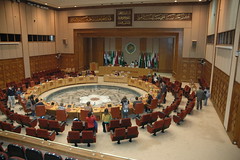
Arab League Meeting RoomImage by AlMustashriqa via Flickr
Arab League members have prepared a list of economic restrictions to impose on Syria, the BBC reported.
The sanctions include ceasing business with the Syrian central bank, suspending commercial flights and banning the travel of top officials.
Arab ministers will vote on the proposals on Sunday. They are seeking to punish the Syrian authorities for their violence against those protesting against the regime.
The United Nations estimates that more than 3,500 people have died since the government began cracking down on protestors in March.

Syria said the League is interfering in its affairs.

from TOLONEWS


Enhanced by Zemanta

Japan provides $17 million in fresh aid package to Afghanistan

Thursday, November 26, 2011 – The state of Japan announced a fresh aid package of $17 million for Afghanistan, which will assist Afghanistan in providing drinking water and electricity.
This comes as the residents of capital Kabuland its suburbs are facing critical issues and lacks access to pure drinking water while residents in the central Bamyan province are facing the lackage of electricity.
Based on the agreement which was signed between the Japan Embassy and FAO in Afghanistan on Thursday, the fresh aid package of Japan will be handed over to the ministry of water and energy of Afghanistan through the Food and Agriculture organization of the United Nations.
Mohammad Ismail Head of the ministry of the water and energy of Afghanistan said, around $10 million of the aid by Japan will spent in northern regions of capital Kabul for the preparation of pure drinking water, electricity and water flow networks for boosting agriculture.
Mohammad Ismail head of the water and energy ministry of Afghanistan further added, a hydro power dam will be constructed in Shakardara valley in northern city of capital Kabul in order to store the Shakardara river water to use the water for agricultural purposes.
He also said, the remaining $7 million will be spent in central Bamyan province for the construction of small dams for producing electricity and small water canals for boosting agriculture in this province.
The water dams and canals will be constructed in Sheebartu, Qarghanatu and shahidan regions of Bamyan province.
This comes as residents of Bamyan province earlier accused the government of Afghanistan for being reckless in implementing reconstruction projects in this province.
Meanwhile, Head of the ministry of water and energy of Afghanistan said, the government of Afghanistan is struggling to control the flow of water from the rivers of Afghanistan to prepare water dams for producing electricity and boost agriculture in the country.
Afghanistan is having plenty of rivers but the majority of water flowing from the rivers are wasted without properly being used in agriculture and production of electricity.
On the other hand, around 30% of the Afghans have access to electricity where 60% of the electricity is being imported from Uzbekistan, Tajikistan and Turkmenistan and Iran.
In the meantime, economical experts believe that Afghanistan would be able to export electricity to other countries if government takes proper actions to control the flow of water from the rivers of Afghanistan, besides paving the way for providing proper electricity across the country.
Enhanced by Zemanta

Taliban paid £100 a month to stop fighting

Members of the Taliban who give up their fight are being paid £100 a month and will be allowed to keep their guns in a new initiative to end the insurgency. 


The “reintegration” programme, which has the full support of Nato, is intended to keep them from attacking troops from the International Stabilisation and Assistance Force (ISAF).
Those who have attacked and killed British forces are also effectively given an amnesty, which means they will never be put on trial.
The amnesty extends to all Taliban fighters, including those who have taken part in atrocities, such as murdering children, beheadings and hanging women.
The agreement is part of a policy signed by the British Government in which insurgents are being allowed to “walk off the battlefield” and enter a “reintegration” scheme.
Taliban joining the programme are not interrogated but instead are asked to complete a questionnaire explaining their reasons for joining the insurgency.
...

Read More: http://www.telegraph.co.uk/news/worldnews/asia/afghanistan/8901151/Taliban-paid-100-a-month-to-stop-fighting.html


Chavez Takes His Gold Back

Hugo Chávez, president of Venezuela.Image via Wikipedia

The government of Venezuelan President Hugo Chavez has begun repatriating gold reserves that had been held in European banks.
The gold bars were unloaded at Venezuela's Maiquetia airport Friday and later transferred to armored vehicles for shipping to the Central Bank in Caracas. Officials did not say how much gold was brought back in the shipment. They also did not say when future shipments would arrive.
Back in August, President Chavez said that $11 billion of gold reserves held in U.S. and European banks would be returned to Venezuela. He has been quoted as saying the gold never should have left the country. Mr. Chavez has said the decision to retrieve the gold is aimed at helping protect Venezuela from economic troubles in the United States and Europe. Most of Venezuela's gold held abroad is in Britain.
Some observers, however, believe that by repatriating the bullion, the Chavez government is reducing the risk of having its assets seized in arbitration cases, including those linked to nationalizations of private industries.
The president also has announced plans to move more than $6 billion in cash reserves to “friendly” banks in Brazil, China and Russia. The money is now held in European and U.S. banks. VoA

Enhanced by Zemanta

Somali Pirates Reportedly Trade Ransom for Italian Ship


An Italian shipping company and Italian media say Somali pirates have released an Italian merchant ship and its crew seized seven months ago.
The MV Rosalia D'Amato had been sailing from Brazil to Iran with a cargo of soybeans when pirates commandeered the boat April 21 in the Arabian Sea, off the coast of Oman.
The boat's operator, Naples-based Perseveranza Navigazione, says the crew appears to be well.
Italy's La Repubblica newspaper reports that a ransom was paid for the release of the ship and its 22 crew members.
In the past, pirates have hijacked ships and anchored them off the Somali coast until a ransom was paid.
Somali pirates are currently believed to be holding at least ten ships and and more than 240 crew members hostage. VoA

Enhanced by Zemanta

Nov. 27., 2011. - ISAF Joint Command Morning Operational Update

2011-11-S-045
For Immediate Release
KABUL, Afghanistan (Nov. 27, 2011)  A combined Afghan and coalition security force captured a Haqqani network facilitator during an operation in Nadir Shah Kot district, Khost province, Saturday.
The facilitator distributed roadside bombs, weapons and provided a safe haven for Haqqani leaders in Nadir Shah Kot  district.
The security force detained one additional suspected insurgent during the operation.
In other International Security Assistance Force news throughout Afghanistan:
East A combined Afghan and coalition security force discovered a weapons cache and detained multiple suspected insurgents during an operation in Terayzai district, Khost province, yesterday. The weapons cache consisted of six hand grenades, one AK-47, six AK-47 magazines, and one anti-personnel mine. The combined security forces confiscated all weapons. Neither the security force nor Afghan civilians were injured.
In Kahmard district, Bamyan province a quantity of grenades was turned into coalition forces yesterday.  The collection consisted of 84 40mm grenades, which  were accepted at the scene by an ISAF explosive ordnance disposal team. The grenades will be destroyed at a later date.
WestA combined Afghan and coalition security force conducted an operation in search of a Taliban facilitator in Khugyani district, Nangarhar province, yesterday. The facilitator constructs roadside bombs. The security force detained one suspected insurgent during the operation.

Search this blog