Showing posts with label African Union. Show all posts

Friday, February 15, 2013

Somali Islamists execute Kenyan hostage, threaten five more

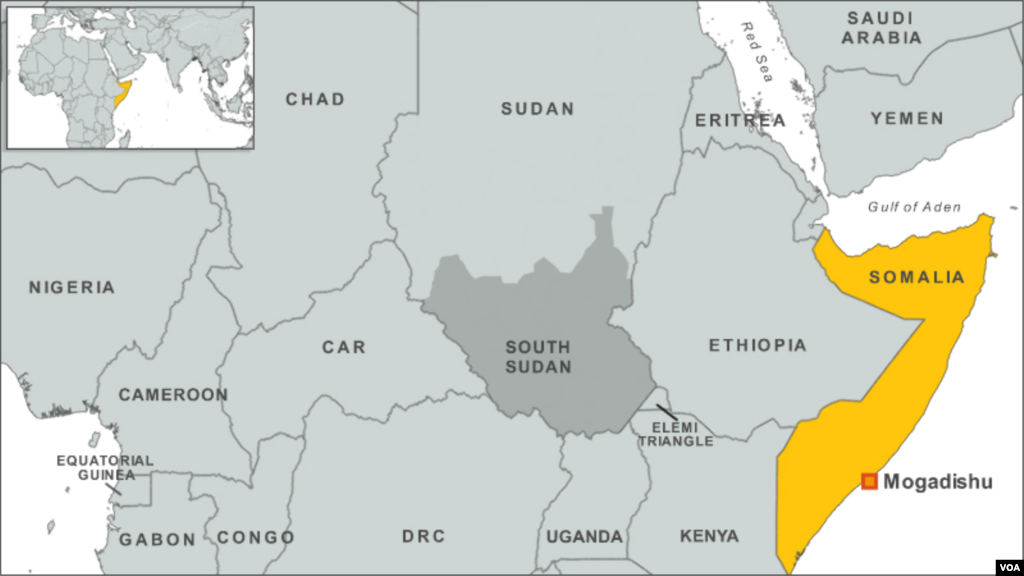
map by Evan Centanni (www.polgeonow.com)
Somalia’s Shebab insurgents claim to have executed a captured Kenyan soldier and repeated threats to kill five other hostages, the extremists said Friday.
“While the mujahedeen have executed the serving KDF (Kenya Defense Force) soldier, there is still a chance of securing the release of the remaining five prisoners,” the Shebab said in a statement.

The claims could not be verified.

Last month the Al-Qaeda-linked insurgents issued a February 14 deadline ordering Kenya -- whose troops are fighting the Shebab inside Somalia -- to release “all Muslim prisoners held on so-called terrorism charges in Kenya.”

The Shebab, who have previously released videos of Kenyan civil servants they have kidnapped, have said they would execute five hostages within three days unless the Kenyan government buckles to their demands.

Kenya has been hit by a spate of attacks including hand grenade and bombs since it invaded southern Somalia in late 2011 to attack Shebab bases, following a string of kidnappings inside Kenya blamed on the Islamists.

Many of the attacks in Kenya -- including hand grenade blasts in the capital Nairobi -- are blamed on Shebab supporters or Kenyan sympathizers, although the Shebab have not claimed the attacks themselves.

But the once powerful Shebab are on the back foot inside Somalia, having fled a string of key towns ahead of a 17,000-strong African Union force -- which includes Kenyan troops -- which is also fighting alongside Somali soldiers.

Ethiopian troops are also battling the Shebab in the southwest of Somalia.

On Thursday, AU troops and government forces seized the towns of Janalle, Aw Dhigle and Barire, some 80 kilometers (50 miles) southwest of the capital Mogadishu, the latest Shebab bases to fall.

However, the Shebab remain a potent threat, still controlling rural areas as well as carrying out guerrilla attacks in areas apparently under government control.

from AL ARABIYA
Last Updated: Fri Feb 15, 2013 09:44 am (KSA) 06:44 am (GMT)
Enhanced by Zemanta

Sunday, January 27, 2013

French-Backed Malian Forces Retake Gao, Advance on Timbuktu

Malian soldiers ride in a Malian army pickup truck in Diabaly January 26, 2013. (photo by Joe Penney)
French and Malian forces are advancing against Islamist militants in northern Mali heading toward Timbuktu after more than two weeks of fighting.  

Overnight, French air strikes destroyed the home of an al Qaida linked militant leader in the town of Kidal some 1,500 from the capital, Bamako.

The assault came  a day after French and Malian forces recaptured the strategic city of Gao.

The French Defense Ministry said Saturday that a contingent of troops from Nigeria and Chad was moving into the city to help maintain stability. The ministry also said the city's mayor, who had sought refuge in the capital, Bamako, was returning.

VOA correspondent Idrissa Fall in Mali says the military intervention in Gao is significant because the city had become a haven for rebel groups.

"Gao is the most important city in northern Mali. Gao was a kind of capital for the Movement for the Unity of God and Jihad in West Africa and also a capital for Ansar Dine. It was the former capital of the MNLA, those rebel Tuaregs who proclaimed independence."

Earlier Saturday, French and Malian forces regained control of Gao's airport and a nearby bridge. French Defense Minister Jean-Yves Le Drian said the forces used an air and ground operation to cut off the logistic and transportation capabilities of the militants.

map by Evan Centanni (www.polgeonow.com)
The U.S. Defense Department announced late Saturday it is expanding its aid to the French mission in Mali.  Defense Secretary Leon Panetta told Le Drian in a phone conversation that the Pentagon is prepared to conduct aerial refueling missions.  The two defense officials also discussed plans for the U.S. to transport troops from other African nations into Mali.  The U.S. has not planned to send its own troops to Mali.

The conflict in Mali and how to end it is the main topic of discussion at the African Union meeting in Addis Ababa, Ethiopia Sunday. The AU has asked leaders of the 54-member bloc of nations to consider committing troops to the mission in Mali.

France began a military offensive in Mali earlier this month, after rebels who seized control of much of the country's north last year began pushing toward the capital, Bamako. The rebels have been imposing a strict form of Islamic law on civilians.

As military operations continue in Mali, defense chiefs from the West African regional bloc known as ECOWAS were holding an emergency meeting in the Ivory Coast to discuss Mali's unrest. ECOWAS has been discussing plans to send roughly 3,000 troops to Mali as part of a U.N.-backed mission. 
from VOA News
Enhanced by Zemanta

Monday, January 7, 2013

Somalia: Ugandan Rebel Group Has Links With Somali Militants, a Report Says

map by Evan Centanni (www.polgeonow.com)
Kampala — A UN report alleges that there is a link between Somalia's Al Qaida inspired group of Al Shabab and the Ugandan rebel group of Allied Democratic Forces (ADF) and that the two group's connection is spreading through east Africa.

According to the report, ADF has established a link with Somalia's militant group of Al Shabab which is now weaker after Somali government forces backed by African union thrashed the group in many battlefields in south Somalia.

Uganda has contributed the bulk of the AU forces in Somalia and Al Shabab carried out a deadly bombing attack in Uganda in 2010, clearly in retaliation to Uganda's deployment to Somalia.

Despite the hatred of Al Shabab on the presence of African union forces in Somalia, the Somali public fully accepts their presence and rejoices their sacrifices in restoring peace in Somalia.

Ugandan police force issued an alert last Monday on possible terror attacks by ADF during the celebration of the new year but luckily nothing bad happened.

from allAfrica/Shabelle
Enhanced by Zemanta

Thursday, January 3, 2013

2 Jordanian Peacekeepers Freed After Kidnapping in Darfur

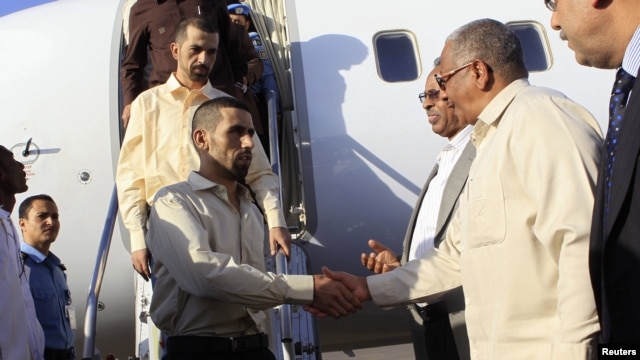
Jordanian peacekeepers Hasan Al-Mazawdeh (front) and Qasim Al-Sarhan are welcomed by officials as they arrive at Khartoum Airport, January 2, 2013, after 136 days of captivity in Sudan's Darfur region according to local media.
Two Jordanian peacekeepers abducted in Darfur four months ago were freed on Wednesday, the international force overseeing the conflict-torn region said.

A plane carrying the pair landed at Khartoum airport, the force led by the African Union and United Nations said in a statement that did not identify the kidnappers or say where the soldiers were released and whether a ransom was paid.

Conflict has raged in Darfur since insurgents took up arms against Sudanese government forces in 2003, complaining that Khartoum had neglected the vast, arid region.

The U.N. says as many as 300,000 people may have died in the fighting. Sudan's government has put the death toll at about 10,000.

The two Jordanians were kidnapped in Kabkabiya in northern Darfur in August. Both men were in good health after their release, the international force said.

from VOA News
January 02, 2013

Enhanced by Zemanta

Monday, December 31, 2012

More French Troops Go to Central African Republic

Dans la nuit du 30 décembre 2012, embarquement dans un Transall C160 de la compagnie de combat du 6e bataillon d'infanterie de marine (6e BIMa) en direction de Bangui Crédit : EMA - Ministère de la Défense 
Bangui — As rebels advance in Central African Republic, France has deployed an additional 180 troops to protect its interests.

The French reinforcements arrived Sunday from nearby Gabon, bringing the total French military force in the capital, Bangui, to nearly 600, Col. Thierry Burkhard told The Associated Press Sunday. The troops are to protect French residents in the capital, which many fear will be attacked by the rebels.

As fears mounted that the rebels would attack Bangui, a city of 600,000, President Francois Bozize imposed a curfew from 7 p.m. until 5 a.m.

Bozize earlier appealed to France for help against the rebels, but French President Francois Hollande's government said it would only protect French interests and would not prop up the Bangui government.

The African Union is attempting to set up negotiations in Gabon between the Bozize government and the rebels.

The rebel forces have seized at least 10 cities across the sparsely populated north of the country. Residents in the capital now fear the

insurgents could attack at any time, despite assurances by rebel leaders that they are willing to engage in dialogue instead of attacking Bangui.

from allAfrica
31 December 2012

Enhanced by Zemanta

Friday, December 14, 2012

Car bomb kills three in Somali capital

map by Evan Centanni (www.polgeonow.com)
A car bomb in the Somali capital killed three people and wounded several others in the latest attack in war-ravaged Mogadishu, police said Friday.

“The car exploded while the driver was moving in it... three people were killed,” said police officer Aden Mohammed, adding it was not clear if the driver had been targeted. “We are still investigating the blast.”

No group immediately claimed responsibility for the explosion, but the Al-Qaeda linked Shebab insurgents have conducted a series of guerrilla style attacks in the capital since pulling out of fixed positions there last year.

The insurgents have vowed to topple President Hassan Sheikh Mohamud, who took office in September after being chosen by the country’s new parliament, bringing an end to eight years of transitional rule.

An offensive led by the 17,00-strong African Union force alongside Somali forces has stripped the Shebab of most of the towns they held.

But the Shebab remain a potent threat, still controlling rural areas as well as carrying out guerrilla attacks -- including suicide bombings -- in areas apparently under government control.

Some of the fighters have reportedly relocated to the Galgala region of the northern Golis mountains in Somalia’s semi-autonomous Puntland region.

The Golis mountains, straddling the porous border between the autonomous state of Puntland and self-declared independent Somaliland, are honeycombed with caves and difficult to access.


from AL ARABIYA
FRIDAY, 14 December 2012 


Enhanced by Zemanta

Sunday, December 9, 2012

AU, Somali Troops Capture Rebel Stronghold

African Union forces and Somali government troops have captured the town of Jowhar from al-Shabab militants.

Witnesses said troops entered the town Sunday morning and briefly fought with militants before gaining control.

Several al-Shabab members have confirmed that their forces have pulled out of Jowhar.

The town is about 90 kilometers north of the capital, Mogadishu and is the regional capital of Middle Shabelle region.  It has been under Islamist control since 2009.

The capture deals a blow to al-Shabab as the Somali government now controls large parts of the country's south, including the capital and the port city of Kismayo.

from VOA News
December 09, 2012

---

from allAfrica/Shabelle

9 December 2012

Somali government forces backed by African union forces have taken control of the key town ofJowharin middle Shabelle region, according to officials and eyewitnesses.

The joint forces of Amsiom and Somali army seized the town without a fight after fighters from the militant group of Al shabab deserted the town.

"Jowhar is liberated and its residents are not under oppression any longer" said a government security official.

Most of the residents in the town remain indoors, observing the transition of control with caution. Jowhar is located 90 kilometres south ofMogadishuand it was under the control of Al shabab since 2009.

Eyewitnesses say that fighters fled the town after government forces and African union forces came close to the town last night.

The fall of Jowhar is a big blow to Al shabab but a boost for the Somali government which now controls large parts of south Somalia after, with a help from African Union forces, pushed Al shabab from major cities and towns including Mogadishu, Kismayo and Baidoa.

Enhanced by Zemanta

Wednesday, November 7, 2012

At least one killed in car bomb near Somali parliament

(Reuters) - At least one person was killed on Wednesday when a car laden with explosives detonated in the car park of the country's parliament building in the capital Mogadishu, police said.

The explosion went off while the country's new legislators were holding a session inside.

General Mohamed Abdulle told Reuters the car full of explosives was parked among those owned by Somali parliamentarians, and a Somali soldier was killed in the blast.

"It exploded and one military soldier died. There are no other casualties but there is damage to the cars," he said.

It was not immediately clear who was behind the attack, though Mogadishu has been frequently targeted by Islamist militant group al Shabaab, who are fighting Somali government forces and African Union soldiers across the country.

Since al Shabaab withdrew from the capital in August last year, it has increasingly turned to suicide bombers and grenade attacks to target government and African Union positions.

Two suicide bombers attacked a restaurant in the Somali capital on Saturday, killing a security guard who stopped them entering the building.

It was not clear who was behind the bombings but Al Qaeda-linked al Shabaab insurgents have conducted similar previous attacks and remain a serious security challenge even after being forced out of their strongholds.

from REUTERS
By Mohamed Ahmed
MOGADISHU | Wed Nov 7, 2012 6:37am EST
(Writing by Drazen Jorgic; Editing by James Macharia)

Enhanced by Zemanta

Tuesday, November 6, 2012

Al-Qaida Leader Urges Guerrilla Warfare in Somalia

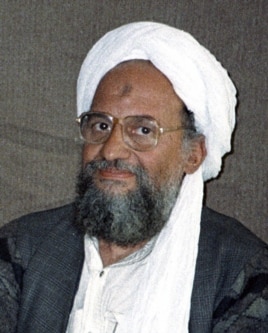
Al-Qaida chief Ayman al-Zawahiri, November 10, 2001.
A purported message from al-Qaida chief Ayman al-Zawahiri calls for a campaign of guerrilla warfare against foreign troops in Somalia.

The alleged message from Zawahiri appeared Tuesday on the website of Somali militant group al-Shabab, which is fighting African forces that support Somalia's government.

The speaker, talking in Arabic, references al-Shabab's loss of the port of Kismayo, an indicator the recording was made recently.

He urges jihadist fighters to disregard the number of troops and attack them through ambushes and suicide bombings.

Al-Shabab made a formal alliance with al-Qaida in February but has suffered continuous battlefield losses to pro-government troops from Kenya, Ethiopia and the African Union. 

Kismayo was the last major town controlled by the group, which once ruled most of southern and central Somalia.

Somalia's newly-installed central government hopes to restore order to a country that has not had a stable central authority since 1991.

from VOA News
November 06, 2012

Enhanced by Zemanta

Sunday, November 4, 2012

British-Somali Businessman's 2nd Restaurant Targeted

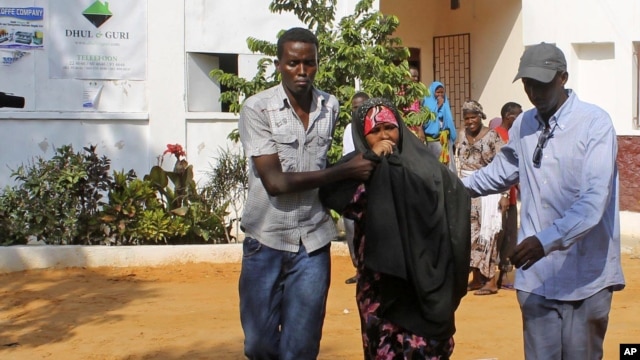
People assist a girl wounded in a suicide blast at popular restaurant in Mogadishu, November 3, 2012
Two suicide bombers in Somalia appear to have targeted a second restaurant owned by a British-Somali businessman.

Witnesses say that four people, including the two alleged bombers were killed on Saturday in twin explosions near the Village Restaurant in Mogadishu. A guard who stopped the bombers from entering the building was killed in the attack, along with a civilian.  A total of 10 people were wounded.

The restaurant is popular with government officials, journalists and politicians.

In September, two suicide bombers attacked another co-owned Village Restaurant in the capital, killing 15 people.  At least three journalists were among those killed, including the Somali National Television director.

The African Union peacekeeping force in Somalia (AMISOM) said it suspected al-Shabab militants were behind the September attack.

The al-Qaida-linked group controlled parts of the capital until last year when it was driven out by Somali and AMISOM forces. However, the militant group has continued to launch attacks in the region.

from VOA News
November 03, 2012

Enhanced by Zemanta

Sunday, October 14, 2012

Somali, AU forces secure more southern towns from rebels

The retreat of the Al Shabaab Islamist
militant group in Somalia since 2011.
Original map by Evan Centanni.
www.polgeonow.com
MOGADISHU, Oct. 14 (Xinhua) -- Somali government forces backed by African Union (AU) peacekeeping forces are spreading their control over territory run by Al-Shabaab rebels in the south of the Horn of Africa country.

The allied forces this week consolidated their control over the Wanla Weyn town, 93 km south of the Somali capital Mogadishu, as well as a former Somali air force base, 15 km away from the Wanla Wein.

The newly taken areas are strategically located along the main corridor linking Mogadishu to the southern town of Baidao, which is also under the control of AU and Somali government forces.

Wanla Weyn falls at a strategic junction linking the two Shabelle regions to Baidoa in the south and Beletweyne in the north of Somalia.

Officials say the capture of Wanla Weyn facilitates the aim of connecting Mogadishu to Baidoa.

Somali Defense Minister Hussein Arab Isse was among officials who paid a visit to the regained military base near Wanla Weyn. He said the capture of the town was a victory for Somalia and called on Al-Shabaab fighters to join the government troops.

"To Al-Shabaab fighters I call upon them to lay down their arms and join the ranks of their brothers. This is your country, these are your brothers welcome to open arms. There is no other door open for you. Somalia is sovereign nation so come and join in building the future of your country," the Somali defense chief said in the newly taken area.

AU and Somali government officials say the advance would to deny fleeing Al-Shabaab insurgents from seeking refuge and destabilizing other regions of Somalia.

The officials believe that the capture of this town denies Al- Shabaab another source of illegal income after a string of defeats and the loss of other major sources of revenue in a number of seaports along the coastal towns.

Al-Shabaab has lost a number of key towns in central and southern regions, in particular, the port city of Kismayo, the stronghold of the rebels.

from XINHUA
2012-10-14 17:34:17
Editor: Tang Danlu

Enhanced by Zemanta

Wednesday, October 3, 2012

Somali militants hit Kismayu as African troops move in

MOGADISHU (Reuters) - African Union troops and tanks occupied al Shabaab's former stronghold of Kismayu on Tuesday, but the Somali Islamist militants gave notice of their intention to fight back, saying they detonated a bomb in the port city.

The blast points to the al Qaeda-linked rebels' ability to hit back with covert strikes and continues a pattern of attacks in other urban strongholds from where they have retreated under military pressure, including the capital.

A spokesman for al Shabaab's military operations, Sheikh Abdiasis Abu Musab, said the bomb was planted inside a district administration office building now housing Somali troops and warned of more attacks.

"This is only an introduction to the forthcoming explosions," he told Reuters. The militants had succeeded in "killing many", Musab said.

The government said the explosion caused no casualties.

Kenyan troops fighting under the AU flag entered Kismayu for the first time on Tuesday after launching an offensive against the port on Friday, forcing the rebels to flee.

They followed hundreds of Somali government troops and allied militia fighters who deployed in the city on Monday.

Al Shabaab's strength is hard to gauge. Mohamud Farah, a spokesman for Somalia's government forces, said between 4,000-5,000 fighters were hiding in the southern Juba regions.

Hundreds of foreign fighters had joined the insurgency at its peak from countries such as Afghanistan, Pakistan, Kenya, Tanzania as well as the United States and Britain, Somalia's last government said.

"Foreign fighters (also) started leaving when they saw their space was shrinking," a Nairobi-based security adviser said, referring to the offensive by African Union and Somali government troops that has steadily won back rebel-held ground over the past 14 months.

After the surrender of Kismayu, defection rates among footsoldiers were also expected to pick up, with the rebel group seen as a losing proposition.

What will be left behind, analysts say, is a hardline core.

Whether al Shabaab is able to wage a prolonged campaign of guerrilla attacks on Kismayu will largely hinge on Mogadishu's success in establishing a regional administration that satisfies competing clan interests in the south.

"If you have marginalised clans, al Shabaab will find allies in them. If all clans are on board it will be hard for al Shabaab to infiltrate Kismayu," the security adviser said.

Read more: http://af.reuters.com/article/topNews/idAFJOE89200D20121003

from REUTERS
By Abdi Sheikh
Wed Oct 3, 2012 5:38am GMT

Enhanced by Zemanta

Saturday, September 29, 2012

Kismayo Hasn’t Fallen Yet....

English: Kismaayo City, Somalia
English: Kismaayo City, Somalia (Photo credit: Wikipedia)

Kismayo Hasn’t Fallen Yet; Even If It Had, It Wouldn’t Be the End of the Shabab


from the "Inside The Shabab Insurgency" blog
Posted on

In the early hours of the morning today, reportedly mostly Somali forces – according to Somali sites – were dropped by Kenyan landing ships on the beaches on the outskirts of Kismayo, the southern Somali port city that is the main target of the Kenyan war against the Shabab.

Some Somali sites report that the amphibious force is in the hundreds, but whatever their number, one thing is clear: they have not taken Kismayo contrary to what most news sites are parroting.

The source of the false news that Kismayo had fallen was a Kenyan army spokesman, Cyrus Oguna who had said that the city had “fallen with minimum resistance”. It is easy to jump the gun when, you know, you are not the one really shooting the gun.

As I have written before, losing Kismayo is not such a big deal to the Shabab: they may actually end up making more from discreet “Jihad donations” that they will collect from businesses in the region once they are forced to fully withdraw than from the port itself.

Kismayo is the second biggest city in southern Somalia, after Mogadishu. Holding it has more of a psychological effect than anything.

The battle for Kismayo is not the decisive battle that would decide the fate of the Shabab in southern Somalia, and it is not their “last stronghold” as some news sites report. The Shabab control another port city, Barawe, and many important towns in south and central Somalia. Simply put: the Shabab can drive from Kismayo all the way to near Galka’yo in central Somalia without going through enemy territory. How is that for a “last stronghold”?

it's not finished yet, read more on the blog:
"Inside The Shabab Insurgency"
Enhanced by Zemanta

Monday, September 24, 2012

Somalia: 200 Former Al Shabaab Agents Surrender to Allied Forces

Mogadishu, Somalia200 hundred Al Shabaab agents surrendered to African Union and Somali government forces on Sunday amid a chain of bombings and assassinations in Mogadishu, Garowe Online reports.

Spokesman for the African Union forces deployed in Somalia, Col. Ali Adan Hamud, said that the agents who surrendered were equipped with their weapons had decided to give up fighting for Al Shabaab and join government forces.

"These Al Shabaab agents renounced their allegiance with the terrorist group and decided to join the government forces.

"We are welcoming this decision by the militants and we are providing their security," continued Col. Hamud.

a video report from ALJAZEERA:


The spokesman also stated that reports that said the agents were actually civilians who were looking to join the battle in the Middle Shabelle region by surrendering to the allied forces were false.

"The 200 agents who surrendered included two Al Shabaab officials, we welcome anyone separating from Al Shabaab and we will protect them," said Col. Hamud.

Al Shabaab did not comment on the agents who split from the organization on Sunday.

The split by the 200 Al Shabaab agents follows a string of attacks by Al Shabaab in Mogadishu as a new Somali President was elected earlier this month.

Last Thursday Al Shabaab agents strapped with explosives attacked a restaurant in a Mogadishu killing14 people and shelled a residential neighborhood the night before.

On Saturday a member of the new federal parliament Mustafa Haji was gunned down after evening prayers near his home in Mogadishu.

Security analysts say that the recent insecurity in Mogadishu is due serious infiltration by Al Shabaab in Mogadishu even stemming all way to top security and military officials.

from allAfrica/Garowe Online
23 September 2012

---
photos:
Defected members of Islamist militant group al Shabaab stand after giving themselves up to the African Union AMISOM forces in Garsale, approximately 10km from the town of Jowhar, 80km north of Mogadishu, in this September 22, 2012 handout picture made available by the African Union-United Nations Information Support Team on September 23, 2012. Islamist rebels said they shot dead a Somali lawmaker in Mogadishu on Saturday and threatened to kill every legislator in the country. The African Union Mission in Somalia (AMISOM) force said, however, there were signs of deepening internal rifts within al Shabaab. More than 200 rebels defected near the town of Jowhar on Saturday, AMISOM said. *******/AU-UN IST/Abukar Albadri/Handout 

---
 Defected members of Islamist militant group al Shabaab stand after turning themselves in to the African Union AMISOM forces in Garsale, approximately 10km from the town of Jowhar, 80km north of Mogadishu, in this September 22, 2012 handout picture made available by the African Union-United Nations Information Support Team on September 23, 2012. Islamist rebels said they shot dead a Somali lawmaker in Mogadishu on Saturday and threatened to kill every legislator in the country. The African Union Mission in Somalia (AMISOM) force said, however, there were signs of deepening internal rifts within al Shabaab. More than 200 rebels defected near the town of Jowhar on Saturday, AMISOM said. *******/AU-UN IST/Abukar Albadri/Handout
---
 A senior commanding officer (front L) of the African Union Mission in Somalia (AMISOM) shakes hands with a defected commander (front R) of Islamist militant group al Shabaab after members gave themselves up to AMISOM forces in Garsale, approximately 10km from the town of Jowhar, 80km north of Mogadishu, in this September 22, 2012 handout picture made available by the African Union-United Nations Information Support Team on September 23, 2012. Islamist rebels said they shot dead a Somali lawmaker in Mogadishu on Saturday and threatened to kill every legislator in the country. The African Union Mission in Somalia (AMISOM) force said, however, there were signs of deepening internal rifts within al Shabaab. More than 200 rebels defected near the town of Jowhar on Saturday, AMISOM said. *******/AU-UN IST/Abukar Albadri/Handout
Enhanced by Zemanta

Friday, September 21, 2012

Suicide bombers kill 15 in Somali capital

(Reuters) - Two suicide bombers walked into a restaurant in central Mogadishu and killed at least 15 people on Thursday, police said, highlighting the security challenges facing the country's new president.

There was no immediate claim of responsibility. However, suspicions will fall on the Islamist militant group al Shabaab which has carried out a campaign of suicide bombings since it withdrew from the capital last year under military pressure.

The al Qaeda-linked group claimed responsibility for suicide bombings last week outside a hotel where President Hassan Sheikh Mohamud was holding a news conference just two days into the job, an attack interpreted as a warning from the insurgents that they are far from defeated.

Police spokesman General Abdullahi Barise told Reuters 15 people were killed in Thursday's attack. A Reuters photographer saw several bodies, the severed heads of the two bombers and pools of blood on the floor.

The blasts targeted The Village restaurant, owned by well-known Somali businessman Ahmed Jama, who had returned to his home country from London to set up business against the advice of friends.

"My relatives, whom I created jobs for, have perished. My customers have perished. All innocent people. I cannot count them, their dead bodies are before me," a distraught Jama told Reuters.

Three local journalists were among the dead, including a reporter at the state-run Somali National Television, the National Union of Somali Journalists said.

The al Shabaab-linked website www.somalimemo.net said in a statement that those killed "supported the infidel government" but stopped short of saying the group was behind the attack.

Mohamud's election was hailed by his supporters as a vote for change in a country mired in conflict for more than two decades.

These attacks underscore the security challenges faced by the political newcomer as African forces battle to quash a five-year insurgency waged by al Shabaab.

HOPE "MELTING AWAY"

"We still have hope in the new president and the new speaker (of parliament) that Somalia will sooner or later change for the better," said Ahmed Ali, a second-year student at a Mogadishu university.

Shopkeeper Asha Farah said she felt the optimism Mohamud's poll win had brought was "melting away."

"We all applauded the election victory of the new president but things in Mogadishu look like they're deteriorating. Al Shabaab have redoubled their suicide bombings," Farah said, echoing the widespread belief the militants were behind the latest attacks.

Expelled from a string of cities, cut off from revenue sources and struggling for its survival, al Shabaab this week fell back on its last bastion in the southern port city of Kismayu, raising fears of a military showdown with advancing African Union troops.

Defeat in Kismayu, a hub of al Shabaab operations throughout its insurgency, would badly hurt the rebels' morale and weaken their capacity as a fighting force.

However, it might not deliver the knockout blow sought by Mogadishu and its regional allies, and western diplomats expect the militants to turn increasingly to guerrilla tactics.

Al Shabaab has shown it can still regroup and easily infiltrate government-controlled areas. And there remain disenchanted, radicalized Somalis ready to strap on explosive belts.

"The new president and the speaker look honest but this is not enough to make Somalia peaceful. I am sure it will take a long time to bring total peace," shopkeeper Farah said with resignation.

from REUTERS


By Abdi Sheikh and Mohamed Ahmed
MOGADISHU | Fri Sep 21, 2012 1:33am EDT
(Writing by Richard Lough; editing by Andrew Roche)

(This story corrects paragraph seven to say a reporter of the TV station was killed, not the director)

Enhanced by Zemanta

Al Shabaab Rebels Pour Back Into Kismayu

Hundreds of Somali al Shabaab militants poured into the southern port city of Kismayu on Wednesday raising fears of a bloody showdown with African Union soliders for control of the rebels' last bastion, residents said.

The al Qaeda-linked insurgents drove convoys of machinegun-mounted pickup trucks into the city and set about building defences, witnesses said.

Somalia is a hotspot in the U.S.-led war on militant Islam and al Shabaab is the most powerful of an array of militias spawned by two decades of conflict - threatening regional stability.

The reinforcements came a day after locals said al Shabaab commanders had pulled out of the city leaving a small number of soldiers to defend the stronghold. Rumours swirled through Kismayu's winding alleyways that one of the militants' top three commanders was now in the city.

"Al Shabaab fighters have filled the bases and camps they abandoned in the past few days," said butcher Farah Roble. "We're terrified. Al Shabaab looks determined to fight for Kismayu," he said.

Earlier this week, Kenyan forces overran several militant outposts to the north and southwest of Kismayu, pushing to within 50 km (30 miles) of Somalia's second biggest city.

Kenyan military spokesman Colonel Cyrus Oguna said the final assault on Kismayu was inevitable.

"We are very, very near Kismayu. It is not a tarmac road that we are walking on. We have to be cautious, the way is littered with explosives. Nevertheless, it will happen. Kismayu will fall," he told Reuters by phone.

Defeat in Kismayu, a hub of al Shabaab operations throughout the group's five-year insurgency, would badly hurt the rebels' morale and weaken their capacity as a fighting force.

from allAfrica
20 September 2012

Enhanced by Zemanta

Tuesday, September 18, 2012

Somali Militants on the Defensive in Kismayo

NAIROBI — Somali civilians and military officials say al-Shabab militants have been exiting Kismayo in recent days, fearing an impending onslaught by Somali forces, African Union troops and allied militaries.

Some fighters said to be remaining behind may continue to pose a serious threat.

Kenyan military spokesman Colonel Cyrus Oguna says ground troops are about 50 kilometers from Kismayo, and advancing from the northwest and the south, backed by navy and air forces.

He says reports of al-Shabab fleeing the city are only “partly true,” adding that some elements may be planning to stay behind to snipe at allied forces when they enter the city.

But Oguna says he does not expect a tough fight against these remnants.

“We do not anticipate stiff resistance as we get into the city because the main commanders are leaving," said Oguna. "We do not expect the junior forces to fight without their commanders.  So we expect minimal resistance as we get to Kismayo.”

He also says the militants have dismantled a radio transmitter in Kismayo, a sign that they are no longer using the city as a base for operations.

"The radio that al-Shabab has been using to broadcast most of their statements is called Radio Andalus and the transmitter has been brought down," Oguna said. "So we reckon that they have removed it to take it to another location, possibly Jilib." 

Jilib is among the other small towns in central Somalia where al-Shabab commanders are believed to be heading to avoid the military assault.

Al-Shabab has denied its fighters are retreating from Kismayo and claim to be defending their positions in the city.

Kismayo is one of the largest remaining strongholds of the al-Qaida linked group, which has used the town's seaport to funnel in weapons and other supplies to support their insurgency.

The militants were driven out of the capital, Mogadishu, by African Union forces in August last year.  But the remnants that have remained behind in the capital continue to pose a serious threat by carrying out suicide bombings and other small scale, targeted attacks.

from VOA NEWS
by Gabe Joselow
September 18, 2012

Enhanced by Zemanta

Tuesday, August 28, 2012

A.U., Somali troops seize port of Marka from Islamists

African Union and Somali troops captured the key port of Marka from al-Qaeda-linked Shebab insurgents on Monday, the latest in a string of bases to be wrested from the extremists, officials said.

“We have taken Marka, we entered alongside the Somali government forces this morning,” said Colonel Ali Houmed, the spokesman for the African Union mission in Somalia (AMISOM).

“There was some fighting, but not so heavy, most of the Shebab had fled.”

The loss of Marka, some 70 kilometers (45 miles) south of the capital Mogadishu, is another major blow for the insurgents, who have been on the back foot for several months.

A.U. and Somali troops have made significant gains in recent months against the Shebab, although the Islamists remain a major security threat. Ethiopian troops are also battling the militants from the south and west.

The loss of Marka leaves the Shebab with two major ports in southern Somalia -- Barawe and the key rebel bastion of Kismayo -- although an international naval blockade has already greatly squeezed maritime access there.

The Shebab abandoned their last fixed bases in Mogadishu a year ago, where they have since reverted to guerrilla tactics, claiming a series of suicide attacks and roadside bombs.

The latest defeat for the Shebab comes as candidates for Somalia’s powerful position of parliamentary speaker campaign a day ahead of the expected vote, a key step in setting up a new government for the war-torn nation.

Somalia has not had a stable central government since the 1991 ouster of dictator Mohamed Siad Barre, which sparked rounds of bloody civil war.

The United Nations-backed process, which has already selected the majority of a new parliament and will culminate in a vote for president, is the latest bid to end two decades of instability in the Horn of Africa nation.

“We are facilitating the timely implementation of this important political step,” the U.N. political office for Somalia (UNPOS) said Monday, adding it was hopeful the already-delayed vote would go ahead on Tuesday as planned.

Secret ballots in parliament for the posts of speaker and two deputy speakers have been delayed several times.

Bitter arguments have begun between challengers for the top jobs, divided along Somalia’s notoriously fractious clan lines.

Six candidates are running for the post of speaker, including two former prime ministers, Hassan Abshir Farah and Ali Khalif Galayr, both from the Darod clan and the northern semi-autonomous Puntland region.

Mohamed Osman Jawari, a former minister under the regime of Siad Barre, from the Rahanweyn clan from the southern Baidoa region, is also running for the post.

The selection of speaker will impact the subsequent parliamentary vote for president, as Somali politics have traditionally tried to share out the seats between rival clans.

Around 260 of the new parliament’s 275 members have been selected by a group of 135 traditional elders under the U.N.-backed process. Most were sworn into office last week on the tarmac of the capital’s airport, protected by A.U. troops.


from AL ARABIYA
Last Updated: Mon Aug 27, 2012 19:16 pm (KSA) 16:16 pm (GMT)

Enhanced by Zemanta

Friday, August 17, 2012

73 Shabaab Killed, KDF Suffers Two Fatalities in Somalia (+video)

Kenyan Defence Forces (KDF) have killed 73 Al Shabaab militants in an attack at a remote region of Fafadun in Somalia, a military source said on Thursday.

"There was an attack in Somalia at a place called Fafadun. Seventy three Al Shabaab were killed and there are two KDF casualties," the source said.

Three other KDF soldiers were wounded in Thursday afternoon's attack.

The KDF headquarters in Nairobi referred our queries to AMISOM which is the umbrella body for all the troops fighting Al Shabaab in Somalia.

The wounded soldiers were expected in Nairobi later on Thursday after being airlifted from the battleground.

"It was a very violent confrontation because the Al Shabaab militants were heavily armed and ready for war. Forty AK-47 rifles were seized from the slain militants," a source told Capital FM News from Somalia.

The KDF soldiers who are part of the AMISOM force are preparing for a major assault in the coming days when they will liberate Kismayu, a key stronghold for the militant group.


On Tuesday, the United Nations warned of an impending assault on the southern Somali port of Kismayu, the largest remaining stronghold of the country's Al-Qaeda linked Al Shabaab insurgents.

"Fighting for control of the town appears imminent," said Mark Bowden, the top UN humanitarian aid official for the war-torn nation, noting reports of recent naval artillery bombardment as well as air strikes.

African Union troops, Ethiopian forces and various Somali militia forces have wrested a string of towns from the hardline Al Shabaab, with the capture of Kismayu - a crucial revenue source for the fighters - seen as a key target.

Last week, Al Shabaab officials and residents said three civilians were killed by missile strikes on the port, reportedly by a naval barrage from an unidentified ship.

Several foreign navies operate anti-piracy patrols off the coast of the Horn of Africa nation, including European, US, Russian and Chinese forces.

Neighbouring Kenya has smaller vessels operating offshore from Kismayu, supporting its ground troops, who invaded southern Somalia last year, before joining the 17,000-strong AU force.

"I am deeply concerned by recent reports of civilian casualties in Kismayu caused by naval gunfire and air strikes," Bowden said.

"I reiterate my call for all parties to the conflict to make every effort to minimise the impact of conflict on civilians, and to allow full humanitarian access to all people in need," Bowden added in a statement.

The reports of the long-awaited assault come as the corruption-riddled government wraps up eight years of infighting, with a UN-backed selection process for new leaders due to be completed by an August 20 deadline.

Three Ugandan army helicopters en-route to Somalia to support the AU force crashed in Kenya on Sunday leaving seven soldiers dead.

from allAfrica / Capital FM (Nairobi)
By Bernard Momanyi, 16 August 2012

Enhanced by Zemanta

Monday, July 16, 2012

Suicide car bomb hits Mogadishu, kills attacker, wounds 6

MOGADISHU, July 16 (Xinhua) -- A suicide car bomb explosion hit the center of Somali capital Mogadishu on Monday, killing the bomber and wounding six others, police said.

"A vehicle parked near a hotel Bin Ali in Hamarweyne district exploded, killing what we think the attacker and wounding six civilians. But the target of the attack was not immediately clear, " police officer Mohyadeen Ali told Xinhua.

The hotel locates in an area frequented by Somali government officials and house key government installations.

Witnesses said the vehicle has been parked near the gate of the hotel since in the hours of Monday morning before it went off while the driver was inside it.

"The explosion was very big. But it was luck that no one else was killed," Saed Muse, an eyewitness told Xinhua.

Somali security forces cordoned off the area and asked people to stay away from the scene of the explosion.

Police said the car bomb appears to have exploded prematurely and that investigations are underway into the explosion.

No group has so far claimed responsibility for the attack so far but the militant group Al-Shabaab has previously carried out similar suicide car bomb attack against Somali government targets and AU peacekeeping forces. Al Shabaab does not usually claim responsibility for failed or foiled attacks.

The radical group which has links to al Qaida has recently been weakened by concerted military offensives by Somali government forces and African Union troops.

The Al-Shabaab fighters which controlled much of southern and central Somalia have lost large swathes of territory since they were forced to withdraw from the capital Mogadishu in August.

from XINHUA
2012-07-16 17:10:51

Enhanced by Zemanta

Search this blog