Showing posts with label Somalia. Show all posts

Saturday, June 1, 2013

Kenya: Garissa Terrorist Blown Up in His Own Explosive

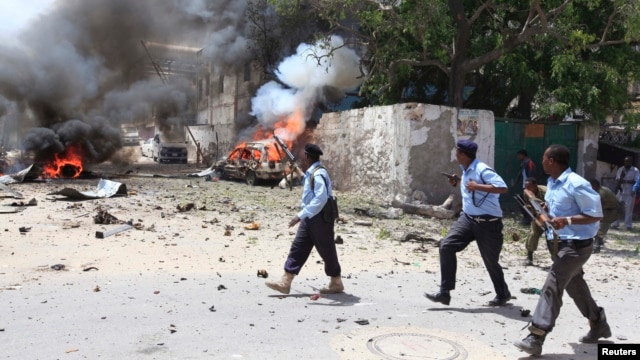
A middle aged terror suspect in Garissa was on wednsday night ripped to peaces after an IED he was trying to plant went off killing him instantly and severely wounding his accomplices.

The 9.30 pm explosion which was had more than five Km away happened along the busy kismayu road, only some 200 meters from the spot where three KDF soldiers were shot dead by suspected Al Shabaab operatives last November.

Confirming the incident NEP Deputy PPO Noor Gabow said the terrorists were targeting military and police vehicles which ply the route when travelling to Dadaab, Wajir, Mandera and Kismayu.

"We have launched a manhunt for the accomplices of the killed man who we believe managed to get away and receiving treatment at private location," said Gabow.

This comes only a day after locals leaders and business men led by Garissa senator Yussuf Haji initiated efforts to form vigilante groups to compliment the efforts of security officers in restore sanity in the insecurity hit town.

In late February this year, at least this terror suspects were killed as they tried to plant an improvised explosive device at the Garissa primary school grounds where the then Narc Kenya presidential candidate Martha Karua was scheduled to address a rally.

Police managed to recover two guns, one which had earlier been stolen from a slain police officer who was killed at the Garissa market. Garissa town has borne brunt of retaliatory attacks by al shabaab since kenya troops crossed over into Somalia in late 2011 following a series of attacks and kidnappings in the country. Since then over 300 people have lost their lives including police officers, military officers, government officials and civilians have been killed .

from allAfrica/the STAR
By Stephen Astariko, 31 May 2013

Enhanced by Zemanta

Monday, May 27, 2013

Al-Shabaab kills 6 in Kenyan border attack


map by Evan Centanni
Al-Shabaab gunmen killed at least six people, including a 15-year-old boy, in an attack along Kenya's border with Somalia Saturday (May 25th), Kenya's Capital FM reported.

"A small unit of Mujahideen raided the Kenyan base early last night, taking over the base, killing 8 Kuffar and injuring more than a dozen," al-Shabaab posted on Twitter on Sunday. Al-Shabaab also claimed to have kidnapped two Kenyans and seized guns.

Police Inspector General David Kimaiyo said al-Shabaab killed six people. He said gunmen attacked two Administration Police camps at about 5:30 pm, killing the boy, two police officers, a Red Cross official and two civilians.

"Security has been beefed up in the two camps and the general area by deployment of additional General Service Unit and Rapid Deployment Unit officers," he said.

from SABAHIOnline
May 26, 2013

Enhanced by Zemanta

Tuesday, May 14, 2013

Kenya to revive police reservists in Garissa to fight al-Shabaab

Français : Le comté de Garissa au Kenya et les...
 (Photo credit: Wikipedia)
The Kenyan government is planning to revive the Kenya Police Reserve (KPR), a programme to train and arm a civilian corps, to help fight al-Shabaab militants from within the local community in Garissa. 

Garissa has borne the brunt of al-Shabaab's attacks in Kenya after the Kenya Defence Forces sent troops into Somalia in October 2011.

Led by Police Inspector General David Kimaiyo and Internal Security Permanent Secretary Mutea Iringo, the National Advisory Security Committee has been investigating a series of such attacks in April. During a meeting on April 20th, the committee recommended engaging citizens in urban Garissa for anti-terrorism operations.

The KPR was formed in 1948 to assist the police in maintaining law and order across Kenya.
In 2004, former Police Commissioner Major General Mohammed Hussein Ali disbanded and disarmed the KPR in Kenya's urban areas after its officers were linked to violent crimes and corruption. He kept the force intact in rural areas, however, to combat cattle rustling and banditry.

Continue & read more the full article on the SABAHI website

By Bosire Boniface in Garissa  

May 13, 2013

Enhanced by Zemanta

Thursday, May 9, 2013

Al-Shabaab fighters loyal to Godane reportedly kill al-Amriki

Abu Mansoor Al-Amriki
Abu Mansoor Al-Amriki (Photo credit: Wikipedia)
American-born jihadist Omar Hammami, also known as Abu Mansour al-Amriki, was reportedly killed by al-Shabaab soldiers loyal to top al-Shabaab commander Ahmed Abdi Godane Tuesday afternoon (May 7th) near the village of Rama Addey in southern Somalia, UN-funded Radio Bar-Kulan reported.

According to the unconfirmed report, senior al-Shabaab leader Fuad Mohamed Qalaf, known as Fuad Shangole, made the announcement Tuesday evening in a sermon he delivered after evening prayers at a mosque in Hiran region's Bulo Burde. He said al-Amriki was ambushed and a fire-fight ensued that left several al-Shabaab militants dead.

In his sermon, Shangole called the men who gunned down al-Amriki as having acted contrary to the principles of Islam, a point previously stated by a number other top al-Shabaab leaders -- including co-founder Ibrahim al-Afghani, leader of foreign fighters al-Zubayr al-Muhajir and Sheikh Mukhtar Robow Ali (or Abu Mansur) -- in a fatwa April 30th that forbade the killing of al-Amriki.

Al-Amriki was placed on the US Federal Bureau of Investigation's (FBI) list of most wanted terrorists last November and in March the United States announced a $5 million bounty on his head.

Al-Amriki was believed to be in hiding in Somalia and he regularly communicated with his followers and international terrorism analysts via Twitter in recent months. His last update on Twitter was on May 3rd, nearly a week after he posted a number of pictures and updates alleging that al-Shabaab fighters loyal to Godane had tried to assassinate him.

In the week since the failed assassination attempt, al-Amriki appears to have been in a precarious situation, posting updates that gave little doubt of the danger he believed he faced.

"May not find another chance to tweet but just remember what we said and what we stood for. God kept me alive to deliver the mssg 2 the umah," he wrote on April 29th.

For more than a year, al-Amriki has posted videos, documents and updates on Twitter and YouTube detailing how al-Shabaab's leadership -- specifically Godane, who is also known as Abu Zubayr -- has been the reason for the organisation's downfall, and how Godane's leadership is contrary to the true principles of jihad.

Even in his last tweets, al-Amriki continued his attacks against Godane. "Abu zubayr has gone mad. he's starting a civil war," al-Amriki wrote April 26th.

Al-Amriki's death could not be independently verified, and this is not the first time such news has circulated. In April 2012, Somali media reports said al-Shabaab executed al-Amriki, which was later found to be erroneous.

from sabahionline
May 08, 2013

Enhanced by Zemanta

Sunday, May 5, 2013

Al-Shabaab claims suicide car bomb attack in Somali capital

map by Evan Centanni (www.polgeonow.com)
MOGADISHU, May 5 (Xinhua) -- The Al-Qaida linked Somali radical group of Al-Shabaab on Sunday claimed responsibility for a suicide car bomb assault, which killed 10 people and injured several others.

The attack targeted a convoy carrying foreign officials, who survived the explosion, according to official sources.

The death toll from the blast at the busy main K4 intersection in the capital Mogadishu has risen to 10 and several others, mostly civilians, sustained injures.

A pro-Al-Shabaab website quoted its commanders as saying the extremist group's fighters were behind the deadly attack, vowing to continue such attacks.

State media say the targeted convoy of Somali government vehicles carrying Qatari officials and that none of the Qataris or government official was hurt in the blast.

The interior minister's vehicle was in the convoy when the explosives were detonated, but the official was not in the car. "The criminal drove the car towards the government vehicles and it exploded after it hit one of them," police officer Mohamoud Gurey told Xinhua, disclosing bystanders were among the dead.

The area was cordoned off by security forces and ambulances rushed to the scene to take the injured to nearby hospitals.

"We heard loud explosion from the K4 junction and when we came out we saw smoke coming out of burning vehicles and people lying in the street and pavement, some dead and some injured. It was terrible scene," resident Yahya Ali told Xinhua.

The attack came four days after a security lockdown at the main streets near government installations, which was just lifted on Saturday.

Somali government officials said the security measure was aimed at preventing "terrorist attacks" that may harm people and their property.

Al-Shabaab is held responsible for a series of similar attacks against the Somali government and African Union peacekeeping forces in Somalia (AMISOM).

Last month, Al-Shabaab fighters raided the Mogadishu court building and the regional administration office, killing at least 20 people including nine attackers.

Al-Shabaab has been attempting bomb attacks in Mogadishu in a bid to demonstrate its presence after losing ground to AMISOM in August 2011.

The attacks are considered nowhere to hamper the momentum to regain law and order in the city and elsewhere in a country suffering a long-standing nightmare.

On May 7, an international conference will be held in London to support Somalia in its process of restoring stability and peace after decades of conflict.

The Horn of Africa country has witnessed instability without a strong central government since 1991 after the overthrow of the late Somali leader, Mohamed Siyad Barre.

from XINHUA
2013-05-05 19:09:40
Editor: Yang Lina

Enhanced by Zemanta

Bomb hits convoy carrying Qataris in Somalia, eight dead

Officers stand by the remains of a wrecked car at the scene of car bomb explosion along the "Kilometre 4" road junction, south of the capital Mogadishu, Somalia, May 5, 2013.
(Reuters) - A suicide bomber hit a convoy of cars carrying Qatari officials through the centre of Somalia's capital Mogadishu on Sunday, killing eight Somalis, officials said.
The visiting delegation of Qataris, who were travelling in the Somali interior minister's bullet-proof vehicle, were "safe", a security officer told Reuters, without going into further detail. The minister was not in the car at the time.

The Islamist rebel group al Shabaab said it was behind the attack and threatened further strikes against Somalia's government, which it called a "puppet" of Western powers.

"More explosions are on the way," al Shabaab's military spokesman Sheikh Abdiasis Abu Musab told Reuters by telephone.

The al Qaeda-linked rebels have kept up a campaign of guerrilla-style attacks since the army and peacekeepers pushed them out of bases in the city.

Witnesses said a suicide bomber rammed a car laden with explosives into the convoy. The blast tore through the busy 'Kilometre 4' road junction in the centre of Mogadishu's commercial and administrative district.

Gunfire rang out immediately after the explosion as the convoy's security guards fired into the air to disperse onlookers.

Qatar has been forging closer political ties with Somalia in recent years as it seeks to expand its influence in the Horn of Africa region.

"The car bomb targeted delegates from Qatar. They are safe," Hassan Osman, a security official, told Reuters, adding that the minister's car was damaged in the blast.

The chairman of Mogadishu's Hodan district, where the blast occurred, told reporters at the scene eight people had been killed and five wounded, most of them civilians.

Sunday's bomb was a stark reminder of two decades of civil strife in a country where the central government depends heavily on a 17,600-strong African Union peacekeeping force for its survival.

While there has been a significant improvement in the coastal capital since African Union peacekeepers drove the Islamist al Shabaab group out of the city in 2011, the attack showed the relative ease with which the militants can still strike.

Some of Mogadishu's major roads were closed last week after security officials received a tip-off about an imminent attack, but were re-opened on Saturday.

The state of Somalia's security forces will top the agenda at conference in London on May 7. Britain and Somalia are hoping to use the event to drum up more international support at a time when al Shabaab are weakened as a fighting force but can still inflict devastating strikes.

Civil war after the fall of dictator Mohamed Siad Barre in 1991 left Somalia without effective central government and awash with weapons. The turmoil opened the doors for piracy to flourish in the Gulf of Aden and deeper into the Indian Ocean.

from REUTERS
By Abdi Sheikh and Feisal Omar
MOGADISHU | Sun May 5, 2013 10:51am BST
(Writing by Richard Lough; Editing by Andrew Heavens)

Enhanced by Zemanta

Friday, April 19, 2013

Gunmen Kill 8 in Kenyan Hotel


GARISSA, KENYA — Gunmen shot dead eight people when they sprayed bullets into a hotel restaurant in the eastern Kenyan town of Garissa on Thursday, the Kenya Red Cross said.

The east African nation has suffered a series of grenade and gun attacks since it sent troops into neighbouring Somalia in late 2011 to pursue the al Shabaab rebels linked to al Qaeda.

Though the wave of attacks on the capital Nairobi, the port city of Mombasa, and Garissa has tapered off in recent weeks, the latest incident shows the new government of President Uhuru Kenyatta will still have to wrestle with insecurity.

The Kenya Red Cross said on Twitter that eight people were killed while five others suffered gunshot wounds and were evacuated to a local hospital.

Charlton Mureithi, the regional police chief, said the attack happened at a restaurant called Kwa Chege, adding they were investigating who was behind the attack and trying to establish the number of fatalities.

"Crime is dynamic. We have to establish the motive now," Mureithi told Reuters.

Al Shabaab has been driven from the Somali capital Mogadishu and the major towns, but still controls large parts of the countryside in Somalia. In February, al Shabaab warned Kenya it faced a "long, gruesome" war if it kept up its campaign against the hardline Islamist group inside Somalia.

from VOA News
April 18, 2013

Enhanced by Zemanta

Tuesday, April 16, 2013

Al-Shabab to launch more attacks after Mogadishu court assault

map by Evan Centanni (www.polgeonow.com)
Somalia’s al-Shebab rebels have threatened further attacks after coordinated bombings and shootings that killed at least 30 people in Mogadishu at the weekend.

Al-Shebab spokesperson Ali Mohamud Rageh told the media that their fighters will double the number of attacks against the government.

Rageh insisted that the court which his fighters attacked has in the past carried out what "illegal" sentences against his Mujahidin fighters so that this time it has to pay the heftiest price for its role in the "war against Islam and endless brutality against innocents".

Al-Shebab - who are they?

“The Mujahidin figheters will intensify their attacks against this apostate government," he said. "'The attack on Sunday was a clear indication that Mujahidin fighters are still kicking and alive.

"Our martyred did a good job when they attacked this so-called court house which was planning a harmful conspiracy against Islam.”

Al-Shebab will go to every possible length to attain its goal of weakening the government’s power, he added.

Former Somalia intelligence chief Ahmed Fiqi has accused members of the army of having links with al-Shebab and aiding its operations after Sunday’s attack.


“This attack was preplanned," Fiqi said. "And there is no doubt that members of the army were involved in it. They at least gave them tips or information and collaborated with them in reaching their goal and they did”

On Monday, Mogadishu remained on high security alert following Sunday’s deadly attacks.

Interior Minister Abdikarim Hussein Guled  announced on Monday that the security forces of the country will remain vigilant to ensure stability in the capital.

Somalia president Hassan Sheikh Mohamud has declared a new phase of war to eliminate the "extremists" of al-Shebab .

Mohamud called for the Somali people to assist the security forces in catching members of al-Shebab who are trying to hide in civilian areas.

By Mohamed Sheikh Nor in Mogadishu
Article published the Tuesday 16 April 2013

Read or Listen to this story on the RFI website.

Enhanced by Zemanta

Monday, April 15, 2013

Islamist Militant Assault Kills 22 in Somali Capital

Somali policemen take up position near the scene of a deadly blast in Mogadishu Apr. 14, 2013.
Somali authorities say suicide bombings and assaults by al-Qaida-linked al-Shabab militants on Mogadishu's main court complex killed at least 22 people and wounded 18 others Sunday, breaking a fragile return to peace.

The preliminary death toll, which includes all nine attackers, is likely to rise because some families took the bodies of their loved ones home instead of to the hospital.

Mogadishu medical officials tell VOA ((Somali service)) the two top lawyers who recently defended an alleged rape victim and the journalist who interviewed her are among the victims.

Authorities say the militants were dressed in Somali military uniforms when they stormed the main court building and started shooting at the security guards on duty. 

Government forces arrived and laid siege to the compound. Explosions could be heard while the two sides exchanged gunfire.  Hours later, a car bomb exploded near the airport in the capital, damaging a vehicle said to be carrying Turkish citizens.

Al-Shabab claimed responsibility for the attack on the court complex.

Somali President Hassan Mohamud strongly condemned Sunday's attacks, saying that "a few desperate terrorists" will not keep Somalia from moving forward toward peace and stability.

British Foreign Secretary William Hague also condemned the attacks and called for the "terrorists" who carried them out to face justice.

The U.N. Special Representative for Somalia, Augustine Mahiga, expressed shock and outrage at the violence.

from VOA News
April 14, 2013

Enhanced by Zemanta

Sunday, March 24, 2013

Somalia: The Federal Government Troops and Ethiopian Troops Attack Shabab Bases in Gedo

map by Evan Centanni (www.polgeonow.com)
Mogadishu (sh.M.network ) A fierce battle between Somali government troops helped by their Ethiopian counterparts against Alshabab milia started in different parts of Gedo.
The government troops and the Ethiopian army started there journey from Garbaharey a town in gedo  region.They started their mission at a palace called Birta deer a small town 18 kilometers south of Garbaharey.Officials from the government contacted shabelle media  informed us that this town was in the hands of Alshabab before the battle started.

Abdi barre Abdi an official from the Government informed Shabele that they have taken over Strategic places from the militia and they will continue to fight out Alshabab from the region.

The official informed the media that there have been casualties of three government troops injured and praised that an equivalent or more have been done to the militia.He added that they will continue their fight against the group and are now heading towards other towns that are Alshabab strongholds in the region

from allAfrica/Shabelle
By Maalik_som, 24 March 2013

Enhanced by Zemanta

Wednesday, March 20, 2013

Al-Shabab Retakes Somali Town After Ethiopian Pullout

map by Evan Centanni (www.polgeonow.com)
Militant group al-Shabab has retaken a town in central Somalia after Ethiopian troops unexpectedly pulled out.

Witnesses say al-Shabab occupied the town of Huddur, the capital of Somalia's Bakool region, immediately after the Ethiopian withdrawal on Sunday morning.

The commander of Somali troops in the region, Colonel Hassan Isaaq Omar, told VOA's Somali Service that Ethiopian troops remain in other parts of the area.

"It is true they have pulled out from Bakool," he said, "but on the other hand, Ethiopian troops are in many other areas in Bay, Bakool and Hiran regions and they are still in these zones. Having said that, it’s true they withdrew from Huddur and pulled back to a town about 90 kilometers away called Elbardeh."

Neither Somali nor Ethiopian officials have offered a reason for the withdrawal from Huddur. Omar said it is his understanding that Ethiopia is not planning a full-scale withdrawal from Somalia.

Ethiopian troops helped the Somali government and African Union forces drive al-Shabab out of its strongholds in central and southern Somalia last year.

The militants, known for imposing a harsh form of Islam on the areas they control, still rule parts of the Somali countryside and carry out periodic attacks.

Omar said following the withdrawal, al-Shabab killed the imam of a mosque in Huddur on Monday night.

from VOA News
March 19, 2013

Enhanced by Zemanta

Wednesday, March 13, 2013

Somali pirates release Greek oil tanker with 26 crew

English: Map showing the extent of Somali pira...
English: Map showing the extent of Somali pirate attacks on shipping vessels between 2005 and 2010. Français : Carte montrant l'étendue des attaques de pirates somaliens sur des navires de transport entre 2005 et 2010. (Photo credit: Wikipedia)
NAIROBI, March 12 (Xinhua) -- Somali pirates have freed Greek oil tanker with 26 crew members onboard after ten months of captivity, the vessel's owners confirmed on Tuesday.

Dynacom Tankers Management said in a statement that the vessel, MT. Smyrni which was hijacked in Arabian Sea in May 2012 off 56 the Gulf Arab state of Oman was released on Monday.

"We are very pleased to report that the MT Smyrni has been released after ten months in the captivity of Somali pirates. All of the crew are safe and well and the vessel is proceeding to a port of refuge," the company said in a statement to Xinhua on Tuesday.

The Liberian-based flagged Smyrni, operated by a Greek company, was carrying 135,000 tonnes of oil and said to have been taken to Somalia.

The vessel has a crew of 26 of mixed nationalities who were all taken hostage in the attack and sources said there was no security guards aboard the tanker when it was attacked by pirates.

The seizure of Smyrni took place on its second voyage and marked the first successful hijacking of an oil tanker off the Omani coast since February 2011.

"We would like to take this opportunity to thank the crew, their families, our employees and those agencies that have provided support through this long ordeal. We do not expect to make any further statements on this matter," Dynacom Tankers Management said.

Piracy off the coast of Somalia and in the Gulf of Aden reduced drastically in 2012 as only 75 incidents including 14 hijackings were attributed to Somali pirates who continue to threaten an extended geographical region, according to a global maritime watchdog.

The International Chamber of Commerce (ICC) International Maritime Bureau (IMB) said in a global piracy report that only five attacks were reported in the last quarter of 2012, adding that the number of Somali hijackings was halved from 28 in 2011 to 14 last year.

The maritime watchdog said the drop is likely due to the increased active military action on suspected skiffs, military land based anti-piracy operations, preventive measures and increased use of armed guards on board ships as well as the monsoon season.

According to the report, only two crew have been killed, 250 taken hostage and one injured. The East and South Coast of Somalia including the Arabian Sea recorded 49 attacks including nine attacks in the Gulf of Oman region, with 13 attacks having been reported in the Gulf of Aden and the Southern Red Sea.

Most of the attacks involve the use of weapons which is a cause of great concern to the merchant navy fleet as it poses a serious threat not only to injury and death of seafarers but also to the ship, cargo and environment.

from XINHUA
Editor: Hou Qiang
2013-03-12 17:31:44

Enhanced by Zemanta

Wednesday, February 27, 2013

American Shabaab fighter urges Muslims to join the 'fronts' of jihad

by Bill Roggio - February 27, 2013. -  LWJ


 A previously unidentified American who fights in the ranks of Shabaab, al Qaeda's affiliate in Somalia, appeared on a videotape and urged Muslims to join one of the numerous fronts of the global jihad.

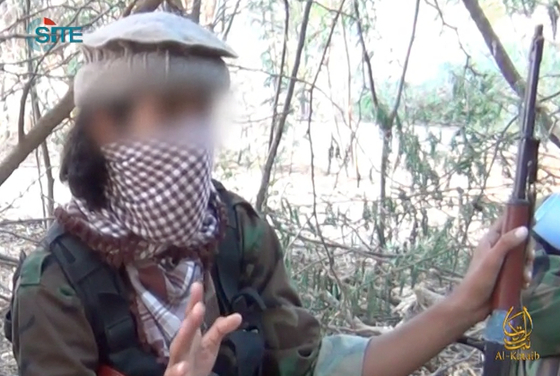
The American, who is identified as Abu Ahmed al Amriki, is seen on a videotape that was produced by Shabaab's media arm and posted on jihadist Internet forums on Feb. 25. The video was obtained and translated by the SITE Intelligence Group.
Abu Ahmed speaks in both English and Arabic, and appears with two Kenyan jihadists, who are identified as Abu Seyf al Kenyi and Abu Khaled al Kenyi. Abu Ahmed's face is digitally blurred in the video. He is seen seated with a group of armed fighters; he is also holding a rifle as he speaks.
In his speech, Abu Ahmed implores Muslims to leave their lives of comfort and wage jihad in Somalia, Mali, Afghanistan, Iraq, or the "Islamic Maghreb" -- North Africa.
"Brothers and sisters, I won't take much of your time, but it's obligatory upon you to leave the lands of [disbelief] and [emigrate]. The fronts, they are all open, whether it's here in Somalia, whether it's in Mali, whether it's in Afghanistan, whether it's in Iraq, or whether it's in the Islamic Maghreb - it's all open," Abu Ahmed says, according to the transcript provided by the SITE Intelligence Group.
He urges Muslims who cannot "emigrate" to "fight the enemies of Allah where you find them ...."
Abu Ahmed claims that the West is losing the war against al Qaeda and its allies, and that a global caliphate will soon arise.
"Victory is coming. Your brothers are gaining strength after strength, victory after victory. The defeat of the [disbelievers] is near," he says.
"America is going down and the Caliphate is rising," he claims.
Abu Ahmed is one of the "Muhajireen" -- the emigrants or foreign fighters who wage jihad in Somalia alongside Shabaab.
Omar Hammami, the American who is better known as Abu Mansour al Amriki, is the most well-known foreign fighter in Somalia. He is feuding with Shabaab, and claims that foreigner fighters are at odds with Shabaab's leaders. Shabaab has disputed the claims, and has countered that Hammami is a narcissistic self-promoter who has taken advantage of his high-profile media presence to sow dissent between the Somali group and foreign fighters. Other than Hammami's claims, there is little evidence to support the assertion that there is a split between Shabaab and the Muhajireen.
Two other prominent Americans waging jihad in Somalia are Abu Abdullah al Muhajir, who is Ayman al Zawahiri's emissary to Shabaab, and Cabdulaahi Ahmed Faarax.
An estimated 50 Somali-Americans are thought to have been recruited in the US to train and fight with Shabaab. At least two Americans have carried out suicide attacks in Somalia, and Shabaab claimed that two other Americans have carried out such attacks.
For more information on Americans and foreigners who are fighting for Shabaab, see LWJ report, American Shabaab fighter and commander pictured together. For more information on Shabaab's links to al Qaeda, see LWJ reports, Somalia's Shabaab vows allegiance to new al Qaeda emir Zawahiri, and Al Qaeda leaders play significant role in Shabaab.

Read more at: http://www.longwarjournal.org/archives/2013/02/american_shabaab_fig_1.php#sthash.p0DHRZUy.dpuf
Enhanced by Zemanta

Wednesday, February 20, 2013

Somali Troops Liberate More Areas From Al-Shabaab

map by Evan Centanni (www.polgeonow.com)
The Somali National army, supported by Ugandan units of AMISOM, on Monday (February 18th) captured the strategic airfield of Jowhar, located 100kms north east of Mogadishu. A Ugandan spokesman, Major Henry Obbo, said the airfield, 20 kms from Jowhar town, was taken over after minimal resistance from fleeing Al-Shabaab fighters.

Allied forces had no losses. The town of Jowhar was taken by Somali government forces and AMISOM in December. The Ugandan contingent commander, Brigadier Michael Ondoga, said Somali troops and AMISOM forces will continue to pressure the weakening Al-Shabaab until it completely disengages from terrorist activities, to provide a more conducive atmosphere to the Somali peace process.

The capture of Jowhar airfield will widen the Somali Government's area of control and provide better opportunities to ensure protection for large areas of Middle Shabelle region including the regional capitalof Jowhar. It will also improve opportunities for reconstruction in the transport sector and other infrastructure.

Balidoogle air base and KM-50 airfield which were recently captured from Al Shabaab have already begun to receive flights; plans are underway for the renovation of both. Four days before the capture of Jowhar airfield, Al-Shabaab was also pushed out of three towns in Lower Shabelle.

from allAfrica
20 February 2013

Enhanced by Zemanta

Friday, February 15, 2013

Somali Islamists execute Kenyan hostage, threaten five more

map by Evan Centanni (www.polgeonow.com)
Somalia’s Shebab insurgents claim to have executed a captured Kenyan soldier and repeated threats to kill five other hostages, the extremists said Friday.
“While the mujahedeen have executed the serving KDF (Kenya Defense Force) soldier, there is still a chance of securing the release of the remaining five prisoners,” the Shebab said in a statement.

The claims could not be verified.

Last month the Al-Qaeda-linked insurgents issued a February 14 deadline ordering Kenya -- whose troops are fighting the Shebab inside Somalia -- to release “all Muslim prisoners held on so-called terrorism charges in Kenya.”

The Shebab, who have previously released videos of Kenyan civil servants they have kidnapped, have said they would execute five hostages within three days unless the Kenyan government buckles to their demands.

Kenya has been hit by a spate of attacks including hand grenade and bombs since it invaded southern Somalia in late 2011 to attack Shebab bases, following a string of kidnappings inside Kenya blamed on the Islamists.

Many of the attacks in Kenya -- including hand grenade blasts in the capital Nairobi -- are blamed on Shebab supporters or Kenyan sympathizers, although the Shebab have not claimed the attacks themselves.

But the once powerful Shebab are on the back foot inside Somalia, having fled a string of key towns ahead of a 17,000-strong African Union force -- which includes Kenyan troops -- which is also fighting alongside Somali soldiers.

Ethiopian troops are also battling the Shebab in the southwest of Somalia.

On Thursday, AU troops and government forces seized the towns of Janalle, Aw Dhigle and Barire, some 80 kilometers (50 miles) southwest of the capital Mogadishu, the latest Shebab bases to fall.

However, the Shebab remain a potent threat, still controlling rural areas as well as carrying out guerrilla attacks in areas apparently under government control.

from AL ARABIYA
Last Updated: Fri Feb 15, 2013 09:44 am (KSA) 06:44 am (GMT)
Enhanced by Zemanta

Wednesday, January 30, 2013

Al-Shabab Claims Responsibility for Mogadishu Bombing

Somali soldiers patrol at the front gate of the presidential palace following a suicide bomb attack in Mogadishu, Somalia, January 29, 2013.
Somali militant group al-Shabab has claimed responsibility for a suicide bombing in Mogadishu Tuesday that killed at least two people, including the bomber.
The bomber set off his explosives on a street that is near the presidential palace, the prime minister's residence and Somalia's National Security Agency.

A statement on al-Shabab's website says the blast killed seven security agents.  Somali officials say the bomber killed himself and one soldier, and that three other soldiers were wounded. 

British Ambassador to Somalia Matt Baugh condemned the bombing and voiced support for the Somali government.

“It’s yet another sad and horrific piece of evidence to show that there are those in Somalia who are against peace and stability of this country," he said.  "And we stand resolutely with both the federal government of Somalia and the people of Somalia in helping them achieve a more peaceful, more stable country."

Somali President Hassan Sheikh Mohamud was not in Mogadishu at the time of the blast, while Prime Minister Abdi Farah Shirdon Saaid was reported to be unharmed.

African and Somali government forces have driven al-Shabab from its former strongholds in Somalia but the group still carries out periodic suicide and guerilla attacks.   The group said it was behind a suicide attack in September targeting President Mohamud, who escaped harm.

Somalia's information minister said Tuesday's bomber was a former member of the National Security Agency.

A witness told VOA's Somali Service the bomber tried to enter the agency's headquarters, then walked toward the home of the prime minister.  The witness, who spoke on condition of anonymity, said guards told the man to go back but the man detonated his explosives.

Somalia went more than 20 years without a stable central authority until U.N.-backed efforts to form a new government succeeded last year.

A new parliament sworn in six months ago elected Mohamud as president, ending eight years of an ineffective and often chaotic transitional government.

from VOA News
January 29, 2013

Enhanced by Zemanta

Tuesday, January 29, 2013

Suicide bomber kills two near Somali presidential palace

map by Evan Centanni (www.polgeonow.com)
(Reuters) - A suicide bomber blew himself up near the Somali presidential palace on Tuesday, killing at least two soldiers in a strike apparently aimed at the country's leaders, a palace guard at the scene said.

Officials working in the palace and guards said Somali President Hassan Sheikh Mohamud was abroad at the time of the blast and Prime Minister Abdi Farah Shirdon Saaid, whose house was near the site of the explosion, was safe.

The blast was the first this year in Mogadishu, where security has improved greatly since Al Shabaab - Islamist rebels allied to al Qaeda - were driven from the capital by African peacekeepers in late 2011.

The group - which wants to impose its strict version of Sharia or Islamic law - is fighting to topple Mohamud, whose election last year was the first such vote since warlords ousted military dictator Mohamed Siad Barre in 1991.

"The man blew up himself near a wall between the Ethiopian embassy and the Somali PM's residence," Ahmed Ali, a Somali soldier at the presidential palace told Reuters.

The two buildings are inside a sprawling compound that also houses the presidential palace.

"One guard died there and then. Another died of his wounds. They were all the guards of the PM," said Ali. "The man was an al Shabaab defector. He had a gate pass, an identity card of the national security."

Guards at the palace who declined to be named said the blast partially damaged a small room made of iron sheets where the prime minister's guards are stationed, but little else was damaged. Buildings and cars within the compound were untouched.

OUSTED FROM URBAN CENTRES

The guards said the bomber was known to them, and frequently visited the palace. When he came by on Tuesday morning, the guards took the suicide bomber through a routine inspection and found he was clad in an explosive jacket.

The guards tried to prevent him from detonating his device, but it went off - killing one instantly and wounding two others.

Al Shabaab was not immediately available for comment on the attack.

The group fled to southern Somalia after quitting Mogadishu but in late September Kenyan troops forced it to withdraw from the port of Kismayu, its last major urban stronghold in the Horn of Africa nation.

That appears to have ended it as a quasi-conventional military force, though Al Shabaab remains a threat and has vowed to step up suicide bombings and hit-and-run attacks.

On January 17 the group said it had executed a captive French agent after a French commando mission to rescue him failed.

from REUTERS
By Abdi Sheikh
MOGADISHU | Tue Jan 29, 2013 10:17am GMT
(Writing by James Macharia; Editing by Jon Boyle)

Enhanced by Zemanta

Thursday, January 24, 2013

Somali militants threaten to kill Kenyan hostages

NAIROBI, Jan. 24 (Xinhua) -- Somalian Al-Shabaab militants who kidnapped two Kenyan civil servants a year ago have threatened to kill them unless Kenya releases all Muslim prisoners held on terrorism charges.
In a statement posted on the militants' Twitter account Wednesday night, the Al-Qaida-allied group gave Kenya, which launched a military campaign in southern Somalia in October 2011 to pursue militants blamed for insecurity in the country, three weeks to release the prisoners.

"The Kenyan government must release all Muslim prisoners held on so-called terrorism charges in Kenya. The Kenyan government must secure the release of Muslims extradited to Uganda for terrorism charges," Al-Shabaab said in the message.

The insurgents have also released a video of the two Kenyans, who were seized from the frontier county of Wajir, claiming "the video carries an important message from the prisoners, and Kenyan government is advised to pay close attention to the pleas of the POWs (prisoners of war)."

"The release of the Muslim prisoners is unconditional and must be made public," it posted on Twitter.

"Kenyan government has three weeks, starting midnight 24/01/2013 to respond to the demands of HSM (Harakat Al-Shabaab Al-Mujahideen) if the prisoners are to remain alive," it warned.

"Following the expiration of this period, all the Kuffar Kenyan prisoners who appeared in the recent video will be executed," Al-Shabaab said.

The threats came barely a week after the militants executed French intelligence agent Denis Allex in retaliation for a botched French operation to free him.

Kenya has heightened security around the country, with security agencies at an unprecedented state of alert after recent reports Al-Shabaab planned attacks against the East African nation and foreign interests in the country.

The militant group has also come under pressure from African Union peacekeepers, which have pushed them out of the Somali capital Mogadishu and from Ethiopia.

Al-Shabaab is known for enforcing a strict brand of Islam in the areas under its rule and is believed to have links to Al-Qaeda. The group has also blocked some international aid workers from accessing parts of Somalia suffering from drought and famine.

Kenya blames the group for a string of attacks and kidnappings on its territory, including those of four Europeans.

The Kenyan government says the kidnappings threaten tourism, a key source of revenue for the country.

Al-Shabaab has been fighting since 2008 to topple Somalia's weak central government. It is considered a terrorist organization by the U.S. government. 

from XINHUA
2013-01-24 15:58:21
Editor: Zhu Ningzhu

Enhanced by Zemanta

Thursday, January 17, 2013

Bomb explosion kills 2 suspected terrorists in Kenya

GARISSA, Kenya, Jan. 17 (Xinhua) -- At least two suspected terrorists died early Thursday when bombs they were carrying exploded in a refugee camp in northern Kenya.
Charlton Mureithi, a regional police commander, confirmed the incident at the Hagdera refugee camp in Dadaab by telephone, saying the suspects were believed to be suicide bombers.

"We have not established what their mission was at the camp. Their bodies were badly damaged and we suspect they were carrying IEDs (improvised explosive devices), which went off and exploded on them," Mureithi said.

He said he had ordered an investigation into the attack, which came as political parties held their primaries Thursday to nominate candidates for the March 4 general elections.

Residents told Xinhua on Thursday they thought the suspected suicide bombers might have been targeting passersby and security officers who normally patrol the areas.

The latest incident comes amid rising fears among communities along the porous border with Somalia. Islamist groups fleeing a military assault in the south of the Horn of Africa nation have been looking to carry out revenge attacks on civilians across the border in Kenya.

Kenya blames Al-Shabaab for the wave of recent bomb and grenade attacks particularly in northern Kenya.

The East African nation has been involved in efforts to bring stability and peace to Somalia, its northern neighbor, with Kenyan troops serving in the UN-backed African Union Mission in Somalia (AMISOM).

Along with government and allied forces, AMISOM has been liberating large parts of Somalia from the control of Al-Shabaab militants, as well as supporting progress on its political front.

from XINHUA
2013-01-17 16:15:18

Enhanced by Zemanta

Sunday, January 13, 2013

What Led the French Commando Raid On Al Shabab to Be a Botched One?

map by Evan Centanni (www.polgeonow.com)
Bulomarer — Reliable sources in and around BuloMarer town in South Somalia where French commandos raided late last night, say that the French commandos first landed at a village called Daaydoog which is located at the seaside and three kilometers away from BulMarur where the French intelligence officer was held by Al Shabab militants.

According to the reliable sources, who are local people and spoke to Shabelle, say that the French commandos killed some villagers and tied others when they landed at Daaydoog before they headed to BulMarer. But some villagers who survived the French killings at the seaside contacted and alerted Al Shabab fighters in BuloMarer telling them that there were at least fifty heavily armed foreign soldiers on their way to BuloMarer.

The reliable sources, who spoke to Shabelle, say that the survived villagers called particularly the commander of Al Shabab in Bulo Shiekh Ahmed who was among those the French killed in the fire fight.

But before he and his men moved to ambush the coming French commandos, Ahmed is reported to have moved the French captive from the house they were holding into another house.

The sources say that the killing of the villagers was a mistake which led Al Shabab to be alerted and prepare for the French commandos.

by SHABELLE Media Network (Mogadishu)
12 January 2013

---

some questions in my mind:
- why they landed at Daaydoog, and why killed "villagers"
- it is an intelligence mistake?
- what about the live surveillance drones? it must show the al-shabaab troops movements...

---
here is the official press release from Harakat Al-Shabaab Al-Mujahideen:
http://www.twitlonger.com/show/kmdebi
---
Enhanced by Zemanta

Search this blog